So, you’ve just scored a beastly new CPU for your rig. Awesome! But as you plan your build, the big question hits: which All-in-One (AIO) cooler should you trust to keep it from melting? The debate often boils down to the classic 240mm vs 360mm AIO showdown. Is dropping the extra cash on a bigger radiator really necessary for South African gamers in 2025, or is it just for bragging rights? Let's find out.
The Core Difference: It's All About Surface Area
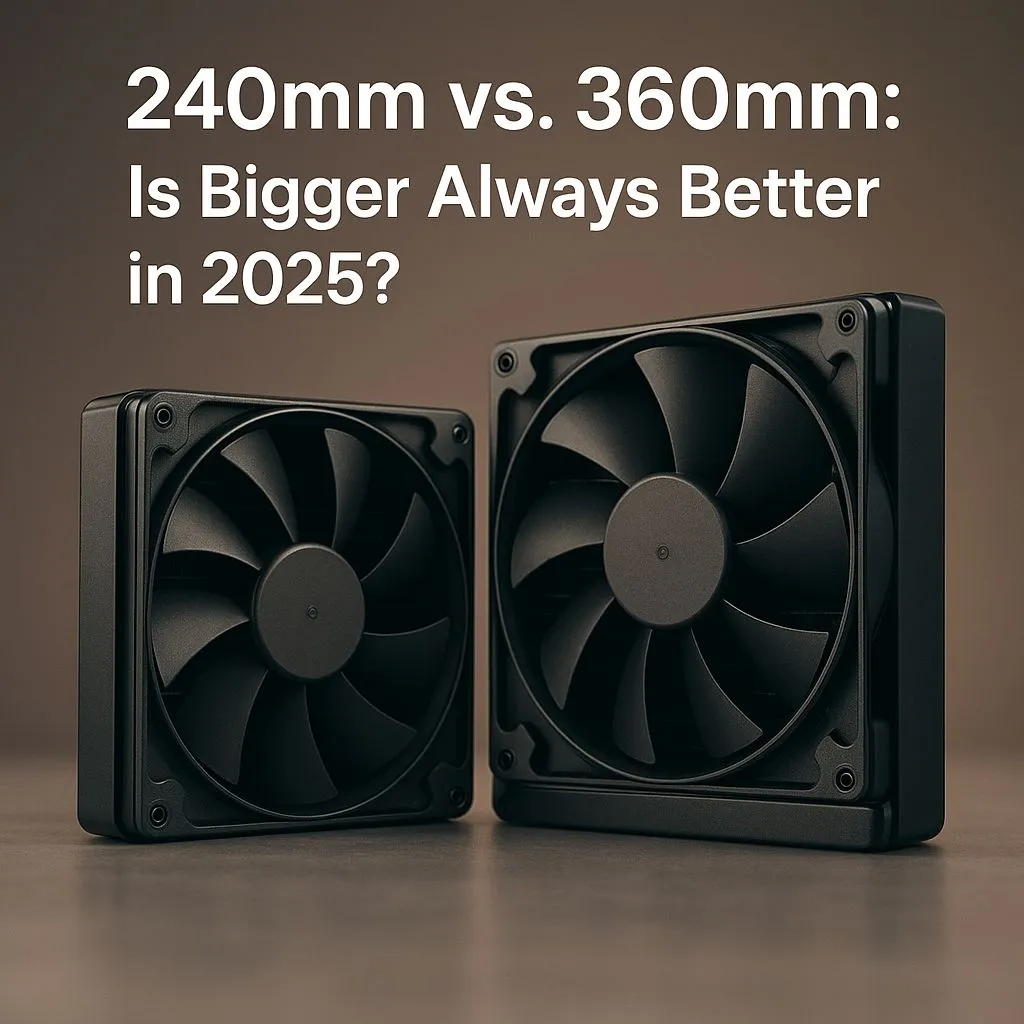
At its heart, the difference between a 240mm and a 360mm AIO is simple physics. A 240mm radiator uses two 120mm fans, while a 360mm radiator uses three. This gives the 360mm model a whopping 50% more surface area.
Why does this matter? More surface area means the cooler can dissipate heat more effectively into the surrounding air. Think of it like opening more windows on a hot day... more heat can escape, faster. This fundamental advantage is why bigger is often better when looking at the entire range of All-in-One (AIO) liquid coolers.
Performance Showdown: 240mm vs 360mm AIO Cooling Power 🌡️
Okay, let's talk numbers. While a 360mm AIO is technically superior, the real-world performance gap might be smaller than you think, depending on your CPU and what you're doing with it.
For the Everyday Gamer
If your rig is built around a modern Intel Core i5/i7 or an AMD Ryzen 5/7, a quality 240mm AIO is more than capable. For pure gaming, these CPUs rarely hit their absolute thermal limits. A 240mm cooler will keep temperatures well in check, ensuring you get maximum boost clocks without any thermal throttling. You'll get great performance without overspending.
For the Power User & Overclocker
This is where the bigger cooler flexes its muscles. If you're running a top-tier Intel Core i9 or AMD Ryzen 9, especially with plans to overclock, the choice becomes clearer. These chips generate immense heat under sustained loads like video rendering or competitive streaming. In these scenarios, a 360mm AIO can result in temperatures 5-10°C lower than its 240mm counterpart. This extra headroom is crucial for stability and squeezing out every last drop of performance from our range of 360mm radiators.
Another benefit? A 360mm AIO can often run quieter. Since it's more efficient, its three fans can spin at a lower RPM to achieve the same cooling as two fans on a 240mm model spinning faster.
Will It Even Fit? Case Compatibility Matters 🔧
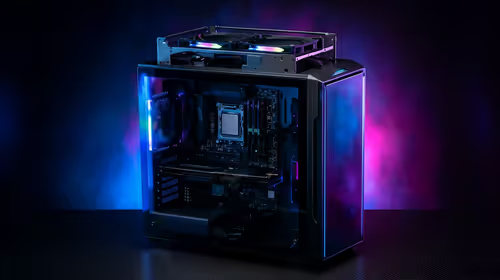
This is the most important practical check. Before you get excited about a massive 360mm AIO, you absolutely must check if your PC case supports it. Many popular mid-tower cases max out at 280mm or 240mm radiators, especially for top-mounting.
A 360mm radiator requires a larger mid-tower or a full-tower chassis. Always consult your case's spec sheet for radiator compatibility (top, front, and side) before adding to your cart. There's nothing worse than getting your shiny new part home only to find it won't fit. When in doubt, checking out how top brands like Corsair design their coolers for modern cases can give you a good idea of mounting trends.
Pro Builder Tip ✨
Before installing your AIO, check for clearance around the radiator and fans. Pay close attention to your motherboard's VRM heatsinks and your RAM height, especially when top-mounting. A radiator that technically fits might still conflict with tall memory modules. A quick measurement can save you a massive headache!
The Rand and Sense: Is a 360mm AIO Worth the Extra Cost?
In South Africa, every rand counts. A 360mm AIO can easily cost R1,000 or more than a comparable 240mm model. So, is that price jump justified?
It all comes back to your specific needs. If you're not running a flagship, power-hungry CPU, that extra money could be better spent on a faster SSD, more RAM, or a GPU upgrade. For many builders, a premium 240mm AIO offers the perfect sweet spot. It's also worth noting that for pure value, some high-end Air Coolers can compete with 240mm AIOs on performance, often for less money.
The Verdict: Which AIO is Right for Your 2025 Build? 🚀
So, in the 240mm vs 360mm AIO battle, there's no single winner... just the right choice for your build.
- Choose a 240mm AIO if: You're a gamer with a Core i7/Ryzen 7 or below, you have a standard mid-tower case, and you want an excellent balance of cooling performance, aesthetics, and value for money.
- Choose a 360mm AIO if: You're taming a beastly Core i9/Ryzen 9, you plan to push your system with heavy overclocking, you value whisper-quiet operation, and you've confirmed your case has the space.
Ultimately, the best cooler is one that matches your processor's needs and your budget. Making an informed choice ensures your PC runs cool, quiet, and fast for years to come.
Ready to Chill Your CPU?
Whether you need a cost-effective 240mm powerhouse or a top-tier 360mm beast, the perfect cooling solution is waiting. Explore our massive range of CPU coolers and find the perfect match to conquer your build.