Quick Answer
If you hit AM5 instability after enabling EXPO, the fix is almost always memory or BIOS related: reseat the kit, set the EXPO profile manually at a slightly lower speed such as DDR5-5600, and update to the latest stable BIOS. Most cases clear within 20 minutes once you stop letting the board auto-overclock unstable memory.
Why EXPO causes instability
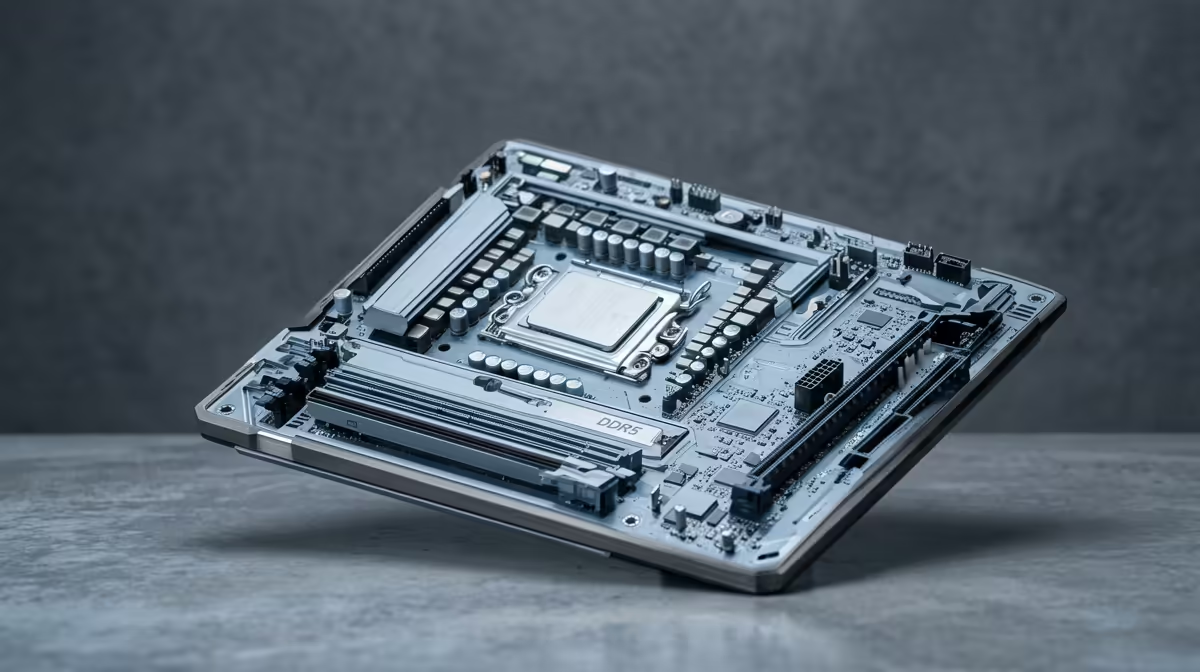
Enabling EXPO applies the memory's rated speed and timings, which is technically an overclock the board has to validate. On AMD AM5, a marginal kit or an early BIOS can cause crashes, BSODs or failed boots at the rated speed. The fix is to give the memory controller an easier target: drop to DDR5-5600 or DDR5-6000, which most kits run rock-solid, and confirm the sticks sit in the A2 and B2 slots for the best signal integrity.
Step-by-step stabilising path
Update to the latest stable BIOS first, since memory compatibility improves with each release. Re-enable EXPO, then if it crashes, lower the memory speed one grade and raise SoC or system voltages slightly within safe limits. Run a memory test such as a stress tool for a few passes to confirm stability before gaming. A quality 650W-plus PSU and clean airflow rule out power and heat as hidden causes.
FAQ
Why does EXPO cause crashes on my build?
EXPO runs your memory at its rated speed, which the board treats as an overclock and must validate. A marginal kit or old BIOS can fail that validation, causing BSODs or boot failures.
Will lowering memory speed hurt gaming performance?
Barely; dropping from a rated speed to DDR5-5600 or DDR5-6000 costs only a few fps in most games while making the system rock-solid. Stability is worth far more than that tiny difference.
Do I need to update the BIOS to fix this?
Usually yes; newer BIOS releases greatly improve memory compatibility on AMD AM5. Flash the latest stable version, reset to defaults, and re-test the profile.
the latest stable BIOS, then re-enable the profile one speed grade lower and stress-test before gaming.