You’ve got your shiny new CPU. You’ve unboxed the cooler. Now comes the moment every PC builder, from first-timers to seasoned pros, feels a little sweat over… applying the thermal paste. Do you go for the classic pea-sized dot, or the full-coverage X? It’s a debate as old as overclocking itself. Let's settle it, the South African way, and make sure your rig runs cool and fast. 🌡️
First, Why Bother with Thermal Paste?
Before we dive into the pea vs X method showdown, let’s quickly cover why this grey goo is so crucial. Your CPU's lid (the Integrated Heat Spreader or IHS) and your cooler's baseplate might look perfectly flat, but on a microscopic level, they're full of tiny imperfections.
Thermal paste is a thermally conductive compound that fills these air gaps. Air is a terrible conductor of heat, so without the paste, your CPU would overheat in seconds. Think of it as the critical handshake between your processor and its cooling solution. A good application ensures a quality CPU cooler can do its job properly, wicking heat away efficiently.
The Great Debate: How to Apply Thermal Paste
For years, PC builders have championed their preferred technique. While there are many ways to get the job done, the pea and the X methods remain the most popular for a reason. Let's break them down.
The Classic Pea Method
This is the go-to for most builders. It’s simple, clean, and effective.
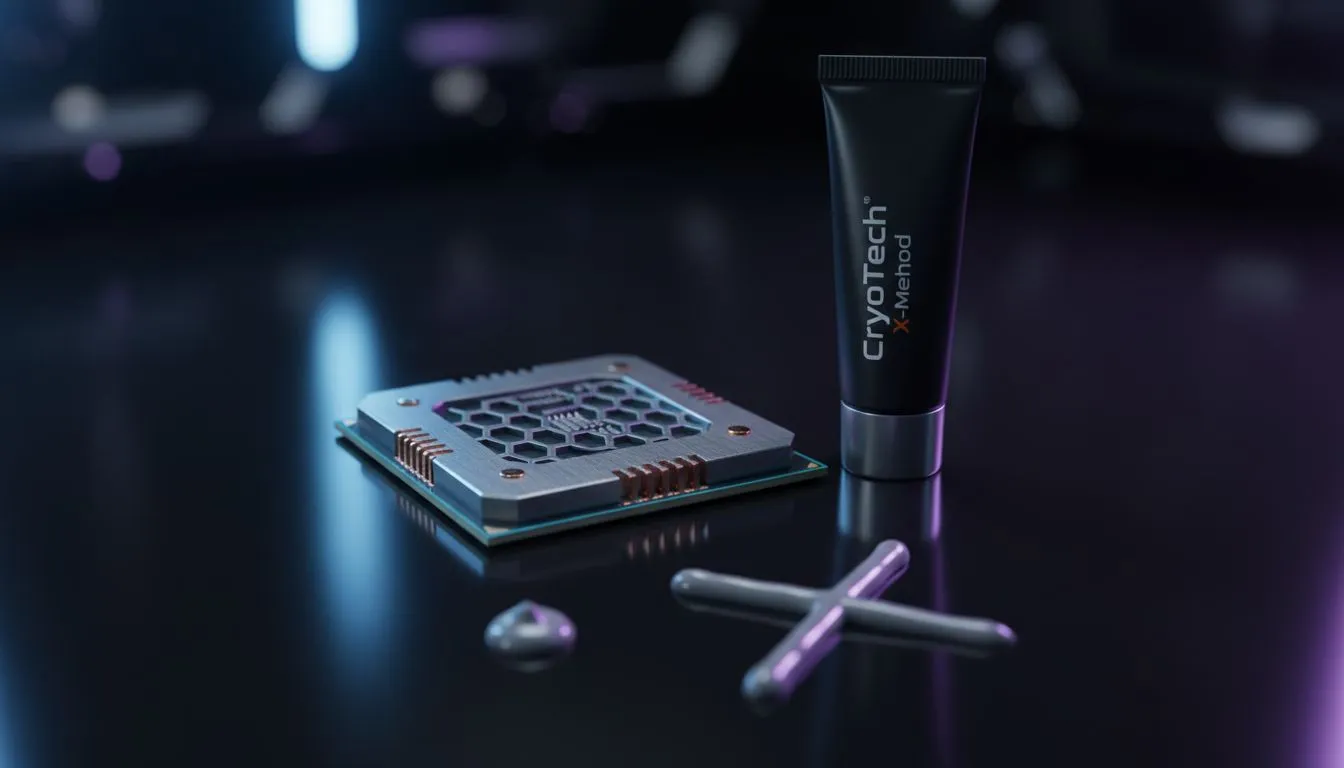
- How it works: You apply a single dot of thermal paste, roughly the size of a small pea (or a grain of rice), directly onto the centre of the CPU. When you mount the cooler, the pressure spreads the paste outwards, creating a thin, even layer.
- Pros: It’s almost impossible to use too much paste, minimising the risk of messy overflow that can get on your motherboard. The central pressure from the cooler mount is strongest in the middle, ensuring excellent contact right over the CPU die.
- Cons: On very large CPUs, like the latest Intel Core i9 or AMD Ryzen 9 chips, a single pea might not spread all the way to the corners, potentially leaving small hot spots. This is why it pairs so well with many traditional and powerful air coolers.
The Coverage-King X Method
The X method is all about ensuring maximum surface area contact from the get-go.
- How it works: You draw two thin, diagonal lines of paste from corner to corner, forming an 'X' across the CPU's surface.
- Pros: This method provides excellent initial coverage, especially on the larger CPUs that are common in high-end gaming rigs. It helps ensure the entire IHS makes contact with the paste, which is ideal for modern All-In-One (AIO) liquid coolers that have large cold plates.
- Cons: The biggest risk here is applying too much paste. An overly thick layer is actually worse for thermal transfer than a slightly-too-thin one. Excess paste can also squeeze out the sides, creating a mess that's a pain to clean.
Pro Tip: The Clean Slate 🔧
Before you apply new thermal paste, always clean the old stuff off completely! Use a lint-free cloth or coffee filter and a few drops of 90%+ isopropyl alcohol. Gently wipe both the CPU and the cooler's baseplate until they are spotless. A clean surface is essential for a good thermal bond.
The Verdict: Pea vs X Method for Your Build
So, which method should you use to apply thermal paste in 2025? The truth is… both are fantastic when done correctly. The best choice depends on your CPU.
- For most mainstream CPUs (Intel Core i3/i5/i7, AMD Ryzen 3/5/7): The Pea Method is your safest and most reliable bet. It's simple, clean, and provides more than enough coverage for these chip sizes.
- For large, high-end CPUs (Intel Core i9, AMD Ryzen 9 & Threadripper): The X Method often gives better, more consistent edge-to-edge coverage, which is beneficial for these heat-generating beasts. Top-tier cooler manufacturers, including brands like Corsair, design their products to handle these chips, and the X method complements them well.
Ultimately, the mounting pressure of your cooler does most of the work. The goal is just to provide the right amount of material for it to spread.
Beyond the Method: What Really Matters ✨
Worrying about the pea vs X method is valid, but don't lose sight of the bigger picture. A perfect thermal paste application won't mean much if the cooler itself isn't up to the task. The single biggest factor in keeping your CPU temperatures low is the quality of your cooler.
Whether you're taming a Core i9 with a beefy 360mm radiator or keeping your Ryzen 5 build quiet and cool, the hardware does the heavy lifting. Get the application right, but invest in the cooling your processor deserves.
Ready to Keep Your Rig Frosty?
The perfect thermal paste application is a great start, but it's only half the battle. A high-performance cooler is what truly unlocks your PC's potential. Explore our massive range of CPU coolers and find the perfect hardware to keep those temps down and framerates up.