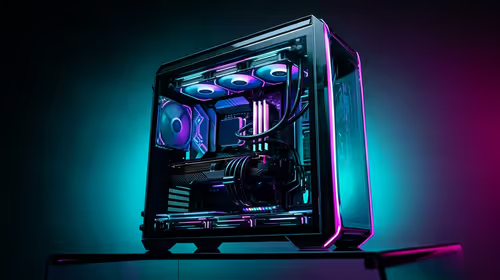
Building a new PC in South Africa? You’ve picked the perfect GPU, a lightning-fast CPU, and a slick case. But hold on… did you think about the fans? In our climate, skimping on cooling is a recipe for disaster. Choosing the right case fans for your PC build isn't just about flashy RGBs; it’s about unlocking the full performance of your hardware and preventing your prized rig from turning into a very expensive space heater.
Why Your Choice of Case Fans for a PC Build Matters
Think of your PC case as a room. Your components, like the CPU and GPU, generate a ton of heat. Without a good ventilation system, that hot air gets trapped, causing temperatures to skyrocket. This leads to "thermal throttling," where your PC intentionally slows itself down to avoid damage. Suddenly, your frame rates in Apex Legends or Warzone start to tank. 📉
Properly selected PC case fans create a steady wind tunnel, pulling cool air in from the outside and pushing hot air out. This simple process keeps your components running at their optimal temperature, ensuring you get the performance you paid for. Even on well-designed budget gaming PCs, effective airflow is crucial for system longevity and stability.
Airflow vs. Static Pressure: The Great Debate
Not all fans are created equal. The biggest decision you'll face when choosing fans for a PC build is between two main types: Airflow and Static Pressure. Understanding the difference is key to an effective cooling setup.
Airflow Fans
As the name suggests, these fans are designed to move a large volume of air in an open, unrestricted space. Their blades are typically wide and steeply curved to scoop up and shift as much air as possible. They are perfect for use as case intake or exhaust fans where there’s nothing directly in their way.
Static Pressure (SP) Fans
SP fans are the specialists. They are engineered to force air through tight, restrictive spaces. Think of pushing air through a dense radiator for your water cooler, a packed CPU heatsink, or a mesh front panel with a dust filter. Their blades are designed to maintain pressure and prevent air from leaking back. Even on powerful systems, like those you'd find in our PCs above R20k range, using the right type of fan for the job is non-negotiable.
Key Factors When Choosing PC Case Fans
Beyond the airflow vs. static pressure debate, a few other specs will guide your purchase. Getting these right ensures your build is both cool and quiet.
Fan Size and Connectors
The most common sizes are 120mm and 140mm. A larger 140mm fan can typically move the same amount of air as a 120mm fan but at a lower RPM (revolutions per minute), making it quieter. Always check your case specifications to see what sizes it supports. Also, look for fans with a 4-pin PWM connector. This allows your motherboard to intelligently control the fan speed based on temperature, keeping your rig whisper-quiet when idle and ramping up only when needed. It’s a standard feature you'll find in most quality PCs under R20k and above.
Pro Tip: Master Your Fan Curves 🔧
Most modern motherboards let you customise your fan curves in the BIOS UEFI. Spend five minutes setting this up. You can create a profile that keeps fans at a barely audible 30% speed until your CPU hits 60°C, then ramps them up aggressively. This gives you the perfect balance between silence for browsing and powerful cooling for gaming.
Noise Level (dBA) and Aesthetics
A fan's noise level is measured in decibels (dBA). Anything under 25 dBA is considered very quiet. And of course, there's RGB! While colourful lighting won't lower your temps, it adds a personal touch to your build. Just remember that performance comes first. A quiet, efficient fan is always a better choice than a loud, flashy one. Many of our best gaming PC deals feature a great mix of both performance and aesthetics.
Putting It All Together for Optimal Airflow
So, you've chosen your fans. How do you install them? The most common and effective setup is to create "positive pressure." This means you have slightly more air coming into the case than going out.
- Intake: Place your fans at the front and/or bottom of the case, pulling cool air in. Use airflow-focused fans here if the path is clear, or static pressure fans if you're pulling through a dense mesh filter.
- Exhaust: Place fans at the back and/or top of the case to expel the hot air that rises naturally.
This simple configuration ensures a constant stream of fresh, cool air flows over your critical components. If you're unsure, checking out professionally assembled systems from our pre-built PC deals can give you a great visual reference for how the pros do it. ✨
Ready to Build a Cooler, Faster PC?
Choosing the right case fans for your PC build is a critical step for performance and stability. Whether you're upgrading your current rig or planning a new one, we've got the cooling solutions to keep your system frosty. Explore our huge range of PC case fans and give your components the cool air they deserve.