Stuck in a VR headset, battling pixelated foes while your own personal heatwave builds? We've all been there. Virtual reality is incredible, but the heat it generates can quickly turn an epic session into a sweaty mess. Effective heat management for your VR gaming room isn't just about comfort; it's about performance and protecting your gear. This guide will walk you through the best strategies for keeping your cool in 2025.
Why Your VR Space Becomes a Sweatbox 🧊
Before we can tackle the problem, we need to understand the culprits. Cooling a VR gaming room effectively means addressing multiple heat sources. But where does all that heat come from?
- Your Gaming PC: The heart of your setup is also a powerful space heater. Your CPU and GPU work overtime to render immersive worlds, generating significant thermal energy that gets exhausted into your room.
- The VR Headset: The display, processors, and tracking sensors packed into that headset all produce heat right against your face.
- You! Physical activity in games like Beat Saber or Blade & Sorcery raises your body temperature, adding to the room's overall heat load.
- The Room Itself: Poor ventilation, direct sunlight, and other electronics all contribute to a warmer environment.
Mastering VR Room Heat Management: From PC to Airflow
A multi-pronged attack is the best way to achieve a comfortably cool VR space. Let's start with the biggest offender: your rig.
Start at the Source: Your Gaming PC 🔧
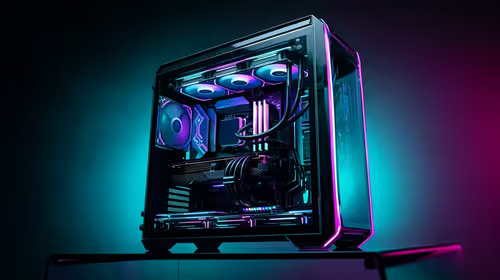
An efficiently cooled PC runs better and pumps less hot air into your room. If your case fans sound like a jet engine during VR sessions, it's a sign your components are struggling. A beast of a PC needs one of our top-tier CPU coolers to stay frosty.
For high-end processors that power demanding VR titles, thermal throttling is a real performance killer. This is where a modern Liquid Cooler (AIO) shines, transferring heat away from the CPU and expelling it directly from the case via a radiator. Brands like CORSAIR are legendary for a reason, offering reliability and exceptional performance. For a high-TDP processor that works hard during VR, a 360mm Radiator setup is your best bet for maximum heat dissipation.
Of course, you can't go wrong with a high-performance Air Cooler either. Modern designs from brands like Noctua and Cooler Master are incredibly efficient and whisper-quiet.
Optimise Your Room's Airflow 🌬️
Once your PC is sorted, focus on the room itself. Stagnant air traps heat. Your goal is to create consistent airflow to carry warmth away.
- Position Your PC Wisely: Ensure your PC's exhaust fans aren't pointing into a corner or directly at your play area. Give it space to breathe.
- Use Fans: A simple pedestal or box fan can make a huge difference. Position it to circulate air across your play space and towards a window or doorway.
- Blackout Curtains: If your VR room gets direct sunlight, thermal blackout curtains are a fantastic investment. They block light and insulate against external heat, keeping the room cooler from the start.
Pro Airflow Tip ⚡
Create a cross-breeze for maximum effect. Open a window and place a fan facing outwards in it. Then, open another window or door on the opposite side of the room. This setup actively pulls hot air out of the room while drawing cooler, fresh air in. It's far more effective than just blowing hot air around.
Simple Hacks for Personal Comfort
Sometimes, the best VR room cooling strategies are the simplest.
- Stay Hydrated: Drink plenty of water before and during your session.
- Use a Fan: A small, quiet fan pointed directly at you can provide immediate relief.
- Take Breaks: Step out of the headset every 30-45 minutes to let your face and the hardware cool down.
Following these steps will transform your VR gaming room from a sweltering cave into a cool, comfortable command centre, letting you focus on the game, not the heat.
Ready to Tame the Heat?
Effective VR room cooling starts with an efficient PC. A hot rig pumps heat into your space, making every session a struggle. Upgrade your cooling and reclaim your immersion. Explore our massive range of PC cooling solutions and find the perfect hardware to keep your system frosty.