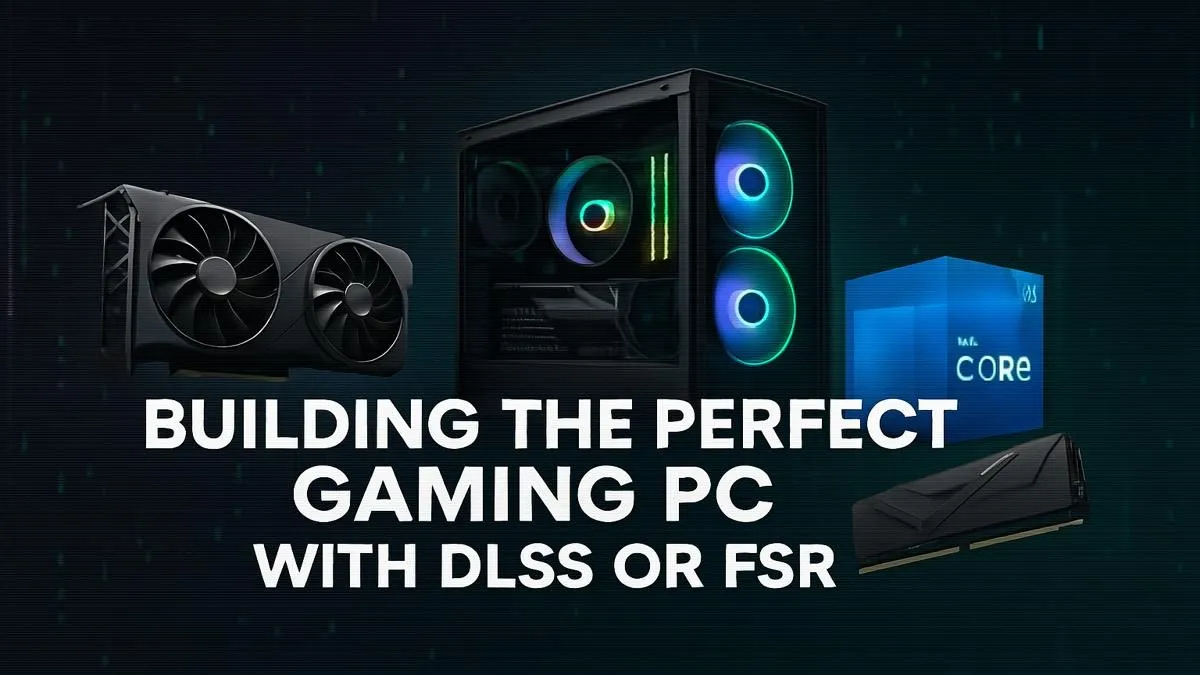
Staring at GPU prices in South Africa and wondering how to get maximum frames without selling a kidney? You're not alone. The secret weapon is upscaling, and the two giants in the ring are NVIDIA's DLSS and AMD's FSR. Choosing between them is the first step in crafting your ultimate gaming PC. So, which camp should your new DLSS vs FSR build fall into? Let's break it down. 🚀
Understanding the Tech: DLSS vs FSR Explained
At its core, upscaling technology is simple genius. Your graphics card renders a game at a lower resolution (like 1080p) and then uses clever algorithms or AI to stretch it to your screen's native resolution (like 1440p or 4K). The result? A massive boost in frames per second (FPS) with minimal impact on visual quality.
NVIDIA's Secret Sauce: DLSS
DLSS, or Deep Learning Super Sampling, is NVIDIA's exclusive tech. It uses artificial intelligence and dedicated Tensor Core hardware found only on their RTX graphics cards to perform its magic. Because it's trained on super-high-quality game images, DLSS is often praised for its incredible ability to reconstruct a sharp, detailed picture that can sometimes look even better than the native resolution. If you're planning a build around one of NVIDIA's range of GeForce RTX cards, DLSS is a major reason why.
AMD's Open Approach: FSR
FSR, or FidelityFX Super Resolution, is AMD's answer. Its biggest advantage is that it's open-source. This means it doesn't require specialised hardware and works on a huge variety of GPUs. This includes AMD's Radeon GPUs, older NVIDIA cards (GTX series), and even Intel's Arc cards. While early versions traded a little more image quality for performance, the latest FSR iterations have closed the gap significantly, making it a powerful option for any gamer.
The Big Question: Which Upscaler is Right for Your Build?
So, how do you decide when planning your DLSS vs FSR build? It really comes down to a classic trade-off: premium features versus broad compatibility and value.
- Image Quality: In a direct comparison, most experts agree that DLSS 3, with its AI-powered Frame Generation and Ray Reconstruction, currently holds a slight edge in producing the cleanest, most stable image. ✨
- Accessibility: FSR wins this hands down. If you're on a tighter budget or want to upgrade an older rig, FSR gives you a path to higher frame rates without forcing you into a specific, and often more expensive, ecosystem.
- Game Support: Both technologies are now widely supported in major new releases. However, some games might launch with support for only one. It's always a good idea to check which tech your favourite titles use before committing.
Builder's Pro Tip 🔧
Before you pull the trigger on a new GPU, check the official support lists for your favourite games. Sites like PCGamingWiki are fantastic resources. A card's raw power means little if the games you play don't support its best features. A few minutes of research can save you a lot of buyer's remorse!
Crafting Your DLSS or FSR Build: Key Components
Your choice of upscaler will directly influence your GPU purchase, which is the heart of any gaming PC.
A DLSS build is an investment in the NVIDIA ecosystem. You're choosing an RTX 20, 30, or 40-series card to get access to not just DLSS but also class-leading ray tracing performance and features like NVIDIA Reflex. It's the premium choice for gamers who want the best visual experience possible.
An FSR build offers incredible flexibility. You can build a powerful all-AMD machine, pairing a Ryzen CPU with a Radeon GPU for great synergy. Or, you could use FSR to breathe new life into an older NVIDIA GTX 10-series card. This approach is perfect for the savvy South African builder focused on maximising performance per Rand spent. For many, finding the best graphics card deals is the starting point, and FSR's open nature makes almost any modern card a viable option.
Ultimately, there's no single "better" option. The best choice is the one that aligns with your budget, your most-played games, and your performance goals.
Ready to Build Your Frame-Slaying Rig?
Whether you're Team Green for DLSS or Team Red for FSR's flexibility, the perfect build is waiting. The DLSS vs FSR build debate ends with what's right for your games and your wallet. Use our Custom PC Builder to craft your ultimate South African gaming PC today.