Lossless Scaling: Double FPS on Handhelds Explained
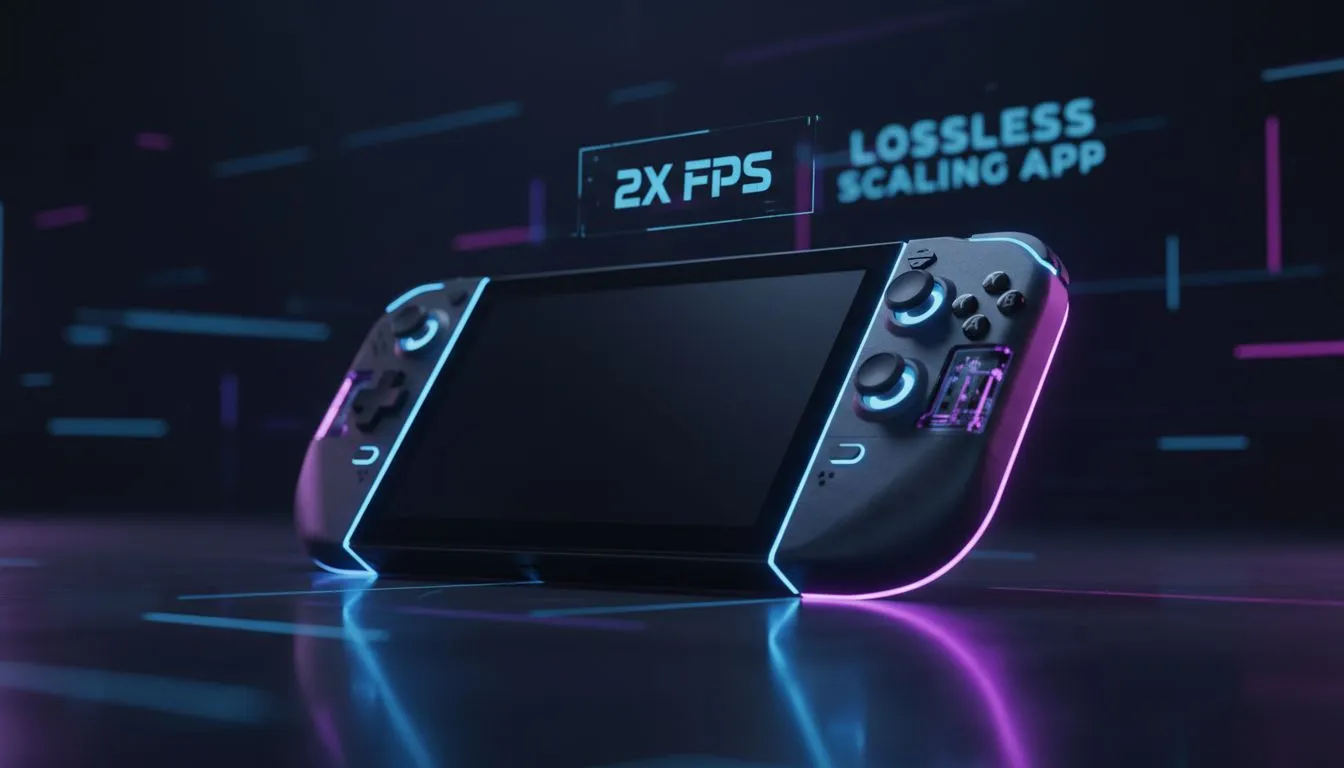
Tired of your handheld stuttering through the streets of Night City or the vast landscapes of Elden Ring? You aren't alone. While portable gaming is massive in South Africa right now, raw performance often hits a wall with demanding AAA titles. Enter Lossless Scaling… a simple app that can effectively double your frame rate. It sounds like magic, but it’s pure software engineering. Let’s break down how to turn your choppy gameplay into a buttery-smooth experience. 🚀
What is Lossless Scaling?
Lossless Scaling (LS) is a utility available on Steam that costs less than a takeaway burger (around R130 depending on the exchange rate). Originally designed to upscale retro games, it has evolved into a powerhouse tool featuring "LSFG" (Lossless Scaling Frame Generation).
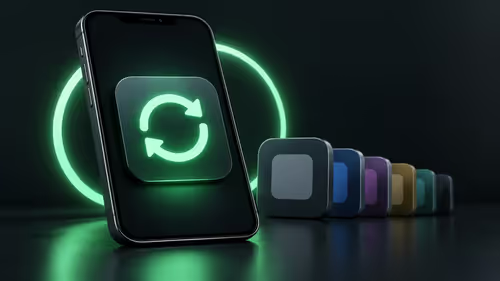
Unlike DLSS or FSR 3, which require game developers to integrate them, LS works at the driver level. It takes the image on your screen, applies spatial upscaling, and inserts generated frames between real ones. This means you can turn a 30 FPS experience into a visual 60 FPS, or 48 FPS into 96 FPS, on virtually any game.
Why Handhelds Need This Tech
Portable PCs are marvels of engineering, but they have power limits. To get acceptable battery life and temperatures, we often have to cap performance.
If you own an ASUS ROG Ally, you know the screen supports 120Hz. However, hitting 120 FPS in modern games natively is nearly impossible on an APU. By rendering the game at a lower resolution (like 720p) and using LS to upscale and frame-gen to 1080p/120Hz, you unlock the panel's full potential without melting the device.
Similarly, the massive, high-resolution display on the Lenovo Legion Go is beautiful, but demanding. Running games at native 1600p is a struggle. Lossless Scaling allows you to render at 800p—saving battery and GPU power—while the app handles the heavy lifting to make it look crisp and fluid.
Smoothness Pro Tip ⚡
For the best results with Lossless Scaling, lock your in-game frame rate to exactly half of your screen's refresh rate. If your handheld is set to 60Hz, cap your game at 30 FPS. This gives the software a consistent rhythm to insert new frames, eliminating stutter and 'tearing'.
Does It Work on All Devices?
The beauty of this software is its universality. It doesn't care if you are running AMD, NVIDIA, or Intel graphics. This is great news for owners of the MSI Claw. While Intel's drivers are improving rapidly, having a universal tool to boost smoothness in older titles or unoptimised indie games is a massive win for the Claw ecosystem.
How to Set It Up
Getting this running is easier than configuring a custom fan curve. Here is the basic workflow:
- Game Settings: Set your game to "Windowed" or "Borderless Windowed" mode. This is crucial; it won't work in exclusive Fullscreen.
- Cap Your FPS: As mentioned in the tip above, cap your frame rate (e.g., 30, 40, or 60 FPS).
- Launch LS: Open the Lossless Scaling app. Select "LS1" or "FSR" for upscaling type, and turn on "LSFG" for frame generation.
- Activate: Click "Scale" in the app, then quickly switch back to your game window. After 5 seconds, the magic happens.
The Trade-off: Latency vs. Visuals
Is it perfect? Not quite. Because the software has to hold a frame to generate the next one, there is a slight penalty to input latency. In fast-paced competitive shooters like Valorant or CS2, you might feel a delay.
However, for single-player adventures, RPGs, and racing sims, the trade-off is almost invisible. The visual fluidity usually outweighs the millisecond delay for most casual gamers.
Final Thoughts
Software like Lossless Scaling extends the lifespan of your hardware. It allows you to enjoy next-gen graphics on portable devices today. If you are looking to jump into the world of portable PC gaming, check out our extensive range of handheld gaming consoles to find the rig that fits your budget and playstyle. ✨
Ready to Game on the Go?
Whether you need the raw power of the Legion Go or the ergonomics of the ROG Ally, Evetech is SA's home for portable performance. Browse our handheld gaming deals and take your library anywhere.