Why Smooth Motion Matters on the Go ⚡
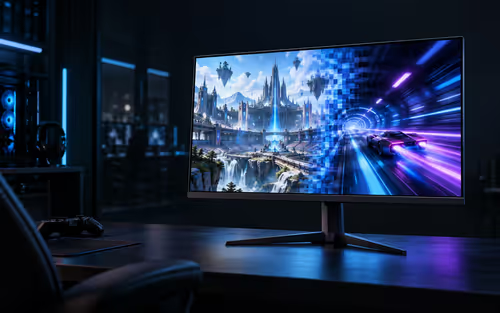
The action heats up, your framerate dips, and suddenly the screen tears like cheap paper. It breaks the immersion instantly. That’s where Variable Refresh Rate (VRR) saves the day. For South African gamers taking their library on the road, VRR isn't just a luxury feature anymore... it’s an absolute necessity for smooth gameplay.
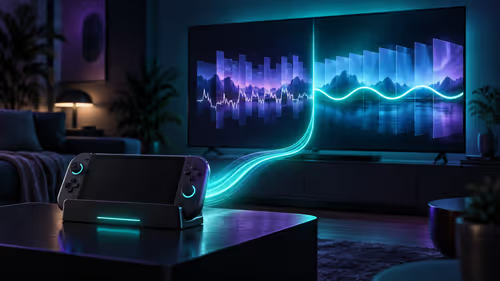
When you are playing on a battery-powered device, every frame counts. Unlike a massive desktop rig that can brute-force a locked 60 fps, portables have to balance performance with battery life. This often means framerates fluctuate wildly between 40 and 60 fps. Without VRR, this fluctuation causes stuttering and tearing (where the screen shows two different frames at once). With VRR for handhelds, the display syncs perfectly with the GPU's output, making 45 fps feel surprisingly fluid.
The Hardware Landscape: Who Has It?
As we move toward 2025, the distinction between a "good" handheld and a "great" one often comes down to the screen technology. Early adopters quickly realised that raw power isn't enough if the display can't handle the dips.
The pioneers in this space, particularly the ASUS ROG Ally variants, made VRR a headline feature. It allowed gamers to run demanding AAA titles at lower framerates without the visual jitter that usually ruins the experience.
However, the market is competitive. We are seeing massive innovation from other giants. The Lenovo Legion Go brings a larger, higher-resolution screen to the table, challenging how immersive portable play can be. Meanwhile, the Intel-powered MSI Claw is pushing the envelope on what different chip architectures can achieve in a small form factor.
If you are browsing for handheld gaming consoles in South Africa right now, checking the spec sheet for FreeSync or VRR support is the smartest move you can make. It essentially "future-proofs" your device for the heavier games coming in 2025.
Optimisation Pro Tip 🔧
Don't rely on VRR alone to save your battery. Even with a VRR screen, use your handheld's command centre to cap your framerate at 45 or 60 FPS. This prevents the GPU from working harder than necessary on menu screens or lighter areas, giving you an extra 20–30 minutes of playtime during a blackout.
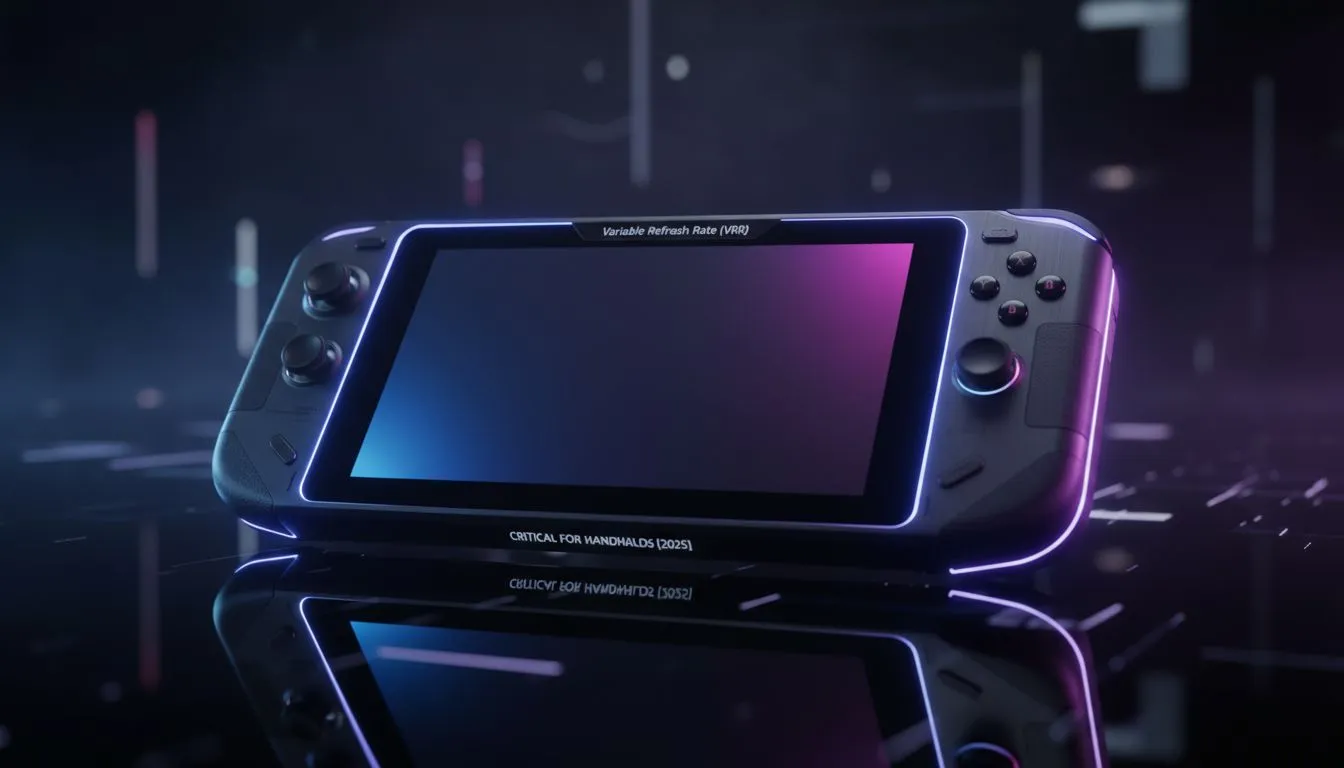
Is VRR Critical for 2025? 🚀
Absolutely. Game engines like Unreal Engine 5 are becoming the standard, bringing incredible lighting and detail but demanding heavy system resources. Handhelds, constrained by thermal limits and battery size, will struggle to maintain locked 60 fps in these next-gen titles.
VRR for handhelds acts as a safety net. It turns an unstable 48 fps experience into something that feels buttery smooth. As games get heavier, this tech stops being an "optional extra" and becomes the bridge that makes high-end PC gaming possible in the palm of your hand.
Don't Let Screen Tearing Ruin Your Game Whether you need the portability of the Ally or the screen real estate of the Legion, we have the gear to keep you gaming through the dark. Shop our full range of Handheld Consoles and experience true portable freedom today.