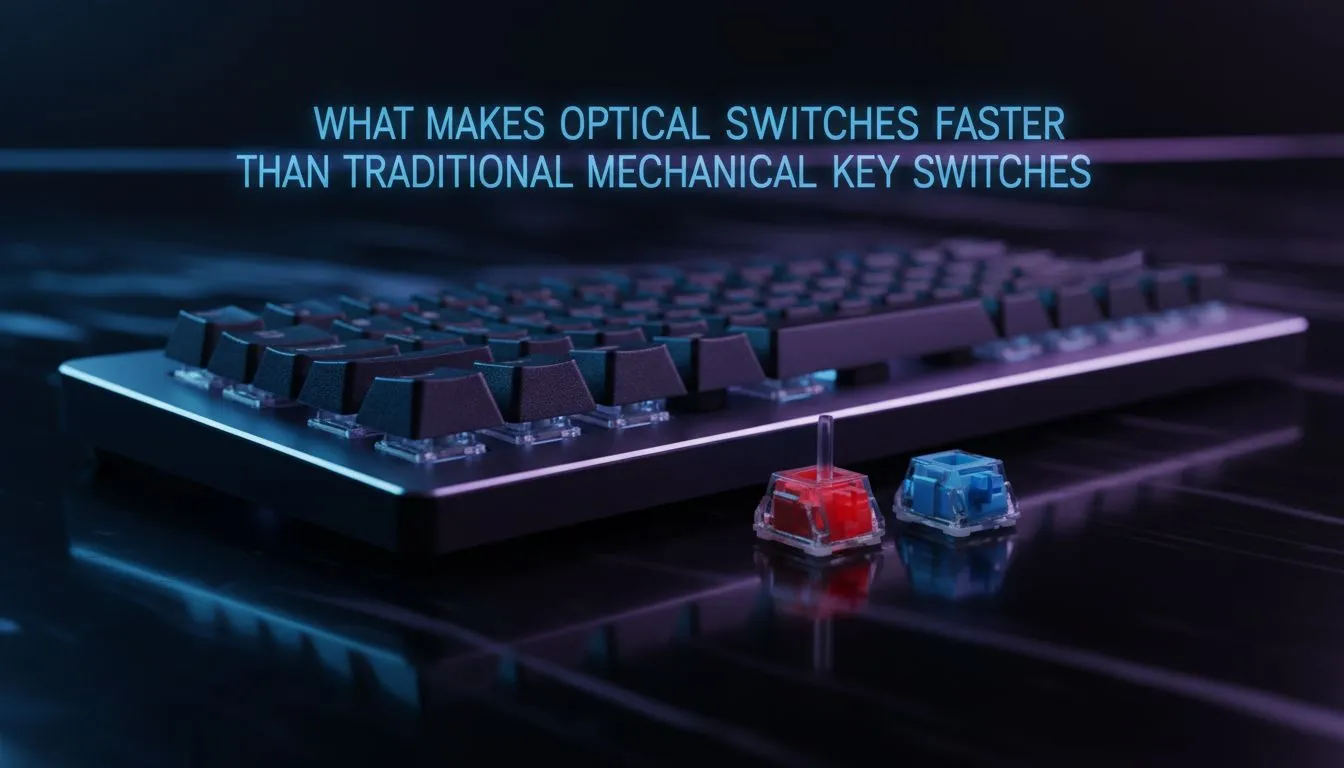
Why optical switches feel faster to South African gamers ⚡
If your reflexes are the difference between a crisp headshot and a respawn, latency matters. Optical switches shave milliseconds off input by replacing metal contact with light — that means crisper double-taps and fewer missed inputs. For gamers and buyers in South Africa, the payoff is snappier play and longer switch life; check current keyboard deals and price ranges on Evetech to see options from around R999 upwards (great value during sales) https://www.evetech.co.za/best-gaming-keyboard-deals/x/055.aspx.
How optical switches work compared to mechanical switches
Optical switches use an infrared beam or light sensor to detect keystrokes, while traditional mechanical switches rely on metal contacts that physically close a circuit. That change removes debounce delay inherent to contact bouncing, which contributes to lower effective actuation latency. For a hands‑on comparison and models to try in SA, see our compact keyboard listings and cheapest options on Evetech https://www.evetech.co.za/components/buy-cheapest-gaming-keyboard-in-south-africa-52.aspx.
Gaming Switch Tip 🚀
When testing keyboards, look for stated actuation distance and whether the switch is linear or tactile. Linear optical switches often feel fastest for rapid repeats; tactile ones help with conscious key presses. Try a keyboard-mouse combo to sample switch feel before committing.
Real benefits for gameplay, from pro practice to weekend raids ✨
Lower input latency matters in high-FPS and fighting games. Optical switches give consistent actuation across the travel, which helps with techniques like jitter tapping and double-tap macros. They often boast longer lifespans since fewer moving contacts mean less wear. If you want to test combos or kits that highlight switch types, browse Evetech's keyboard and mouse bundles to compare real setups used by local players https://www.evetech.co.za/buy-keyboard-mouse-combo/x/1583.aspx.
Wired vs wireless: latency and lifestyle choices
Wired keyboards still offer the simplest path to minimal latency, but modern wireless tech is closing the gap. If ultimate speed is your priority, stick wired; if desk cleanliness wins, premium wireless options can be fine. See both wired and wireless keyboard selections and filter by connectivity on Evetech to match your rig and budget https://www.evetech.co.za/components/buy-cheapest-gaming-keyboard-in-south-africa-52.aspx?attributes-connectivity=Wired and https://www.evetech.co.za/components/buy-cheapest-gaming-keyboard-in-south-africa-52.aspx?attributes-connectivity=Wireless.
Making the choice: practical buying tips
- Try before you buy when possible; switch feel is personal.
- Prioritise actuation distance and switch type over marketing terms.
- Factor warranty and local support; hardware sold on Evetech includes local returns and service, which matters in SA.
Ready to Find Your Perfect Match?
The Mac vs Windows debate is complex, but for maximum power, choice, and value in South Africa, Windows is hard to beat. Explore our massive range of laptop specials and find the perfect machine to conquer your world.