


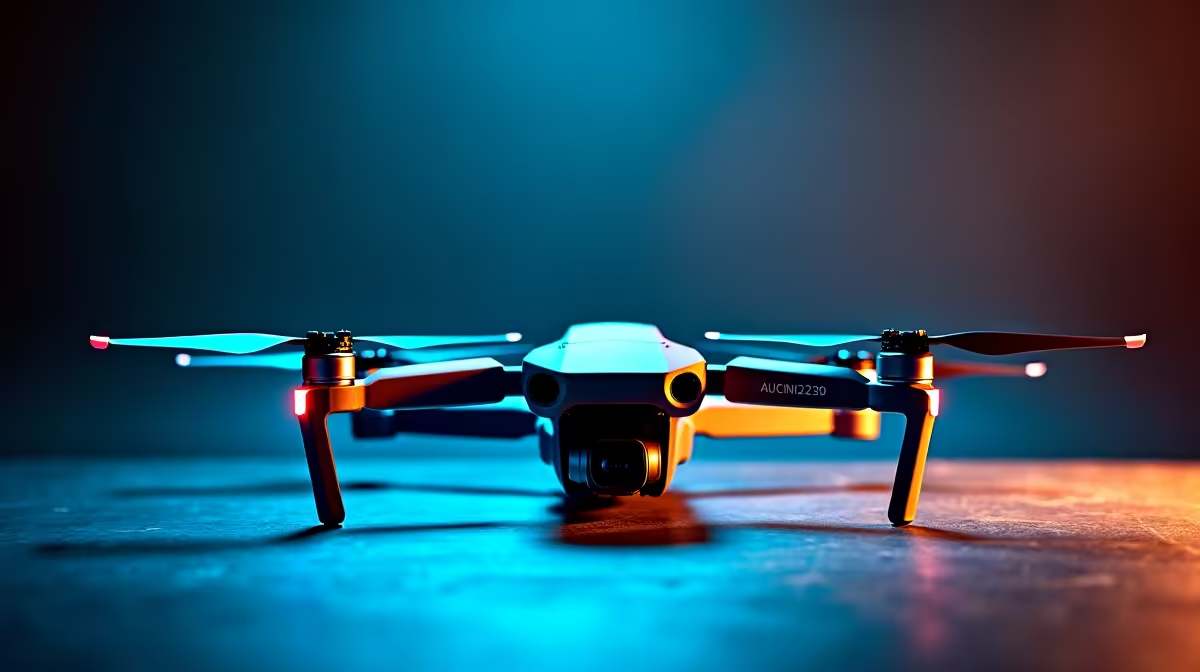
Unbox a new drone in South Africa and the first worry is usually paperwork: do you owe the authorities a drone registration before that first flight over the garden? For ordinary recreational flyers, the answer is more relaxed than most people fear, but it comes with conditions that absolutely still bind you. Here is how to work out exactly where you stand before you take off.
Quick Answer
For private recreational use, the SACAA exempts privately operated drones under 7kg from mandatory registration and licensing. You do not register a hobby drone for personal flying. But every operational restriction still applies in full: altitude limits, distance from airports, line-of-sight rules and no-fly zones. Fly commercially and a completely different, fully regulated set of requirements kicks in.
Step 1: Confirm Your Drone Is Under 7kg
The first thing to check is weight, because it sets which rules you fall under. Most consumer camera and toy drones sit comfortably under 7kg, often well under 1kg. Weigh yours, including battery and any attachments, and confirm it is below the 7kg threshold.
If you are below 7kg and flying purely for your own recreation, you fall into the exempt private category. If you are at or above 7kg, or flying for any kind of payment or business purpose, you are no longer in this lane and the lighter rules below do not cover you.
Step 2: Confirm It Is Genuinely Private Recreational Use
The exemption hinges on the word private. It means you own the drone, you fly it for your own enjoyment, and no money or commercial benefit is involved. The moment you accept payment for footage, fly for a client, or use the drone to advance a business, it becomes a commercial operation with its own licensing.
Be honest with yourself here. Posting a clip for fun is recreational. Selling that clip, or shooting a property listing, is commercial, and that distinction decides which rule book you live under.
If you are still shopping for a drone that fits cleanly in the recreational category, browsing the drones and smart home range at Evetech shows current models with their weight and feature breakdowns.
Step 3: Learn the Restrictions That Always Apply
No registration does not mean no rules. Even an exempt private flyer must respect the operational limits, and these are the part people get wrong.
Maintain direct, unobstructed sight of the drone throughout the flight - no flying behind buildings, trees or beyond the point where you can track it with your own eyes. Stay below the legal height ceiling and do not climb into airspace used by crewed aircraft. Keep well clear of airports, helipads and any controlled airspace, and never fly near a fire, accident scene or other emergency operation. Do not fly over crowds, gatherings or other people's property without good reason, and respect privacy.
Breaking these carries real consequences regardless of your drone's weight, so treat them as the actual law they are.
Step 4: Respect No-Fly Zones and Privacy
Certain areas are simply off-limits, including the vicinity of airports, national key points, prisons, police stations and other restricted sites. Before flying somewhere new, check whether the area is restricted rather than assuming an open field is fair game.
Privacy matters too. Flying a camera drone over a neighbour's yard or filming people without consent invites complaints and worse. Stick to spaces where you have permission and a clear, unobstructed view.
Step 5: Know When You Cross Into Commercial Territory
If your flying turns commercial, whether through paid work, business use, or a drone at or above 7kg, the relaxed exemption falls away entirely. Commercial operators face a structured regime of operator certification, pilot licensing and approvals under the relevant civil aviation rules.
If that is your direction, do not try to stretch the recreational exemption to cover it. Look into the proper commercial requirements from the outset, because the gap between the two categories is large and the penalties for operating commercially without the right approvals are serious.
Frequently Asked Questions
Do I need to register my hobby drone in South Africa?
If it is under 7kg and used purely for private recreation, the SACAA exemption means you do not register or licence it. Larger drones and any commercial use fall outside this exemption and do require formal compliance.
Does no registration mean no rules?
No. All operational restrictions still apply: line of sight, altitude limits, distance from airports, no-fly zones and privacy. The registration exemption only removes the paperwork, not the obligation to fly safely and legally.
What counts as commercial drone use?
Any flying for payment, for a client, or to benefit a business is commercial, even if the drone is small. Selling footage or shooting for a property listing both cross the line into the regulated commercial category.
How high can I legally fly a recreational drone?
You must stay below the legal height ceiling and well clear of airspace used by crewed aircraft. You must also be able to see the drone with your unaided eyes throughout the entire flight, which naturally limits how far and how high it goes.
Can I fly near an airport if I stay low?
No. You must keep well clear of airports, helipads and controlled airspace regardless of altitude. These are firm restrictions, and flying near them is one of the most serious breaches a recreational pilot can commit.
Flying for fun in South Africa is refreshingly accessible if you stay under 7kg and follow the rules. Browse the current drone and smart device lineup in the smart home range at Evetech, and check the accessories best sellers at https://www.evetech.co.za/accessories-best-sellers/x/1919 for the spare batteries and cases that keep you flying.










