Quick Answer
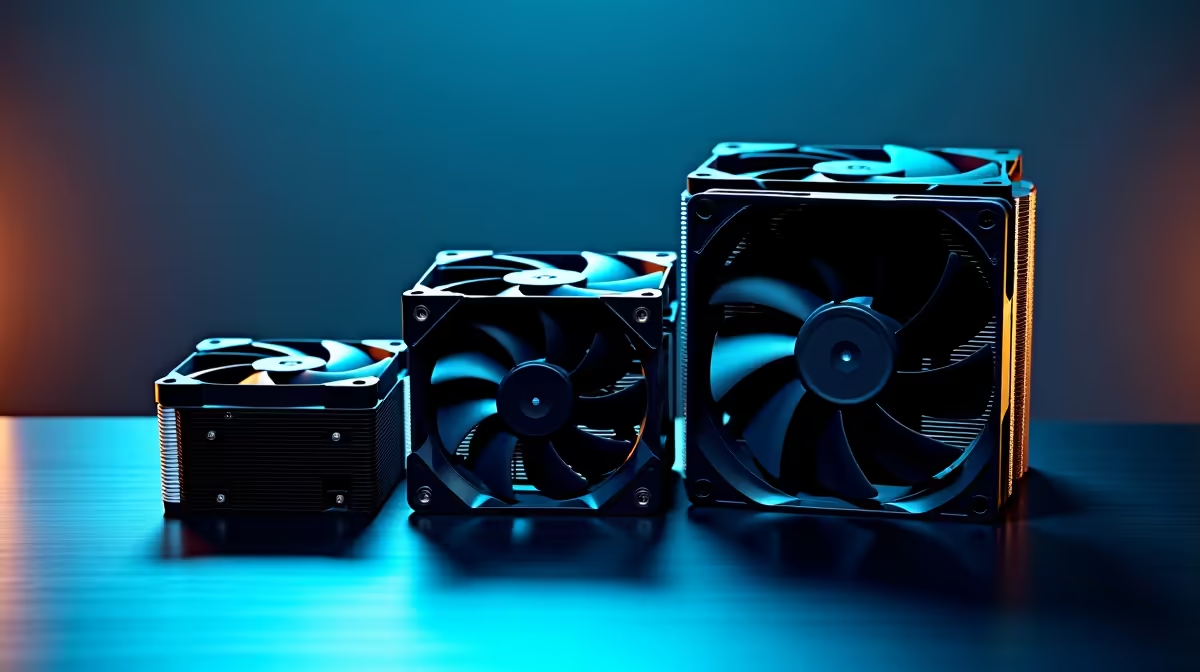
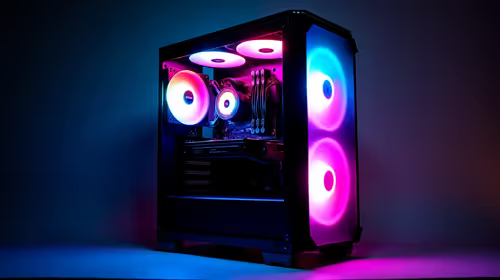
Use budget for the minimum reliable spec, balanced for quieter or stronger hardware, and premium only for daily use. For quiet PC builds, the balanced tier is usually the strongest SA value. A sensible SA shortlist starts with fans such as Arctic P12 PWM, Cooler Master SickleFlow 120, or Noctua NF-A12x25, checked against a broad R120-R550 per fan category band and the exact ports, size, or mounting points in your setup.
Start with airflow direction
Do the physical check before comparing marketing claims. Measure the desk, case, room, bag, or TV unit where the gear will sit, then confirm the connection type and clearance limits. 120 mm pwm control, 1,200-1,800 rpm, and low vibration mounts is more useful than a feature that never affects the task.
For quiet PC builds, the common mistake is buying the cheapest item that technically works and then adding cables, adapters, stands, or replacement parts later. Keep the first purchase simple: one device, the right connector, and a local warranty path.
Noise, headers and fit
Use numbers to filter the shortlist. Check wattage, Hz, RPM, VA, frame rate, USB speed, or battery hours where those figures apply, then ignore claims that cannot be tested at home. If gaming is involved, aim for steady 60 fps or 144 Hz support only where the PC, screen, and network can use it.
Quiet setups need predictable behaviour. Prefer PWM fan curves, closed-back headset isolation, and button-level controls so late-night gaming stays controlled.
Match fan spend to quiet PC builds
The right option is the one that solves the daily irritation. In a shared flat, noise and cable clutter matter. In a campus room, size and packability matter. In a family gaming space, easy controls and durability matter. Do not pay extra for a premium feature until the basic fit is confirmed.
FAQ
What should South African buyers check first?
Check compatibility, size, and included cables before brand preference. A case fan that needs a missing adapter or blocks another part of the setup is the wrong purchase even if the headline spec looks strong.
Is the cheapest option good enough?
Sometimes, but only when it meets the basic spec and will not be moved often. For most buyers, one step above the cheapest option is safer because build quality, controls, and warranty support are usually better.
When is premium worth paying for?
Premium is worth it when the gear is used daily, shared by several people, or protects a more expensive PC or console setup. If it only adds styling, spend the difference on comfort, stability, or performance.
confirm the exact port, cable length, mounting space, and one key spec for your setup; if any one is unclear, compare another case fan.