A South African podcast lives or dies on its sound. Listeners will forgive a plain thumbnail, but they will not sit through hollow, echoey audio that sounds like it was recorded in a bathroom. The good news is that professional podcast audio gear does not demand a studio budget. Three core upgrades, a cardioid mic, a sturdy boom arm and a pop filter, lift the average voice recording from amateur to broadcast-ready, and you can build from there as the show grows.
Quick Answer
The essential podcast upgrades are a cardioid microphone, a stable boom arm and a pop filter. The cardioid pattern rejects room noise, the arm holds the mic at mouth height, and the filter tames plosives. Together they fix the three problems that make home audio sound cheap.
🎙️ Start With the Microphone That Rejects Your Room
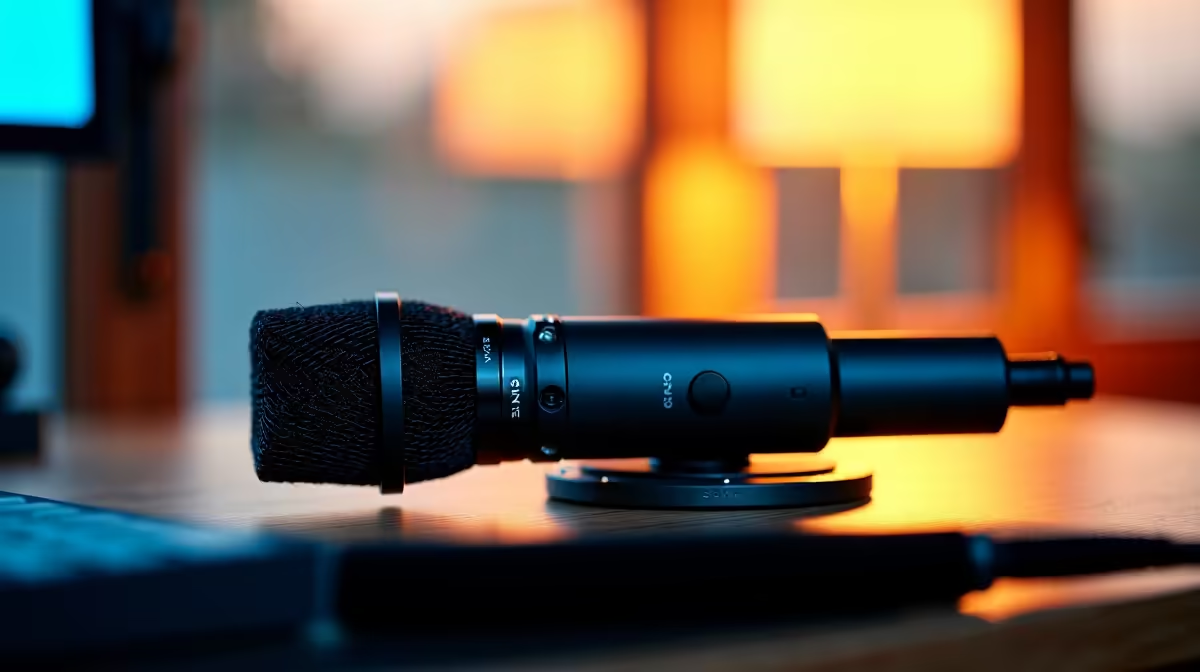
Your microphone choice does more for podcast quality than anything else, and the single most important spec is the pickup pattern. You want cardioid. A cardioid mic focuses on what is directly in front of it, with sensitivity dropping sharply toward the sides and rear, which is exactly what you need in an untreated South African flat or home office where echo and street noise are constant.
The next decision is USB or XLR. A USB cardioid mic plugs straight into your laptop and gets you recording today, which is ideal for a solo show finding its feet. XLR mics need an interface or mixer but scale better to multiple hosts and give you room to grow. Many creators start USB and move to XLR once a second presenter joins.
Whichever you pick, resist the urge to overspend on the mic before you have sorted out the room and the stand. A mid-range cardioid in a treated corner beats an expensive mic shouting across a bare lounge.
🦾 A Boom Arm Is a Quality Upgrade, Not a Luxury
People treat the boom arm as an accessory. It is closer to a core component. Resting a mic on a desk stand means every keyboard tap, mug placement and accidental knock travels straight up into the recording as a thud. A boom arm fixes to the edge of the desk and holds the mic suspended in the air, breaking the vibration path from the surface to the capsule.
It also lets you place the mic correctly. Good podcast technique puts the capsule roughly 15 to 20cm from your mouth, slightly off to one side. A desk stand forces you to hunch down to that height. An arm brings the mic to you, so you sit up straight and speak naturally for a full episode without backache.
Buy metal, not plastic. A steel arm rated to hold your mic's weight, often up to around 1.5kg, will not sag or droop mid-session the way a flimsy plastic one does. Check the clamp opens wide enough for your desk, since chunky gaming desks can run 40mm or thicker.
🔧 The Pop Filter and the Quiet Room
The third core upgrade is the cheapest and most overlooked: a pop filter. Plosive consonants, the hard p and b sounds, fire a burst of air that a sensitive mic records as an ugly low thump. A pop filter scatters that air before it hits the capsule, and the improvement on a vocal track is immediate.
Beyond the three core items, the highest-value thing you can do costs almost nothing: treat your space. Soft surfaces kill the echo that screams home recording. A room with a carpet, curtains and a stocked bookshelf will sound dramatically better than a bare one, no gear required.
Pro Tip ⚡
Record a 30-second test in your chosen room before buying anything else. If you hear echo bouncing back, hang a duvet on the wall behind you and re-record. That free fix often makes a bigger difference than your next R2,000 of equipment.
💰 Building the Setup in the Right Order
Spend in sequence, not all at once. A sensible South African starter path looks like this: a cardioid USB mic and pop filter first, then a metal boom arm, then room treatment with whatever soft furnishings you already own. That gets a solo show sounding professional for a reasonable outlay.
The next tier, once the show has momentum, is the move to XLR. An audio interface or a compact mixer opens the door to a second host, hardware gain control and better preamps. Add a second matching mic and a second arm, and you have a two-person studio.
Headphones belong on the list too, and closed-back ones specifically. Monitoring as you record lets you catch a clipping level or a noise problem in the moment, rather than discovering it in the edit when it is too late to fix. Recording blind is how good episodes get ruined.
The pattern across every tier is the same. Fix the fundamentals, voice clarity, stable mounting and a quiet room, before chasing fancier gear. A clean recording from modest equipment will always beat a noisy one from expensive equipment.
Frequently Asked Questions
Do I need an XLR mic to start a podcast, or is USB fine?
USB is perfectly fine to start. A quality cardioid USB mic plugs straight into your laptop and delivers professional results for a solo show. XLR becomes worth it when you add a second host or want hardware gain control through a mixer. Many successful South African podcasts began on a single USB mic and upgraded only once they had grown.
How much should I budget for a first podcast setup?
You can put together a solid solo setup, starting with a cardioid mic, a steel boom arm and a plosive filter, for a modest outlay, then layer in room treatment using soft furnishings you already own. Prioritise the mic and the arm, since those affect quality most. Spending more on a fancy mic while ignoring the room is the most common money-wasting mistake.
Why does my podcast sound echoey even with a good mic?
Echo comes from your room, not your microphone. Hard walls, tiled floors and bare surfaces bounce sound back into the mic. No microphone fixes that on its own. Add soft surfaces like a rug, curtains and a full bookshelf, or hang a duvet behind you while recording. Room treatment usually improves clarity more than upgrading the mic.
Is a boom arm really necessary for podcasting?
It is close to essential. A boom arm isolates the mic from desk thumps and keyboard taps, and it positions the capsule at mouth height so you sit comfortably. A desk stand transmits every vibration and forces you to hunch. For long recording sessions, a sturdy metal arm pays for itself in cleaner audio and better posture.
What should I upgrade after the three core items?
Add closed-back headphones so you can monitor levels as you record and catch problems live. After that, the move to an XLR mic with an interface or mixer gives you room for a second host and better preamps. Beyond gear, keep investing in room treatment, since a quiet space lifts every recording you make from then on.
Ready to build a podcast setup that sounds professional?
Explore the USB microphone range and matching boom arms for South African creators, and start your show with audio your listeners will actually stay for.