A handheld gaming PC promises console-style play in your hands, but the gap between models is wide and the chip is fixed for life. Buying the right tier the first time matters more here than on a desktop you can upgrade piece by piece.
Quick Answer
For most handheld gaming, a Steam Deck OLED or an ASUS ROG Ally Z1 Extreme is the sweet spot, holding 40 to 60 fps in many titles at the native screen resolution. Entry handhelds near R8,000 to R10,000 handle indie and esports titles well; demanding AAA play wants the R12,000-plus tier.
The Specs That Decide Frame Rates
Three things move handheld performance. The APU (AMD Z1 Extreme or the Steam Deck's custom chip) sets raw power and how high you can push settings. RAM matters more than on a desktop, since 16GB is shared between system and graphics; busy games stutter on less. The screen resolution and refresh rate set the target, so a 1080p panel demands far more than a 720p or 800p screen at the same settings. A TDP slider lets you trade frames for battery on the move.
Buy Now Or Upgrade Later For Handheld mode shows up
Handhelds are hard to upgrade beyond storage, so the chip you buy is the chip you keep. If your current device already holds a playable frame rate in the games you replay, an SSD swap or a fast microSD is the cheaper move. If it drops below 30 fps in the titles you care about for handheld mode shows up, buying up a tier now saves a frustrating year. Match the device class to the games you actually load, not the heaviest benchmark.
Power, Heat And Battery On The Move
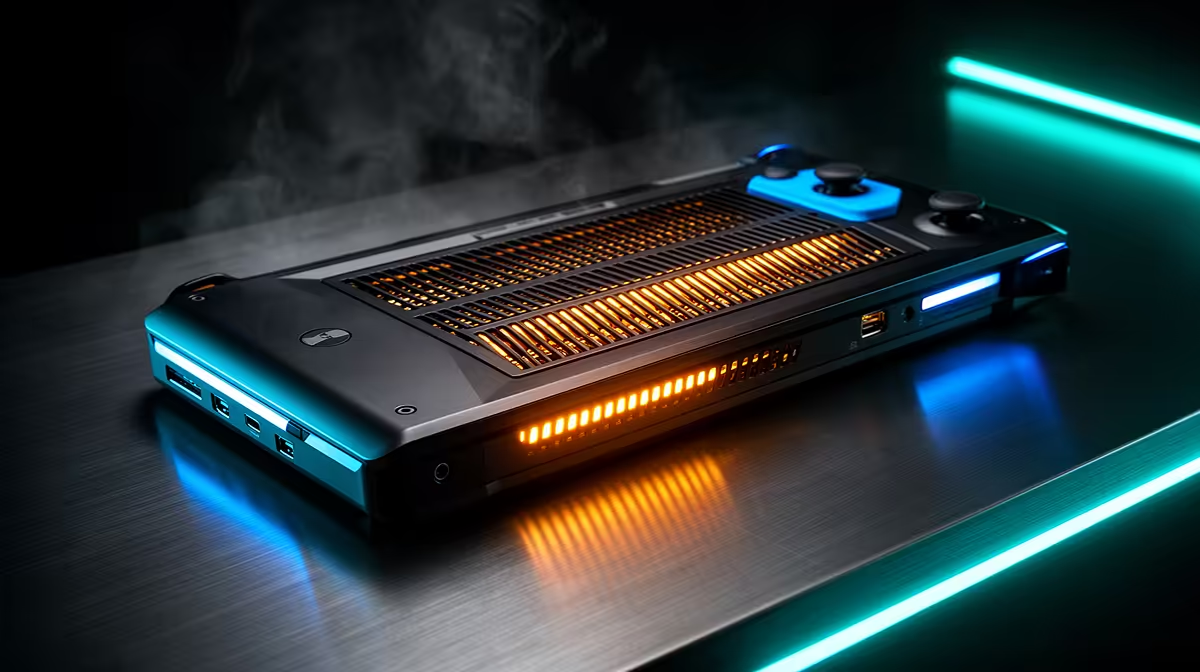
A handheld trades sustained power for portability, so heat in handheld mode is normal but should not throttle hard. Lowering the TDP from 25W to 15W roughly doubles battery life while costing some frames, which is a fair trade on a commute or flight. Keep the vents clear, use a fast charger that supports the device's wattage, and dock to a screen and controller for couch sessions where battery and heat stop mattering.
Tailored To Handheld mode shows up
Match the choice to how, where and how often this kit is used in your space, since the right fit for your routine beats a spec sheet that flatters a different use case. For this use, pick the device tier that clears a playable 40 to 60 fps in the games you replay, with entry handhelds near R8,000 and the strong tier from about R12,000.
FAQ
Which handheld gives the best value in SA?
The Steam Deck OLED and ASUS ROG Ally Z1 Extreme lead on frames per Rand around the R10,000 to R13,000 mark. Cheaper handhelds near R8,000 suit indie and esports titles but struggle with demanding AAA games.
Can a handheld replace a gaming laptop?
For portable play, often yes, especially docked to a monitor and controller. For heavy AAA at high settings or VR, a laptop or desktop still pulls far ahead because it sustains more power and cooling.
How do I get more battery life?
Drop the TDP, cap the frame rate to the screen's refresh and lower brightness. Moving from 25W to 15W can roughly double runtime, turning a 90-minute session into closer to three hours on lighter titles.
List the exact games you replay most, check their handheld frame rates, then pick the device tier that clears 40 fps in them from Evetech's handheld range.