Stage 4 hits. The power dies mid-match. You reach under your desk to plug your rig into the UPS, but you're met with a tangled nightmare of cables... a real rat's nest. Sound familiar? In South Africa, solid gaming PC cable management isn't just about a clean aesthetic; it's a critical part of a backup-power strategy. A tidy setup is a resilient setup. Let's get your battle station sorted. ✨
Why Good PC Cable Management is a Non-Negotiable
Before we dive into the how-to, let's talk about the why. A chaotic mess of wires behind your PC isn't just ugly—it's actively working against you. Properly organised cables offer tangible benefits that every PC owner can appreciate.
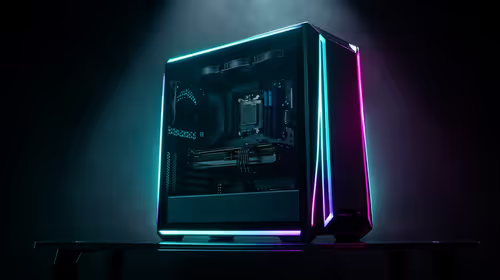
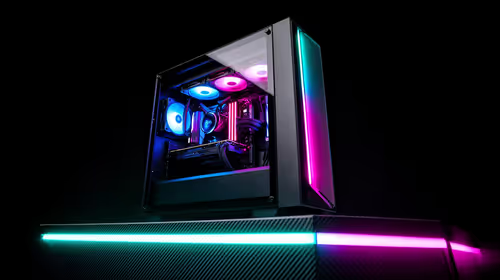
For starters, airflow is king. Cluttered cables inside your case can block fans and create hot spots, causing your CPU and GPU to run hotter and potentially throttle performance. A clean interior means cooler, more stable components. Beyond that, a neat setup makes maintenance and upgrades infinitely easier. Need to swap out a RAM stick or add a new SSD? Good luck if you have to fight a web of wires first.
When the power cuts, you need to switch to your UPS fast. A well-managed setup with clearly routed power cords makes this a seamless, stress-free process instead of a frantic fumble in the dark. Finding the right plug becomes simple, and you reduce the risk of accidentally unplugging the wrong thing.
The Essential Toolkit for Taming the Cable Monster
You don't need a massive workshop to achieve pro-level gaming PC cable management. A few key items will make all the difference. The goal is to group, guide, and hide cables effectively.
Here's your shopping list:
- Velcro Cable Ties: Far superior to single-use plastic zip ties. They're reusable, adjustable, and won't damage your cables if you pull them too tight.
- Cable Sleeves: These fabric or plastic tubes are perfect for bundling a group of cables (like your monitor, keyboard, and mouse) into one neat package.
- Adhesive Cable Clips: Ideal for running cables along the back or underside of your desk, keeping them completely out of sight.
- A Quality Surge Protector: A must-have for protecting your gear. Look for one with enough outlets and good spacing.
Investing in a few quality gaming accessories can transform your setup from chaotic to clean.
Reliable Everyday Performance
Ready to get hands-on? Set aside an hour, put on some music, and follow these steps. The payoff is huge.
Step 1: The Great Disconnect
Start with a blank slate. Shut down your PC and unplug everything. Yes, everything. This is the only way to properly assess your cable situation and plan your routes without being constrained by existing connections.
Step 2: Plan Your Pathways
Group your cables by function: power, data (USB, DisplayPort/HDMI), and audio. Visualise the most direct and discreet path for each group to take from your components to their destination. The golden rule is to use the routing channels and tie-down points built into your PC case and desk. For a truly clean look, many find that a few comprehensive cable solutions like pre-cut ties and mounting bases are a massive help.
Cable Labelling 101 ⚡
Before you start bundling, use a label maker or small pieces of masking tape to mark both ends of every cable (e.g., "Mouse," "Monitor DP," "Main Power"). This seems tedious now, but it will save you a massive headache months later when you're trying to troubleshoot or upgrade a single component in a hurry!
Step 3: Tidy the Internals First
The best PC cable management tips always start inside the case. Route your power supply cables, SATA cables, and front-panel connectors behind the motherboard tray. Modern PC cases have specific cutouts and channels for this. Use your Velcro ties to secure them neatly, ensuring they don't obstruct case fans.
Step 4: Conquer the External Chaos
- Bundle the cables running from your PC to your peripherals using a cable sleeve.
- Mount your surge protector to the underside of your desk to get it off the floor.
- Run all power bricks and cables to the mounted strip, securing them with adhesive clips along the way. Quality brands like Promate offer excellent and durable options for this.
The goal is to have a single, tidy power cable running from your surge protector to the wall... or, more importantly, to your UPS. Having a wide variety of dedicated gaming accessories at your disposal makes this process much smoother.
By organising now, you're not just cleaning up; you're building a more resilient and functional gaming rig. And if you need the gear to get it done today, you can find plenty of in-stock cable management kits ready to ship.