Quick Answer
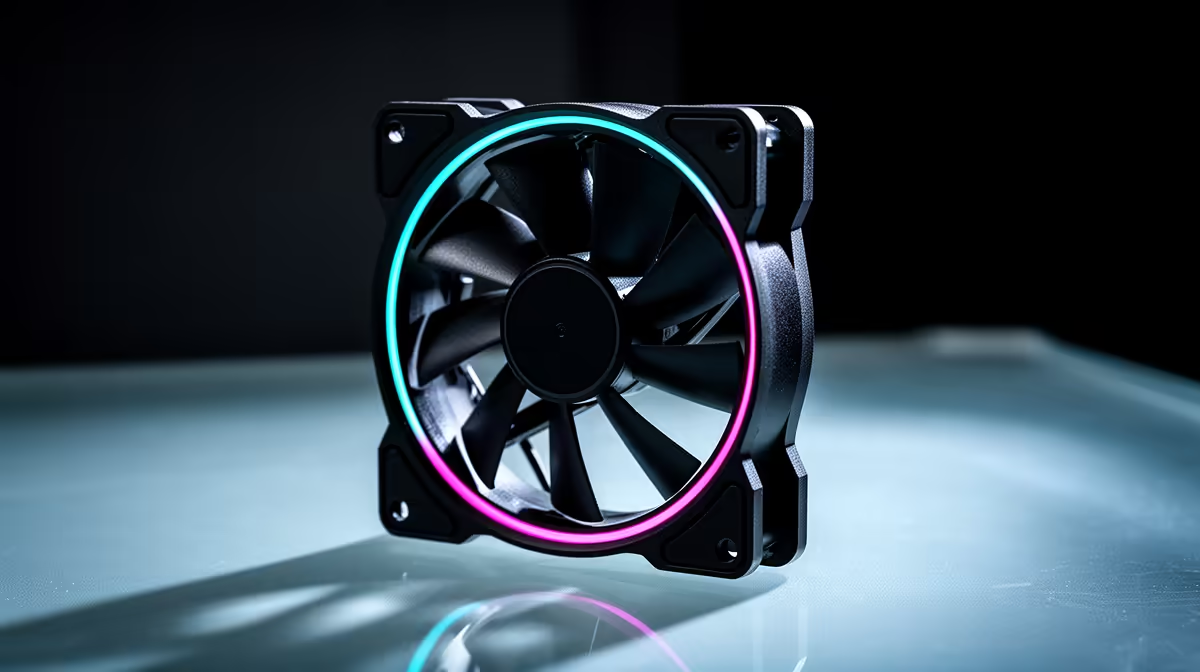
Compare case fan options by the spec floor, fit, and long-session comfort before chasing premium claims. The useful SA range is R120-R550 per fan, or about R1,200 for a multi-fan pack, and the shortlist should include concrete models such as Arctic P12 PWM, Cooler Master SickleFlow 120, and Corsair AF120 fans plus the measured requirement: 120 mm or 140 mm sizes, PWM control, 1,200-1,800 rpm ranges, and airflow/noise ratings. Esports players care about stable frame pacing, quick inputs, and hardware that behaves the same every match.
Ignore Hype Until The Basics Are Met
Start by matching the case fan to the actual job, not the longest feature list. The useful baseline is PWM control, rubber corners where possible, and enough static pressure for mesh or radiator positions. That baseline keeps the purchase practical for esports gaming and avoids paying for a feature that will not be noticed after the first week.
Price also needs context. A broad R120-R550 per fan, or about R1,200 for a multi-fan pack band is realistic for this category, but the right point in that band changes with build quality, warranty, and whether the part solves a real bottleneck. Compare named options such as Arctic P12 PWM, Cooler Master SickleFlow 120, and Corsair AF120 fans so the decision is tied to actual hardware rather than vague labels.
Numbers That Actually Change Daily Use
The numbers that matter are 120 mm or 140 mm sizes, PWM control, 1,200-1,800 rpm ranges, and airflow/noise ratings. Treat those figures as a checklist: if the cheaper option already meets them, spend elsewhere. If it misses one of them in a way that affects the room, recording, study, or gaming session, the upgrade has a clear reason.
For competitive play, aim for stable 1,000 Hz input devices, a 144 Hz or faster display where relevant, and network latency that stays consistent. Predictable feel wins more value than the highest number on the box.
Fit And Compatibility Checks
Before checkout, check physical fit, connector support, and the way the product will be used every week. For PC parts, that means clearance, wattage, ports, thermals, and cable routing. For accessories, it means comfort, desk space, software simplicity, and whether settings stay saved when moved between devices.
A strong buy is easy to explain in one sentence: it fixes a specific problem at a sensible price. If the reason sounds like styling, a bigger number, or a feature you cannot test, keep the shortlist tighter and put the spend toward the part that changes daily use.
FAQ
What should SA buyers check first?
Check local stock, warranty handling, and whether the case fan fits the space or system you already have. Then compare the spec floor against your actual use: esports gaming, study, gaming, recording, or family sharing.
Is the cheapest option good enough?
The cheapest option is fine only when it meets the minimum spec floor and does not create a new problem with noise, heat, comfort, or ports. If it misses a core requirement, a mid-range option in the R120-R550 per fan, or about R1,200 for a multi-fan pack band is usually the cleaner buy.
Which spec is easiest to overpay for?
The easiest spec to overpay for is the one that sounds premium but does not change your workload. Put more weight on PWM control, rubber corners where possible, and enough static pressure for mesh or radiator positions and less weight on cosmetic extras or numbers that your PC, room, or game cannot use.
write down the one problem the case fan must fix, then reject any option that does not solve that problem within the R120-R550 per fan, or about R1,200 for a multi-fan pack range.