South African companies using the WhatsApp Business Platform need a new line in their support budgets. From 1 October 2026, service replies sent during the customer-service window are expected to carry a per-message charge. The reported local rate is small at one reply and material at contact-centre scale.
Quick Answer
The reported South African service-message rate is $0.0076 per delivered reply, roughly R0.12 at publication time. At that rate, 10,000 replies cost about R1,200 and 100,000 cost about R12,000 before a platform provider's fees and taxes. The change concerns the API-based WhatsApp Business Platform used by agents and bots. It does not mean ordinary personal messages suddenly cost 12 cents.
💬 Which replies are affected
A customer message opens a 24-hour customer-service window. Businesses can respond inside that period with service messages. Those replies have been free under the current model. Reports on the October change say each delivered service message will move to the same South African rate used for utility messages.
Meta's pricing system charges on delivery, not when a business presses send. The recipient's market and the message category determine the rate. Marketing, utility, authentication and service messages remain separate categories. A support team therefore needs to count delivered platform messages, not only conversations or tickets.
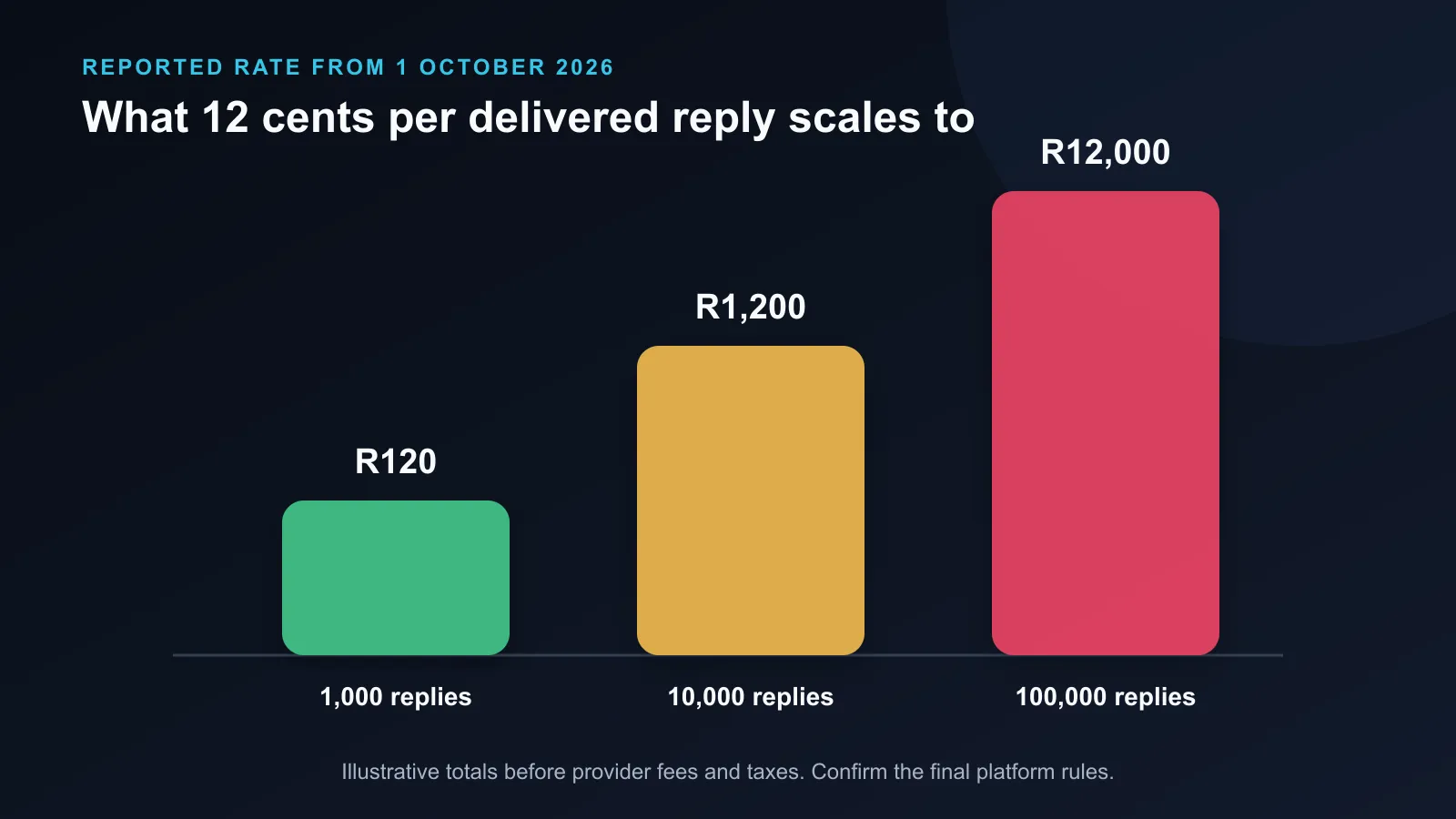
🧮 Turn 12 cents into a monthly budget
At R0.12 per reply, 1,000 messages are about R120. Ten thousand are about R1,200. One hundred thousand are about R12,000. These examples isolate Meta's message charge. A Business Solution Provider may add its own platform, agent, automation or support fee, and the rand value can move with the exchange rate.
Export recent message volumes before October. Split service replies from templates, marketing and authentication traffic. Then multiply the delivered South African service replies by the final published rate. A reliable networking setup remains necessary for the team, but faster equipment does not reduce a per-delivered-message platform fee.
🛠️ Reduce waste without hurting support
Do not answer a customer's question with several fragments when one clear response works. Review bots that send acknowledgements, typing updates or repeated hand-off messages. Keep useful order, security and service information intact. Cutting necessary support to save twelve cents can cost more than the message.
Meta's current pricing page also describes a 72-hour free period after certain click-to-WhatsApp adverts or Facebook Page buttons. Confirm the final October rules and entry-point treatment with the platform provider before building a forecast around that exception.
Teams that work away from the office can compare current laptops. A UPS can keep the router and support desk running through a short interruption. Those hardware choices protect service continuity; the messaging budget still depends on delivered volume.
Frequently Asked Questions
When do the new service-message charges start?
The reported change takes effect on 1 October 2026.
How much will a South African reply cost?
Reports use Meta's $0.0076 South African utility rate, which was about R0.12 at publication time.
Does the free WhatsApp Business app change?
The reports concern the WhatsApp Business Platform used through APIs, agents and bots, not ordinary app replies.
How much could 10,000 replies cost?
At 12 cents each, the message charge would be about R1,200 before provider fees and taxes.
Planning an October support budget?
Export delivered service-message volume, remove wasteful bot fragments, and confirm the final rate with your provider.