YouTube is changing the public view count shown across video formats from 24 August 2026. Numbers may rise because a view will be counted when playback starts, but the engagement measures used for creator earnings and programme eligibility are not being replaced.
Quick Answer
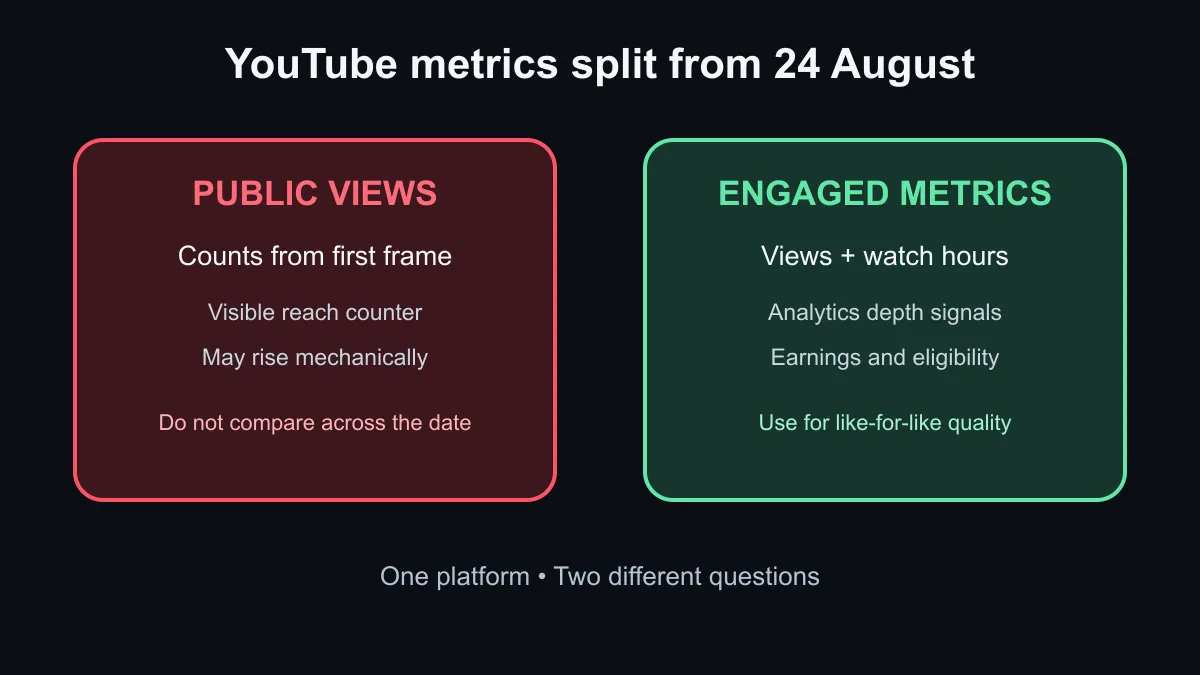
From 24 August, YouTube says public view counts will align across video formats and count a view when a video starts playing from its first frame. The previous public method will remain available in Analytics as Engaged Views and Engaged Watch Hours. Earnings and eligibility continue to use engagement-based measures. Creators should mark the change date on reports and avoid comparing raw public views before and after it as if the method stayed identical. Better production still starts with clear sound, a suitable camera and dependable streaming essentials, not a larger counter.
▶️ What changes on 24 August
The update applies globally and covers long-form videos, Shorts, live streams and other formats. A public view will register as playback begins, without the previous minimum-watch requirement. That makes the visible counter a measure of starts rather than the same depth of attention used before.
YouTube is preserving the earlier measurement inside Analytics. Engaged Views and Engaged Watch Hours will help creators compare meaningful watching behaviour. The company also says monetisation and YouTube Partner Programme eligibility remain based on engaged viewing, so a higher public count does not automatically mean higher revenue or progress toward eligibility.
📊 Reset reports without losing history
Record the change on every dashboard that uses public views. Keep data before 24 August in its original period, then begin a new comparison baseline after the update. A weekly or monthly report that spans the date should carry a note explaining the method change. Do not backfill an invented conversion factor because the effect will vary by format, audience and traffic source.
Use engaged views, watch time, retention and returning viewers to judge content quality. A clip can attract many starts while losing viewers quickly, and the new public number will make that gap easier to miss. For live content, also review peak concurrent viewers and average watch duration. The starter streaming guide can help creators fix the capture chain while Analytics explains whether viewers stay.
🎙️ Keep the creator decision practical
The metric change does not require new hardware. Upgrade only when an actual production problem limits the content. Poor speech clarity points first to room treatment, microphone position and input level. A noisy or dark image calls for lighting and camera checks before an expensive capture upgrade. Unstable streams need network and encoder diagnosis.
If sound is the weak point, compare current microphones by connection, pickup pattern and mounting needs. If the workflow already produces clean video and audio, spend the week building a reliable reporting baseline rather than changing equipment. Public views remain useful for reach, but engaged views and watch time are the stronger evidence that the content held attention.
Brands and agencies should brief clients before the change lands. Put the old and new methods on separate chart segments and use the same engagement definitions for campaign comparisons. There is no reason to celebrate a mechanical uplift as audience growth, and no reason to panic if the visible increase differs between channels.
Frequently Asked Questions
When does the public view-count method change?
YouTube says the global change takes effect on 24 August 2026.
Will a view count as soon as playback starts?
Yes. The new public count begins from the first frame without a minimum-watch threshold.
Does this change creator earnings?
YouTube says earnings and programme eligibility will continue to use engaged viewing measures.
How should creators compare performance?
Mark 24 August as a methodology break and use engaged views, watch time and retention for like-for-like analysis.
Reviewing a creator setup? Fix the weakest production link, then track engaged viewing on a clean post-change reporting baseline.