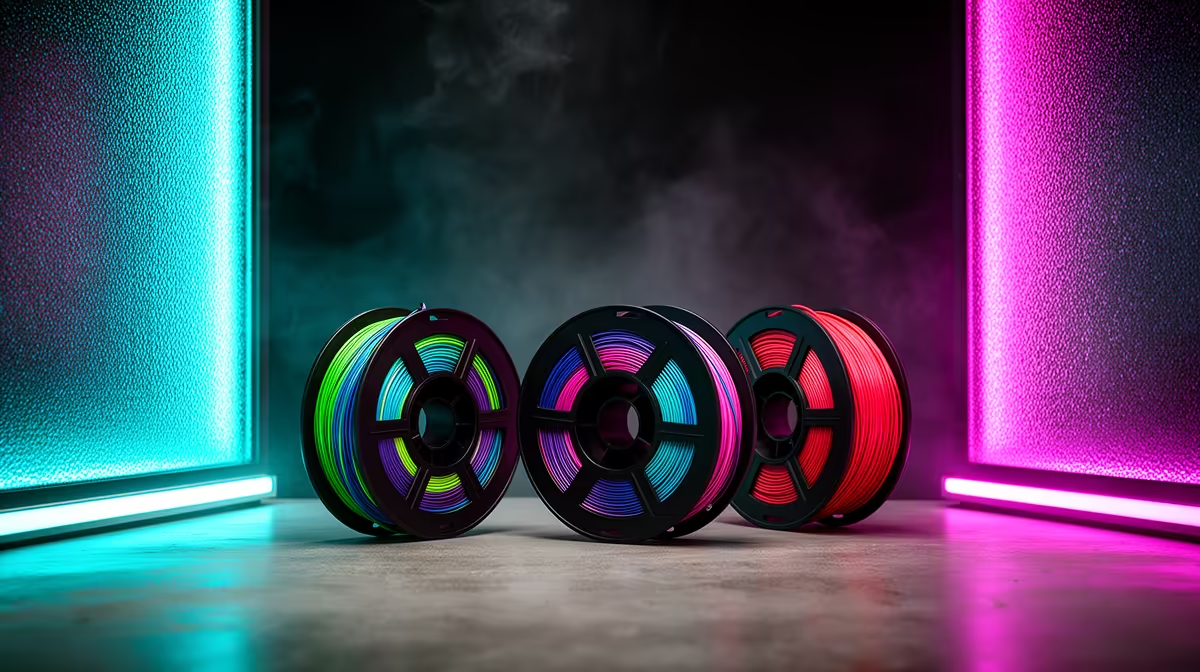
Wet filament shows up as stringing, popping noises during a print, weak layer bonds and a rough, foggy surface, and the fix is heat plus airflow over several hours. The hard part is doing that without slumping the spool or cooking the plastic past its glass transition point. How to dry filament safely comes down to picking a method that holds a steady, low temperature, and three options dominate South African workshops: the kitchen oven, a food dehydrator and a dedicated filament dryer.
Quick Answer
A dedicated filament dryer is the safest and most accurate method because it holds a precise temperature inside a spool-sized chamber and often lets you print straight from it. A food dehydrator is a strong budget alternative if a 1 kg spool fits inside. A kitchen oven works in a pinch but runs uneven and often 10 to 20 degrees hotter than the dial, which risks melting the spool.
Why filament needs drying in the first place
PLA, PETG, ABS, nylon and TPU are all hygroscopic, meaning they pull moisture out of the air. In a humid coastal climate like Cape Town or Durban, an opened spool can absorb enough water in a week or two to start printing badly. When that damp filament hits the hotend, the trapped water flashes to steam and bursts through the molten plastic, leaving gaps, strings and brittle layers.
Drying drives that moisture back out. The goal is to warm the plastic enough that water escapes, while staying below the temperature where the spool softens and deforms. Get the heat wrong and you trade a moisture problem for a warped, unusable reel. Many of the compact machines in the 3D printer range at Evetech ship with enclosed builds that benefit most from properly dried material.
Method 1: The kitchen oven
The oven is the method everyone tries first because it costs nothing extra. The technique is simple: set a low temperature, place the spool on a tray, and leave it for several hours.
The problem is accuracy. Most domestic ovens run 10 to 20 degrees hotter than the dial reads below 100 degrees, and the heat pools unevenly around the cavity. PLA softens at roughly 60 degrees, so an oven set to "50" that is actually sitting at 70 can slump a spool into a solid lump.
If you go this route, follow three rules. Put an oven thermometer inside and verify the real temperature before the filament goes in. Use the lowest setting and prop the door slightly if it overshoots. And never use a microwave, which heats unevenly and can damage the plastic. Treat the oven as a last resort, not a regular workflow.
Method 2: The food dehydrator
A food dehydrator is built for exactly the job filament needs: steady low heat with a circulation fan moving air across the load. That airflow is the key advantage over a static oven, because it carries evaporated moisture away rather than letting it settle back onto the plastic.
For common materials, a dehydrator with an adjustable thermostat handles PLA at around 45 to 50 degrees, PETG near 55 to 65 degrees and ABS or ASA closer to 70 to 75 degrees. Run it for roughly six to seven hours for a properly soaked spool.
The catch is size. Many dehydrators are stacked-tray designs that will not swallow a standard 1 kg reel without removing trays, and even then it can be a tight fit. Measure your spool against the chamber before buying. If it fits, a dehydrator is the best value compromise between accuracy and cost.
Method 3: The dedicated filament dryer
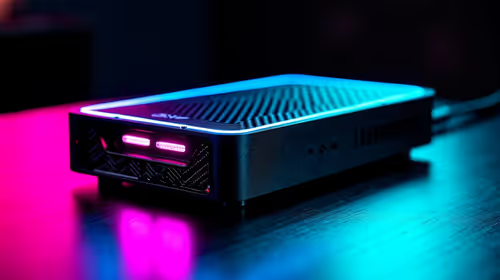
A purpose-built filament dryer is the method that removes the guesswork. The chamber is shaped to hold one or two spools, the temperature settings are calibrated for specific materials, and most units include a built-in humidity readout so you can watch moisture drop in real time.
The standout feature is feed-through printing. Many dryers have a port that lets the filament run from the heated chamber straight to the printer, so the material stays dry through a long print rather than reabsorbing moisture on the bench. For anyone printing PETG or nylon regularly, that alone justifies the spend. The top-selling accessories at Evetech are a quick place to pick up sealed storage and desiccant while you are stocking up on drying kit.
How long to dry, and how to keep it dry
Drying time depends on how saturated the spool is. A lightly damp reel might need two to three hours, while a spool that has sat open for weeks can need six hours or more. Weigh the spool before and after if you want a precise read: a meaningful weight drop means water has left.
Keeping filament dry afterwards matters as much as the drying itself. Store reels in a sealed container with silica gel or rechargeable desiccant between prints. In a humid SA workshop, that single habit cuts how often you need to dry in the first place.
Frequently Asked Questions
Can I dry filament in a normal kitchen oven?
You can, but it is the riskiest method. Domestic ovens run hotter than the dial and heat unevenly, so verify the real temperature with an oven thermometer and use the lowest setting. PLA softens near 60 degrees, so a small overshoot can ruin the spool.
What temperature should I dry PLA, PETG and ABS at?
As a rough guide, PLA dries around 45 to 50 degrees, PETG around 55 to 65 degrees, and ABS or ASA around 70 to 75 degrees. Always stay below each material's softening point, and check the manufacturer's spec on the spool label where one is printed.
How long does drying take?
Plan for around six to seven hours for a heavily soaked spool, and two to three for a lightly damp one. Weighing the spool before and after gives you a concrete sign that moisture has actually left the plastic.
Is a food dehydrator good enough, or do I need a real dryer?
A dehydrator with an adjustable thermostat handles PLA, PETG and ABS well, provided your spool physically fits inside. A dedicated dryer wins on precise calibrated temperatures, a humidity readout and feed-through printing, which matter most for nylon and frequent PETG work.
How do I stop filament getting wet again?
Store every opened reel in a sealed box with silica gel or rechargeable desiccant. In humid coastal areas this single step dramatically slows reabsorption and reduces how often you need to redry a spool.
Ready to stop fighting stringy, brittle prints? Browse the 3D printers and drying gear at Evetech and pair your printer with the right storage and accessories so every spool runs clean from the first layer.