Quick Answer
Lag spikes on a Gen 5 NVMe SSD should be split into ping spikes, frame-time spikes and storage stalls before buying parts. Use Ethernet, an FPS counter and a 1% low readout; if ping is stable but frame time jumps, tune drivers, thermals and background tasks. For this class, Crucial T700 2TB or Corsair MP700 and a PCIe 5.0 x4, 10,000MB/s plus sequential reads, heatsink required setup should feel stable once the real bottleneck is fixed.
First Test To Run
Run one clean session with ping, FPS and frame time visible. On fibre from Vumatel, Openserve or MetroFibre, a local server should often sit below 40ms, while distant servers can be far higher even on a healthy Gen 5 NVMe SSD. If ping jumps but FPS stays steady, check Ethernet, router placement, background downloads and Wi-Fi band choice. If ping stays flat while the game pauses, move to drivers, temperatures, USB devices and storage activity.
High ambient room temperatures in SA homes make heatsink contact worth checking.
Fix The Hardware And Driver Path
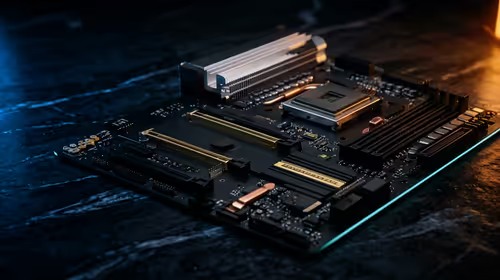
Check M.2 slot, heatsink contact and firmware. Crucial T700 2TB or Corsair MP700 class drives can run fast enough to need real cooling, and a poorly seated thermal pad can trigger throttling. Confirm PCIe mode in BIOS, leave free space, and avoid running the game, recording folder and large downloads on the same drive during testing.
Windows And Game Settings
Close launchers, recording tools, browser video and update tasks for one test. Then reintroduce them after the baseline is stable. If online lag remains, compare Ethernet with Wi-Fi and test a different local or regional server. If offline play stutters too, the fix sits inside the PC path.
FAQ
How do I know if lag is from the Gen 5 NVMe SSD or the internet?
Watch ping and FPS together. Ping spikes point to router, Wi-Fi, ISP route or server issues, while stable ping with FPS drops points to the PC path.
What ping is acceptable for SA gaming?
Local or regional servers under about 40ms feel responsive, while distant servers can be much higher. Stability matters as much as the lowest number.
Should I buy new hardware to fix lag spikes?
Only after Ethernet, drivers, temperatures and background tasks have been tested. Use the R3,000-R6,500 band as a broad guide.
Practical check
Write down the test scene, refresh rate, driver version and the one result that changed. That note tells you whether to tune, cool, reconnect or upgrade the Gen 5 NVMe SSD.