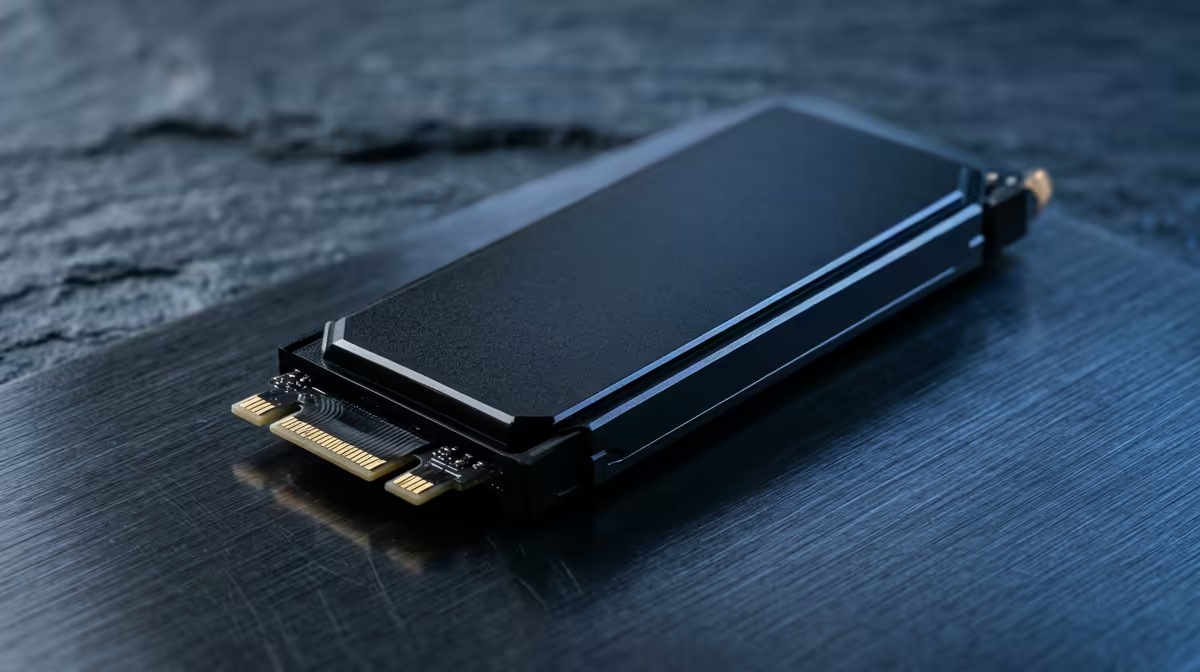
Flicker on a Gen 5 NVMe SSD under Windows 11 is annoying but usually a refresh-rate, cable or driver mismatch rather than a dead panel.
Quick Answer
Disable adaptive sync at the desktop, swap to a certified DisplayPort cable, and a flickering Gen 5 NVMe SSD usually settles within minutes.
Check background apps and overlays
RGB suites, capture overlays and aggressive power plans can strobe the display. Close overlays one by one and set the power plan to High Performance to see if the Gen 5 NVMe SSD steadies.
Set the correct refresh rate
In Windows 11 go to System then Display then Advanced display and pick the panel's native refresh. A Gen 5 NVMe SSD set above what it supports will flicker; drop it to a confirmed value such as 144Hz or 165Hz.
Replace or reseat the cable
A marginal cable is a top flicker cause. Use a VESA-certified DisplayPort 1.4 or HDMI 2.1 lead, reseat both ends, and avoid cheap adaptors when connecting the Gen 5 NVMe SSD.
Putting it together
Treat flicker as a process: lock the native 144Hz or 165Hz refresh, clean-install the driver, swap to a certified cable, then disable adaptive sync and HDR on the desktop. Retest after each change so you know which one steadied the Gen 5 NVMe SSD, and you avoid spending on parts you do not need.
FAQ
Can RGB or overlay apps cause flicker?
Yes, lighting suites and capture overlays sometimes strobe the display. Close them one at a time to find the offender, then update or remove it.
Should I disable hardware acceleration?
If flicker shows in browsers or chat apps, turning off hardware acceleration there often stops it without affecting games.
Why does my Gen 5 NVMe SSD flicker only on the desktop?
Desktop flicker usually points to adaptive sync, HDR, or a marginal cable rather than a game setting. Disable desktop VRR and HDR, then test a different cable.
one cause at a time and retest after each step so you know exactly which fix worked on your Gen 5 NVMe SSD.