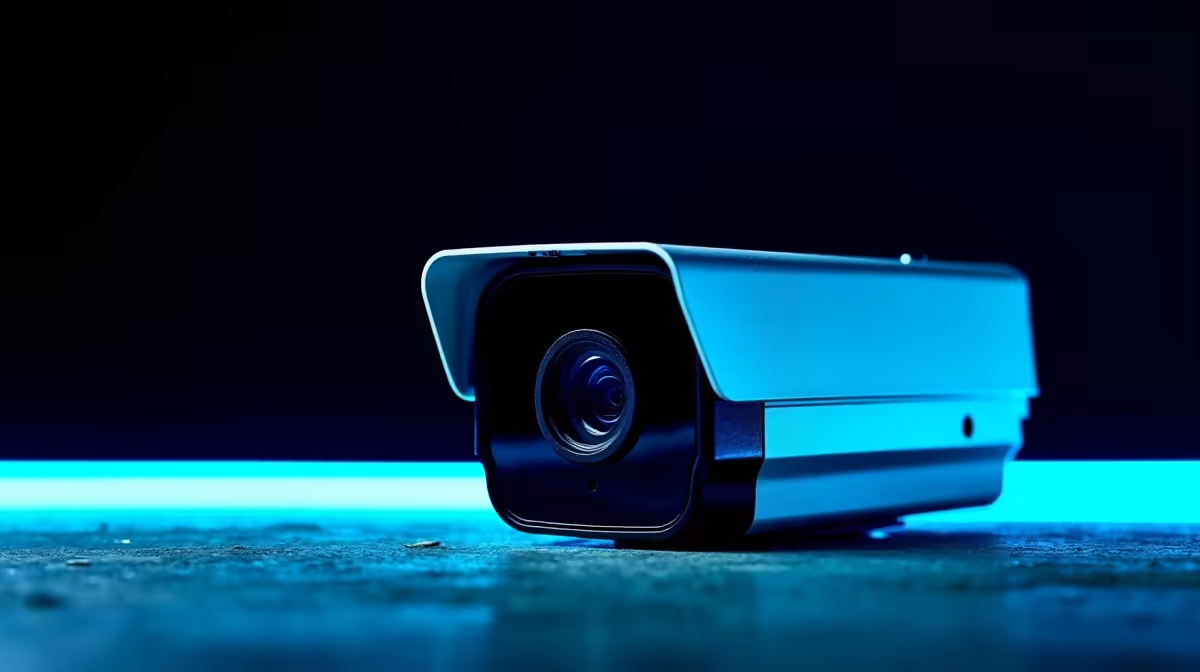
The reason PoE security cameras have largely replaced the old two-cable approach is simple: one Cat6 run carries both the power and the video data, so a single cable from a switch or injector does the whole job. No separate power supply at the camera, no socket needed up a wall or under an eave. Get the cabling and the power source right and the rest of the install is mostly mounting and aiming.
Quick Answer
A PoE camera draws power and sends video over one Cat6 cable connected to a PoE switch or PoE injector, with each cable run limited to 100m by the Ethernet standard. Plan the cable routes, choose a switch with enough total power budget for all your cameras, terminate the cable correctly, and the camera powers up the moment it is plugged in.
Step 1: Choose your power source, switch or injector
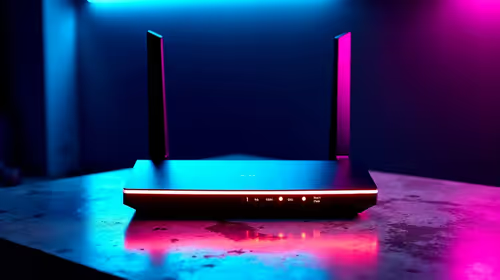
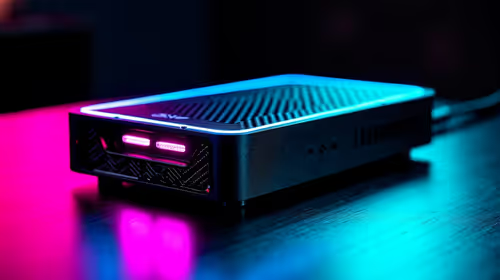
Your first decision is how the cameras get power. A PoE switch is the cleaner option for multiple cameras: every port delivers power and data, and you only need to watch the switch's total power budget. If you are adding one or two cameras to an existing non-PoE network, a PoE injector is the simpler fix, sitting inline on the cable to add power to a single run without replacing your switch.
The number that matters is the power budget. Each camera draws a certain wattage, and the switch has a total figure across all ports. A switch rated for, say, 60W total cannot fully power eight cameras that each want 12W to 15W, so add up your camera draw and leave headroom. Check whether your cameras need 802.3af, the higher-power 802.3at, or the newer standards, and match the switch accordingly.
Step 2: Plan and run the Cat6
- Map the runs first. Measure from each camera position back to where the switch or NVR will live, and remember the 100m per-run limit covers the entire cable length, not the straight-line distance. Cable that snakes through a roof and down a wall adds up faster than you expect.
- Use solid-core Cat6 for permanent runs. Solid-core handles long in-wall and in-roof routes better than stranded patch cable. Keep the cable away from mains wiring where you can, to avoid interference on long runs.
- Route to avoid the elements. Use outdoor-rated or UV-stable cable where it is exposed, and bring the cable into the camera housing or a weatherproof junction so the connection itself stays dry.
Step 3: Terminate and connect
Terminate each end to the T568B standard, keeping the twisted pairs intact as close to the connector as possible, because untwisting too much degrades both power delivery and data over distance. Test every run with a cable tester before you mount anything, since a marginal termination that works on a short bench test can fail on a 70m roof run. Once the cable passes, plug the camera into a PoE port and it should power on and appear on the network within seconds.
For the camera hardware, mounts, and weatherproofing pieces that complete an install, the smart home and security range at Evetech covers the devices, and the most popular accessories at Evetech are where most installers pick up the cable, connectors, and tools the job needs.
Step 4: Set up recording and verify
Most PoE camera systems record to a network video recorder, and many NVRs include their own built-in PoE ports, which simplifies the whole setup because the NVR powers the cameras directly. Connect each camera, confirm it appears in the NVR or app, set your recording schedule and motion zones, and walk each camera's view to check framing and night-vision range before you consider the install finished.
Frequently Asked Questions
Do I need both a power cable and a network cable for a PoE camera?
No. A PoE camera draws power and carries video over a single Cat6 cable, which is the main reason to choose PoE. You only need one cable from the camera back to a PoE switch, injector, or PoE-enabled NVR.
What is the maximum cable length for a PoE camera?
The Ethernet standard limits each run to 100m total, including every twist and turn of the route. For high-draw cameras the reliable distance can be shorter, and a PoE extender is the fix when you need to go further.
Should I use a PoE switch or an injector?
Use a PoE switch when powering several cameras from one place, since it handles power and data on every port. An injector is better for adding power to a single run on an existing non-PoE network without replacing your switch.
How do I know if my switch can power all my cameras?
Add up the wattage each camera draws and compare it to the switch's total power budget, leaving some headroom. Also confirm the switch supports the PoE standard your cameras need, whether 802.3af, 802.3at, or newer.
What cable should I use for outdoor PoE camera runs?
Use solid-core Cat6 for permanent runs, and choose outdoor-rated or UV-stable cable where it is exposed to sun and weather. Bring the connection into a weatherproof housing so the terminated ends stay dry.
A clean single-cable install starts with the right camera and a switch sized for your power budget. Browse the smart home and security range at Evetech to choose cameras and PoE gear that match the runs you have planned.