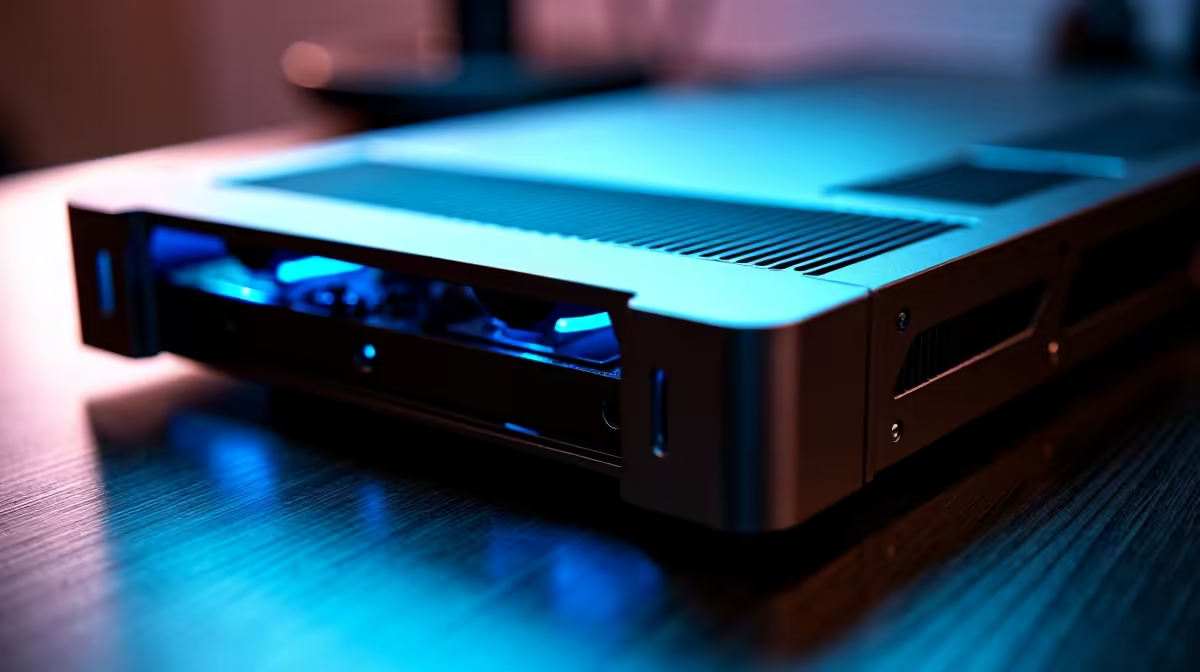
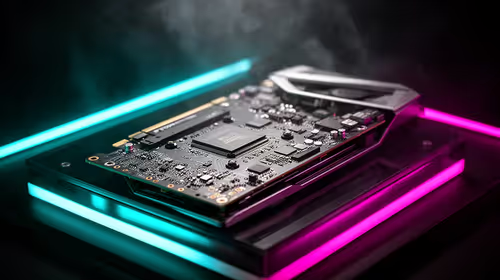
An external graphics card can turn a thin laptop into a real gaming or rendering machine, but only once Windows is talking to it properly. Getting the correct eGPU drivers in place is where most setups stall, because Windows treats the external card as a second display adapter living alongside the laptop's built-in graphics, and the two need to be set up in the right order. Do it cleanly and the eGPU drives your games and apps; do it carelessly and Windows quietly ignores it.
Quick Answer
Install eGPU drivers by first enabling Thunderbolt or USB4 support in the laptop BIOS, connecting the enclosure, then installing the latest graphics driver for the external card while the laptop is offline so Windows does not override it. Confirm both adapters appear without errors in Device Manager, then assign demanding apps to the eGPU in Windows Graphics settings.
How Windows Sees Your eGPU
When you plug an eGPU enclosure into a laptop, Windows does not replace your existing graphics. It adds the external card as a second display adapter in Device Manager, sitting next to the laptop's integrated graphics, the iGPU. Both are active at once, and Windows decides which one renders each application. This is the mental model that makes everything else click: you are not switching cards, you are managing two, and your job is to make sure the powerful external one is properly recognised and then pointed at the work that needs it.
Step One: Prepare The BIOS And Connection
Before any driver goes near the machine, sort out the hardware handshake.
- Enter your laptop BIOS and enable Thunderbolt or USB4 support if it is not already on.
- Set the Thunderbolt security level to "No Security" or "User Authorization" so the eGPU is allowed to connect, and enable PCIe tunnelling if your BIOS offers it.
- Save, exit, and boot into Windows.
- Connect the eGPU enclosure to the correct Thunderbolt or USB4 port, with the external card seated and powered inside the enclosure.
A solid connection through a quality dock or enclosure is the foundation here, and the docking stations at Evetech cover the Thunderbolt and USB4 units that carry an eGPU link properly.
Step Two: Install The Driver Cleanly
This is the step that trips people up, because Windows often rushes in with its own generic driver.
- Disconnect the laptop from the internet first, by switching off Wi-Fi and unplugging any LAN cable. This stops Windows fetching and forcing its own driver mid-install.
- Download the latest driver for the external card from the card maker beforehand, matched to the exact model in your enclosure.
- Run the installer and let it complete. Reconnect to the internet only once it has finished.
- Restart the laptop with the enclosure connected.
Keeping the machine offline during the install is the single most reliable trick for forcing the correct driver to take hold rather than a stand-in version.
Step Three: Confirm In Device Manager
With the driver in and the machine rebooted, verify the result. Open Device Manager and expand the Display adapters section. You should see two entries: the laptop's integrated graphics and the external card, both listed cleanly with no yellow warning triangles. If the external card shows an error or fails to appear, a common fix after recent Windows updates is to reinstall the PCI-to-PCI Bridge devices, since Windows now handles the Thunderbolt and USB4 connection through its own USB4 connection manager rather than older vendor drivers. Only once both adapters report healthy should you move on.
Step Four: Force Apps Onto The eGPU
Recognition is not the same as use. Windows may still default heavy apps to the integrated chip, so the last step is to direct them. Open Windows Settings, go to System then Display, then Graphics, add the game or application you want, and set its graphics preference to the high-performance device, which should be your external card. This per-app assignment is how you guarantee the eGPU does the rendering rather than the weaker built-in graphics. To see which cards make sense inside an enclosure, the best-selling graphics cards at Evetech are a good shortlist of what people are pairing with docks right now.
Frequently Asked Questions
Why does Windows not detect my eGPU?
Most often the BIOS lacks Thunderbolt or USB4 support enabled, or the security level is blocking the connection. Check those first. After recent Windows updates, reinstalling the PCI-to-PCI Bridge devices in Device Manager also resolves many detection failures.
Should I uninstall my laptop's built-in graphics driver?
No. The integrated graphics stays active and works alongside the external card. You install the external card's driver in addition, then use per-app settings to choose which graphics device renders each program.
Why install the driver with the internet disconnected?
Because Windows will otherwise fetch and force its own generic driver during setup, which can override the correct one. Going offline lets the proper driver from the card maker install and take hold before Windows interferes.
How do I make a specific game use the eGPU?
Open Windows Settings, then System, Display and Graphics. Add the game, set its preference to the high-performance device, and confirm that device is your external card. This per-app assignment forces the eGPU to handle that game's rendering.
Both adapters show in Device Manager but performance is poor. What now?
Confirm the demanding apps are assigned to the external card in Windows Graphics settings, not the integrated chip. Also check the connection is on a full Thunderbolt or USB4 port, since a slower link starves the eGPU of bandwidth.
Building an eGPU setup? Explore the docking stations at Evetech and connect your external graphics card to your laptop with the bandwidth it needs.