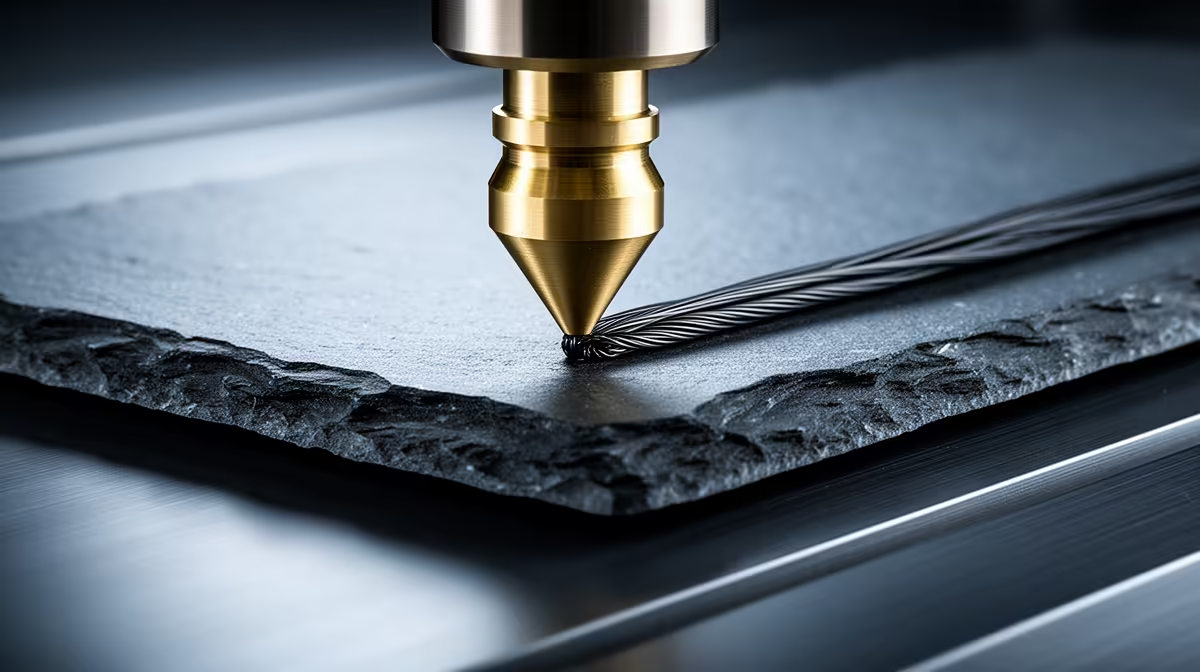
A fresh 1kg spool of carbon-filled PLA can chew a standard 0.4mm brass nozzle out of spec before the spool even runs dry, leaving you with under-extrusion and ragged walls you cannot tune away. Printing carbon and glass-filled filaments with a hardened nozzle is not optional with these composites, because the chopped fibres act like a slow grinding paste on every millimetre of soft metal they pass.
Quick Answer
Brass wears out almost immediately on abrasive composites, so fit a hardened-steel nozzle (good for many spools) or a ruby-tipped nozzle (effectively wear-proof, but brittle and roughly five times the price of steel). Hardened steel conducts heat worse than brass, so raise your hotend temperature by about 5 to 15 degrees to keep flow steady.
Why brass fails and what to fit instead
Carbon-fibre and glass-fibre filaments carry tiny hard fibres suspended in the base polymer. Each fibre scrapes the nozzle bore as it extrudes, and brass is soft enough that the 0.4mm orifice slowly widens and rounds off. Once that happens, line width drifts, retraction stops sealing cleanly, and surface quality collapses.
Hardened steel is many times harder than brass and holds its diameter across plenty of composite spools, which makes it the sensible default for most makers. Ruby-tipped nozzles take it further: a brass body carries the heat while a synthetic ruby insert handles the abrasion, and these have shown effectively no measurable wear even after kilograms of carbon-fibre filament. The catch is cost and fragility, since a crash into the bed can shatter the tip.
For very heavy composite work, tungsten-carbide-coated nozzles sit between steel and ruby in both cost and durability, and they are less brittle than ruby for printers that occasionally probe the plate aggressively.
Nozzle size and layer height choices
Composite filaments also respond well to a larger nozzle orifice. A 0.6mm hardened-steel nozzle clogs far less often than a 0.4mm on heavily filled material, because the wider bore gives fibres less chance to bridge and pack. The trade-off is a slight drop in fine detail, so use 0.4mm when dimensional precision matters and 0.6mm when you want reliable flow on functional parts.
Avoid layer heights below 0.25mm on composite materials. Very thin layers create high back pressure as the extruder tries to push fibre-laden plastic through a tight gap, which stresses the drive mechanism and increases the chance of partial clogs. A 0.2mm layer that works fine on PLA will cause trouble on CF-PLA with the same hardware.
Setting up a hardened nozzle correctly
Swap the nozzle while the hotend is hot so the threads release cleanly, then do a hot tighten once it is fully up to temperature to seal against the heatbreak and stop oozing. Run a fresh first-layer calibration afterwards, because even a same-size hardened nozzle can sit a fraction higher or lower than the brass one it replaced.
Because steel holds heat less efficiently than brass, nudge your printing temperature up by 5 to 15 degrees so flow stays consistent at speed. Slow your print speed slightly for the first composite job and watch the first few layers: clean, even extrusion means the temperature offset is right. The same hardware lives alongside the wider 3D printing range at Evetech, which is the place to start if you are still choosing a machine that takes standard V6-style nozzles.
Slicer and maintenance settings that matter
Dry composite filaments before printing, especially nylon-based CF blends, which absorb moisture quickly and produce bubbled, weak layers when wet. Keep retraction modest to avoid grinding fibres inside the hotend, since over-retraction packs chopped fibres into the melt zone. Many experienced makers disable retraction entirely on CF-nylon and accept minor stringing rather than risk a clog mid-print.
Store spare nozzles and tools where you can reach them quickly. You will find the consumables and hand tools you need among the top-selling accessories at Evetech when you are stocking a workshop drawer for these jobs.
Treat the nozzle as a wear item. Inspect the tip under a phone macro lens every few spools, and if you see the bore opening up or extrusion going inconsistent, retire it before it ruins a long print.
Frequently Asked Questions
Can I print carbon-filled filament with a brass nozzle just once?
You can, but expect visible wear from a single spool. Brass is fine for one short test, yet the orifice will widen quickly and print quality will drop. For anything beyond a quick trial, fit hardened steel.
Is a ruby nozzle worth it over hardened steel?
Only if you print abrasive composites constantly. A ruby tip barely wears even after kilograms of carbon fibre, but it costs several times more than steel and the tip can shatter on a bed crash. For occasional composite work, hardened steel is the better value.
Do I need to change my print temperature for a steel nozzle?
Yes. Steel conducts heat less efficiently than brass, so raise the hotend by roughly 5 to 15 degrees to keep flow consistent, then verify with a clean first layer.
Does a hardened nozzle improve print quality on normal PLA?
No. On non-abrasive filaments a hardened nozzle prints the same as brass, sometimes with marginally rougher surface finish. Its only real advantage is wear resistance, so keep brass for standard materials if you want.
Should I use a 0.4mm or 0.6mm nozzle for carbon-filled filament?
A 0.6mm hardened nozzle is the safer choice for most composite work: it clogs less often, extrudes more reliably, and still holds reasonable dimensional accuracy. Step down to 0.4mm only when the printed part genuinely requires tighter feature resolution.
Printing composites means treating your nozzle as a consumable. Set yourself up properly with a machine built for it from the 3D printer range at Evetech and print carbon and glass-filled parts without grinding your hardware to scrap.