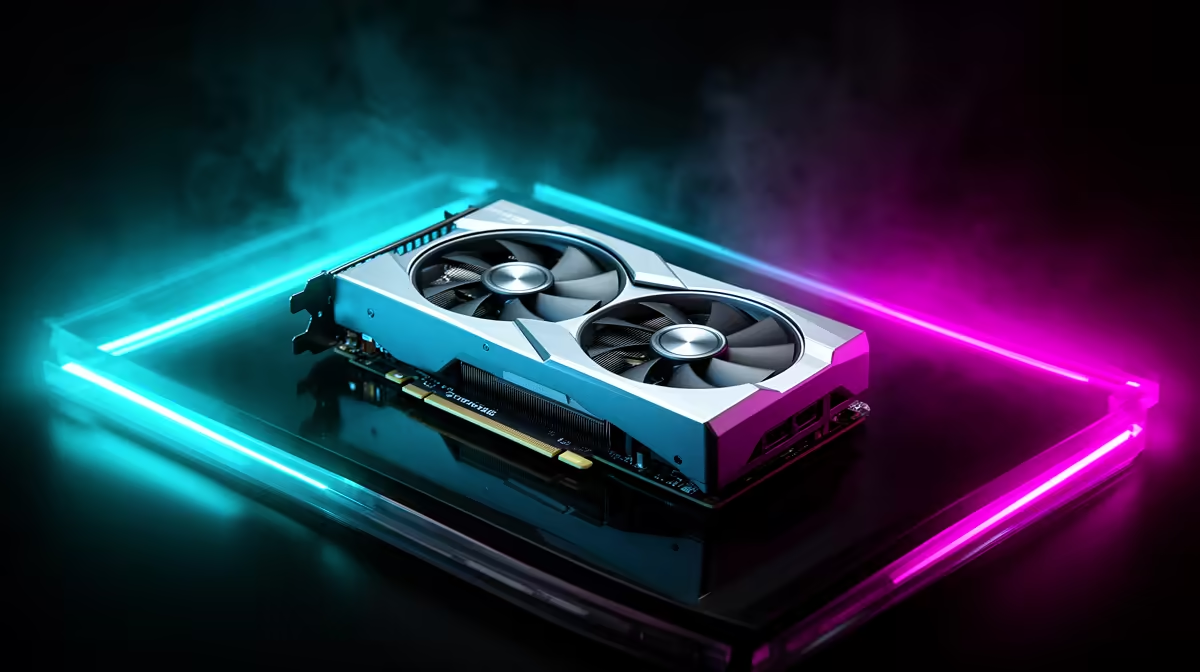
Waiting for GPU prices to drop has burned a lot of buyers since 2025, because the usual logic stopped working. Graphics cards used to get cheaper as a generation aged. This cycle they have not, and the reason is upstream of the cards themselves: an AI-driven memory supercycle that has kept DRAM and GDDR supply tight. Before you sit on your hands hoping for a price cut, learn to read the signals that actually predict where prices go.
Quick Answer
Through 2026, the market signals point to GPU prices staying firm or rising, not falling. The AI-driven DRAM supercycle that began in Q3 2025 is projected to keep memory supply tight into at least Q4 2027, and analysts have forecast roughly 10 to 25 percent increases on mid-range cards. If you need a GPU for a current project, waiting is unlikely to save money in the short term.
Step 1: Read the Memory Market First
Graphics cards are mostly memory, and memory pricing now drives card pricing more than chip supply does. The single most useful habit is to watch DRAM and GDDR trends rather than just GPU headlines. When memory makers prioritise high-margin AI data-centre orders, the supply left for consumer graphics cards tightens, and prices hold or climb regardless of how old a GPU generation is.
The current supercycle is the clearest example. Demand from AI infrastructure has soaked up memory production capacity since Q3 2025, and forecasts run that tightness into late 2027. As long as that holds, the old "prices fall as the generation ages" rule does not apply.
Step 2: Watch Supply, Not Just Launch Dates
A new GPU launch does not automatically lower prices on existing cards. What actually moves prices is supply relative to demand. Check whether stock is plentiful or thin at retailers, and whether new launches are arriving in real volume or in a trickle. Thin stock plus steady demand keeps prices up even when a "cheaper" generation technically exists.
For South African buyers there is a second layer: the rand-dollar exchange rate and import costs. Even when global prices ease, a weaker rand can cancel the saving locally. Track both the international supply picture and the currency, because either one can keep the shelf price high.
Step 3: Separate Real Price Moves From Promotions
A temporary promotion is not a market trend. A single discounted card during a sale tells you nothing about where prices are heading. A genuine price drop shows up as a sustained, broad reduction across many models and several retailers over weeks, not a one-off deal on a single product.
Look for the pattern, not the outlier. If multiple cards from multiple brands ease together and stay down, that is a real shift. If one model dips for a weekend and bounces back, that is a promotion, and it should not change your buying plan.
Step 4: Weigh the Cost of Waiting
Waiting has a price even when it works. Every month you hold off is a month without the card, and if you are waiting on a drop that the memory market says is not coming, you may simply pay more later. The honest calculation is to compare the realistic best-case saving against the value of having the GPU now.
Given the supercycle forecast, the current odds favour buying when you have a real need rather than speculating on a cut. If your build or work is waiting on a card today, the market signals say a price drop is unlikely soon. You can gauge what represents fair value right now against the graphics card range at Evetech and the current GPU best sellers.
Putting the Signals Together
A quick read before you buy: is memory supply tight (yes, currently), is GPU stock thin or plentiful, is the rand stable or weak, and is any price cut broad and sustained or a lone promotion. With the supercycle running and forecasts of mid-range increases, the picture in 2026 leans toward holding or rising prices. Use these signals every time, because they will tell you when the picture genuinely changes.
Frequently Asked Questions
Will GPU prices drop in 2026?
The market signals suggest not in any sustained way. The DRAM supercycle keeps memory supply tight into at least Q4 2027, and analysts forecast roughly 10 to 25 percent increases on mid-range cards rather than cuts.
Why are GPU prices staying high despite new launches?
Because pricing is driven by memory supply and overall demand, not by launch dates. AI data-centre demand has tightened memory production since Q3 2025, so even older cards do not get the usual age-related discount.
What is the DRAM supercycle?
It is a period of sustained high memory demand, largely from AI infrastructure, that began in Q3 2025 and is projected to keep DRAM and GDDR supply tight into at least Q4 2027, which props up GPU pricing.
Should I wait to buy a graphics card?
If you need one for a current project, waiting is unlikely to save money under present conditions. The cost of going without, plus the risk of prices rising further, generally outweighs the small chance of a near-term drop.
How can I tell a real price drop from a promotion?
A real drop is broad and sustained across many models and retailers over several weeks. A single discounted card during a sale that bounces back afterwards is a promotion, not a market trend, and should not drive your decision.
Stop guessing at the market and check real value today. Compare current pricing across the graphics card range at Evetech and the GPU best sellers to buy with confidence.