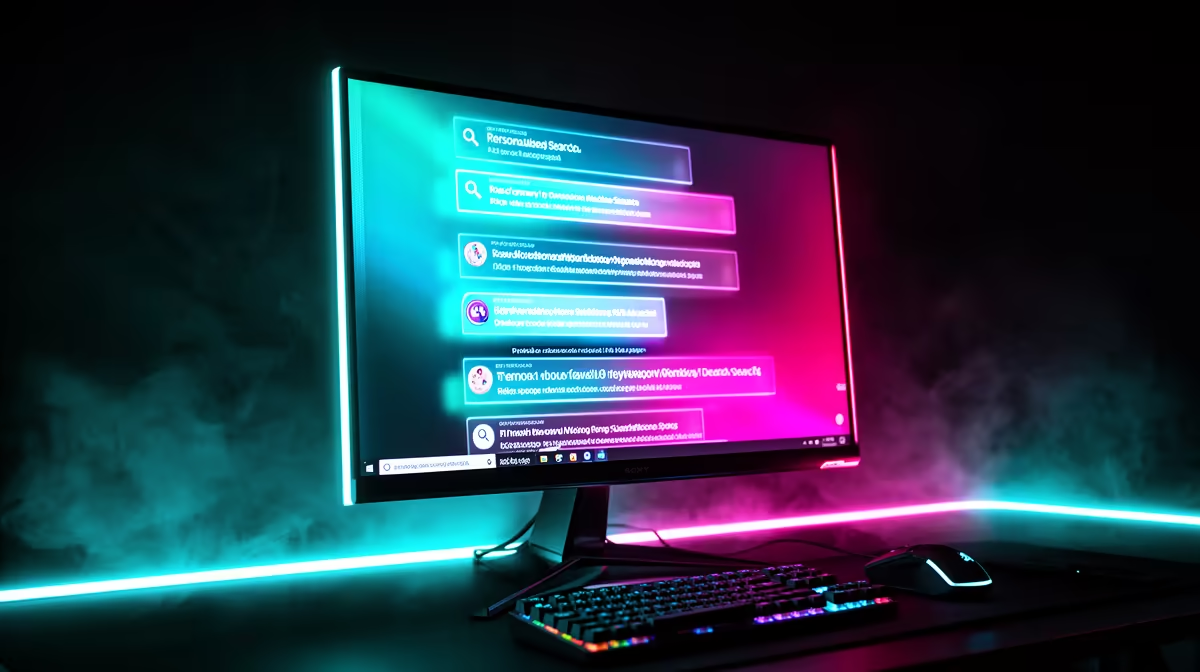
Ask your Mac to "find the PDF my colleague sent last week" and, with the rebuilt personal-context Siri, it actually pulls the file rather than offering a web search. The macOS 27 version of Siri reaches across Messages, Mail, your files and what is currently on your screen, then answers in plain language. The trick is switching the right toggles on so Siri is allowed to look in those places.
Quick Answer
Open System Settings, choose Apple Intelligence and Siri, turn on Apple Intelligence, then enable Siri and the personal context options. Once on-device indexing finishes, you can ask Siri in natural language to find messages, files, photos and on-screen content across your apps without naming the exact app.
Turning on personal-context Siri
Click the Apple menu, open System Settings, and select Apple Intelligence and Siri in the sidebar. Switch on Apple Intelligence first, since personal context is built on top of it. Your Mac may take a little while to download the on-device models and start indexing your content; this is normal and runs in the background.
With Apple Intelligence active, make sure Siri itself is enabled and that the personal context and on-screen awareness options are turned on. These are what allow Siri to reference your own data instead of treating every request as a generic search.
If your Mac is older and the option is missing, Apple Intelligence has hardware requirements, so a recent Apple-silicon machine is needed. You can compare current models in the MacBook range at Evetech if an upgrade is on the cards.
How to phrase requests that work
Personal-context Siri shines when you describe the thing the way you remember it, not the way a file system stores it. Try requests like "show me the photos from the Cape Town trip in March", "find the email with the invoice from the supplier", or "open the document I was editing yesterday". Siri pulls from Mail, Messages, Files, Photos and the active window to piece the answer together.
You can also lean on what is on your screen. If a contact's details are visible in a message, you can say "add this to their contact card" and Siri understands "this" from the on-screen content.
What personal context reaches across
Personal-context Siri is integrated with the core Apple apps: Mail, Messages, Notes, Files, Photos, Calendar and Reminders. The cross-app nature is what makes it genuinely useful. A request for "the hotel booking Tarryn sent me" reaches into Messages, while "my notes from the team meeting last Thursday" pulls from Notes -- without you specifying where to look. Spotlight and Siri now share the same index in macOS 27, meaning Siri's retrieval is as fast and thorough as the native search engine.
On-screen awareness extends this further. Siri can see the frontmost window and understand its content, so questions like "summarise what I have open" or "who wrote this document" can be answered without you copying any text manually.
Keeping it private and accurate
Much of this processing happens on the device, which keeps your messages and files on your Mac rather than shipping them off for indexing. If results feel thin right after you enable the feature, give the indexer time to finish, then try again. The more your content is indexed, the sharper the cross-app answers become.
For day-to-day productivity, a fast SSD and plenty of memory help Siri index and retrieve quickly. The best-selling laptops at Evetech include strong options if you are weighing a Mac against other notebooks currently on the market.
Frequently Asked Questions
Where exactly is the setting on macOS 27?
It lives under System Settings, in the Apple Intelligence and Siri section. Turn on Apple Intelligence, then enable Siri and the personal context and on-screen awareness toggles.
Why can Siri not find my files right after I turn it on?
The on-device index needs time to scan your content the first time. Wait until indexing finishes, keep the Mac awake and charged for a bit, then repeat your request.
Does personal-context Siri send my messages to the cloud?
Much of the personal context processing is done on-device to protect privacy. Some larger requests may use Apple's private cloud compute, but your personal indexing stays local where possible.
Which Macs support this feature?
Apple Intelligence requires recent Apple-silicon hardware. If the Apple Intelligence option does not appear in System Settings, your Mac likely does not meet the requirement and would need a newer model.
Can it search across more than one app at a time?
Yes, that is the point of personal context. A single question can pull a file from Files, a date from Messages and a name from Mail to assemble one answer.
Does personal-context Siri work in multiple languages?
The initial rollout of Siri AI on macOS 27 is in English only, with additional language support planned for later updates. Check System Settings for the languages available on your current macOS version.
Want the full personal-context Siri experience? Make sure your Mac is up to it by checking the latest MacBooks at Evetech, then enable Apple Intelligence and start asking Siri in plain language.