Why Airflow Matters When the Grid Goes Dark
We have all been there. You are mid-raid or finishing a render when the lights flicker and the dreaded UPS beep begins. Did you know your chassis layout impacts how long that backup power lasts? Optimising your outage-ready PC case layout to improve cooling on UPS isn’t just about temps... it is about efficiency and hardware longevity. ⚡
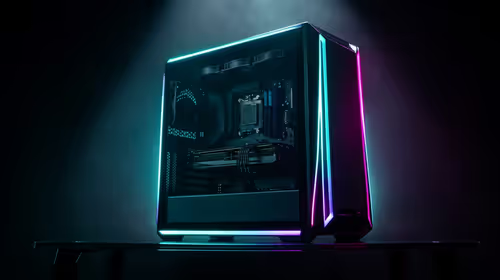
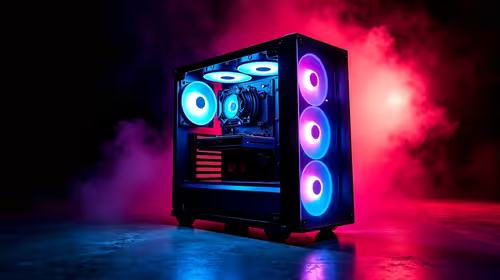
When your PC switches to battery power, every watt counts. High internal temperatures force your fans to ramp up to maximum RPM, which draws more current and drains your UPS battery faster. By choosing from a massive selection of computer cases designed for high airflow, you ensure that your components stay cool without demanding extra power from your backup solution.
The Best Chassis Designs for Maximum Thermal Efficiency
A "closed-off" case is a nightmare during a summer power outage in Gauteng or Durban. You need a mesh front panel that allows your intake fans to pull in fresh air with minimal resistance. This reduces the workload on the motors and keeps your GPU from thermal throttling while the air conditioning is off.
For those who prioritise premium build quality and acoustic performance, Fractal Design PC cases are often the gold standard. Their meshify series uses a unique angular mesh that creates turbulent air patterns, effectively scrubbing heat off your heatsinks more efficiently than flat mesh designs. This level of engineering is vital when you are trying to squeeze every extra minute out of your UPS runtime.
UPS Efficiency Pro Tip ⚡
When running on a UPS, try to set a custom fan curve in your BIOS. Set your fans to a static, medium speed rather than a 'performance' curve. This prevents sudden power spikes when the CPU boosts, helping your UPS lead-acid or lithium batteries provide a more stable discharge during an unexpected outage.
Budget-Friendly Layouts for Steady Performance
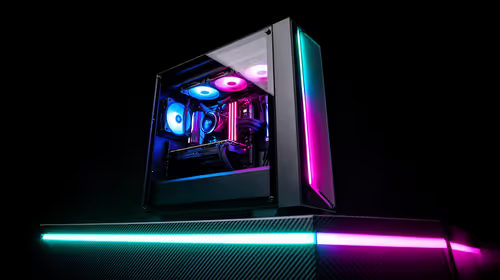
You don't need to spend a fortune to keep your rig chilly during Stage 6. There are fantastic options that provide excellent ventilation without breaking the bank. Many Gamdias gaming cases come pre-installed with multiple fans, ensuring you have a "push-pull" configuration right out of the box.
If you are building on a strict budget, you can find highly capable affordable gaming cases under R1500 that still feature tempered glass and mesh fronts. The trick is to ensure your cable management is tucked away behind the motherboard tray... blocked airflow is the number one cause of heat build-up during power cuts. 🔧
Everyday Reliability
To truly master a outage-ready PC case layout to improve cooling on UPS, consider these three steps:.
- Positive Pressure: Ensure you have more intake fans than exhaust fans. This prevents dust from entering through unfiltered gaps, which keeps your fans spinning smoothly for longer.
- GPU Positioning: If your case allows, move your GPU away from the bottom of the case to allow more "breathing room" for its intake fans.
- Component Spacing: Don't crowd your SATA cables or power leads directly in front of your intake fans. Clear paths mean lower RPMs and longer battery life. ✨
By focusing on a layout that prioritises natural convection and unobstructed paths, you turn your PC into a lean, mean, power-saving machine that can handle the heat of a South African afternoon... even when Eskom can't.
Ready to Beat the Heat?
With the right chassis and cooling strategy, you can keep your temps low and your UPS runtime high. Explore our massive range of computer cases and find the perfect layout to keep your rig running cool through every power cut.