The lights flicker. The screen goes black. Your ranked match... gone. For South African gamers, this is more than an annoyance; it's a constant threat to your grind. While a good UPS is your first defence, the components inside your rig play a massive role in how quickly you can recover. A truly loadshedding-ready gaming PC isn't just about surviving the outage—it's about getting back in the action before your team even misses you. ⚡
Why Your SSD is the MVP in a Power Cut
Remember the old days of waiting minutes for Windows to boot? In the era of loadshedding, that's an eternity. The single biggest upgrade for a fast recovery is switching from a mechanical hard drive (HDD) to one of the blazing-fast solid-state drives (SSDs).
An NVMe SSD can boot your system and launch a game in seconds, not minutes. When the power comes back on, you're not stuck staring at a loading screen while your teammates are getting wiped. This speed is the core of building a loadshedding-ready gaming PC. The faster you reboot, the faster you reconnect. It’s that simple.
Building a Smarter, Power-Efficient Rig
A beastly PC is great, but a power-hungry one puts immense strain on your UPS, shortening its runtime. Building a modern, power-efficient gaming rig is a smart strategy to maximise those precious battery minutes and ensure a safe shutdown.
Here's what to consider:
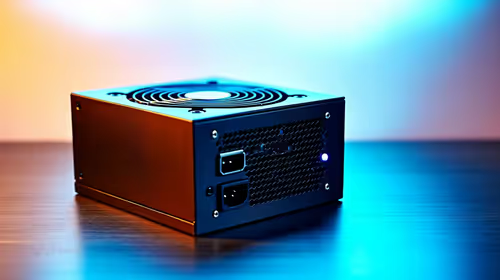
- Power Supply Unit (PSU): Look for an 80+ Gold rated (or higher) PSU. They run more efficiently, wasting less energy as heat and drawing less power from your UPS.
- CPU & GPU: Newer generations of processors and graphics cards from Intel, AMD, and NVIDIA offer incredible performance-per-watt. You get more frames without needing a small power station to run them.
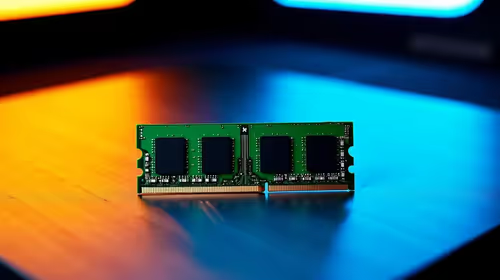
- Reliable Storage: Speed is nothing without reliability. When choosing your boot drive, consistent performance is key. Brands like Kingston SSDs are known for their dependability, giving you peace of mind during sudden shutdowns. You can also find great options from ADATA that balance speed and value perfectly.
UPS Sizing 101 🔋
Don't just guess your UPS needs! Use an online power supply calculator to estimate your PC's total wattage draw. Add the wattage of your monitor(s). As a rule of thumb, multiply that total by 1.5 to find the ideal VA (Volt-Amperes) rating for your UPS. This gives you a safe buffer and enough runtime for a proper shutdown.
Your "Get Back in the Game" Checklist 🚀
Building the hardware is half the battle. Here are a few more tweaks to make your PC a recovery speed demon.
The NVMe Advantage
For the absolute fastest boot and game load times, an NVMe M.2 SSD is non-negotiable. These drives plug directly into the motherboard, bypassing slower data cables for ludicrous speed. With modern games easily topping 100GB, investing in a spacious 2TB SSD ensures you have room for your entire library. For competitive gamers who demand the best, top-tier drives from Corsair deliver cutting-edge speeds to get you back in the fight instantly.
Enable Fast Startup in Windows
Windows has a built-in feature that dramatically speeds up boot times.
- Search for and open "Power Options" in the Start Menu.
- Click "Choose what the power buttons do".
- Click "Change settings that are currently unavailable".
- Tick the box for "Turn on fast start-up (recommended)" and save changes.
This simple software tweak complements your fast hardware, making your loadshedding gaming PC even quicker on the draw.
Ready to Build Your Loadshedding-Proof Rig? Don't let power cuts dictate your K/D ratio. A smart build focused on speed and efficiency is your best defence. Explore our massive range of PC components and build the ultimate loadshedding-ready gaming PC today.