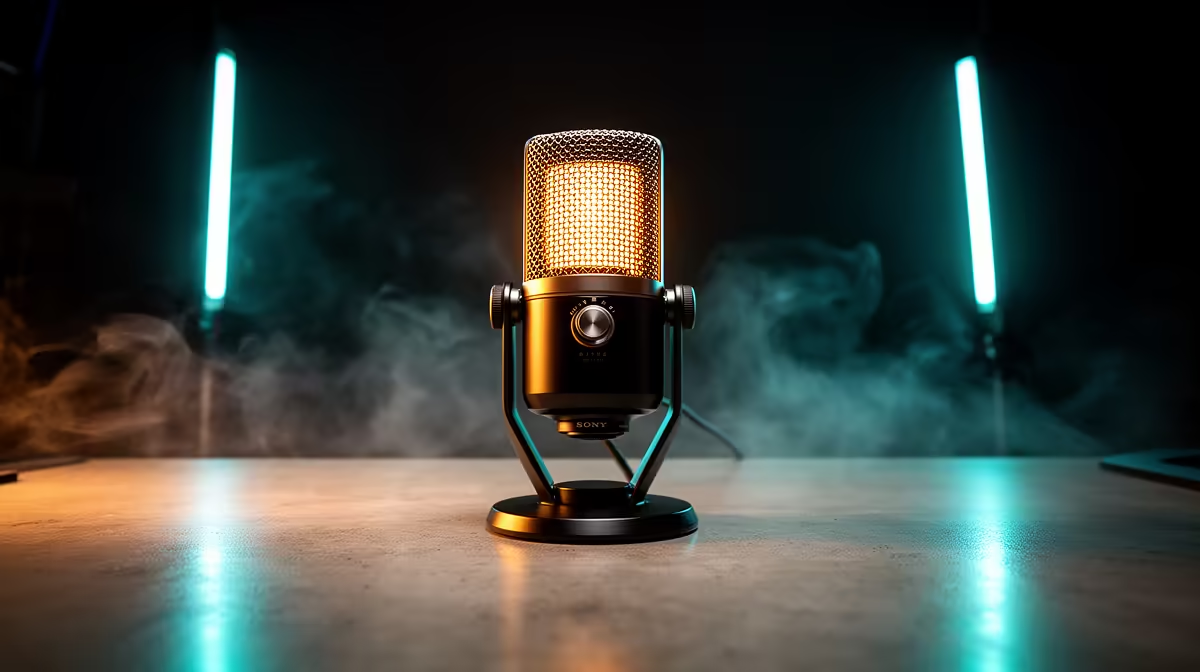
South African podcasting has matured quickly, and the bar for audio quality has risen with it. Listeners who consume polished international shows notice immediately when a local episode sounds flat or untreated. 48V phantom power and custom sound modes together close that gap, letting a condenser microphone produce professional-grade recordings without a rack of outboard gear sitting behind the presenter.
Quick Answer
Condenser microphones need 48V phantom power to activate the capsule. Without that voltage, they produce nothing. Custom sound modes apply preset EQ and compression curves to the signal, shaping the voice before recording begins so you do not need a separate processor to get a polished result.
🎙️ What Phantom Power Is Actually Doing Inside a Condenser Mic
A condenser microphone's capsule works by maintaining a charge across two closely spaced plates. The gap between those plates varies with sound pressure, and that varying gap produces the audio signal. The capsule cannot generate that charge independently. It requires an external voltage delivered over the same cable that carries audio.
The 48V standard for phantom power was established as a way to feed capsule voltage over balanced XLR cable without a separate power supply. The voltage travels down both signal lines simultaneously, cancels at the receiving end of any balanced input, and does not interfere with the audio.
For a podcast setup, enabling phantom power is the prerequisite, not a bonus feature. A condenser with the phantom switch off is a silent object. With it enabled, the capsule charges and begins transducing sound within a few seconds. Many podcasters new to condensers assume their mic is faulty when the real issue is simply that the 48V switch is off.
For SA podcasters mixing a condenser with a dynamic on the same desk, most modern mixers allow per-channel phantom power. The condenser gets its 48V while the dynamic on the adjacent channel runs without it. There is no risk to a balanced dynamic provided it uses an XLR connection.
🔆 How Custom Sound Modes Shape the Voice Signal
Where phantom power is a technical requirement, sound modes are a creative shortcut. A voice preset on a podcast mixer applies a tuned combination of equalisation and compression to the channel before the signal reaches the USB or recording output.
A typical voice mode lifts the presence range, usually 2kHz to 5kHz, which is the frequency band that makes consonants crisp and speech intelligible. It may simultaneously apply a high-pass filter below 80Hz to cut low-frequency rumble from the desk or building, and a gentle compressor to smooth level variation between a lively presenter who moves and a calm one who stays still.
The alternative is adjusting each parameter manually on a separate EQ and compressor. For an experienced engineer that is preferable. For a podcaster whose priority is content rather than signal processing, a well-designed preset closes 80 percent of the gap with one tap.
Pro Tip ⚡
Record a 60-second test segment in each available sound mode and compare them through headphones rather than laptop speakers. What sounds balanced on a laptop speaker often has a boosted low-midrange that reveals itself through headphones. The mode that sounds natural through decent headphones will transfer to every listening platform your audience uses, including earbuds on the Gautrain.
✨ Running Both Together for a Complete Recording Chain
Combining phantom power and sound modes creates a signal chain that handles microphone powering, amplification, tone shaping, and dynamic control in a single hardware unit. Enable phantom power on the condenser channel before connecting the mic. Select the voice preset. Set channel gain so peaks reach roughly -12 dBFS during a test sentence at normal conversational volume. From there, the output going to a DAW or recording software is already treated and ready to use.
A warmth mode applies less presence boost and a gentler high-pass filter, suiting a host whose natural voice sits in a higher register where added presence would tip into harshness. Testing both modes with your specific voice in your specific room takes under five minutes and avoids fixing tone in post.
The limitation these tools share is that they work on the signal after it enters the mic. A condenser with phantom power active and a voice mode still picks up room noise, because the mic captures everything within its polar pattern. A close-placement cardioid condenser at 15 to 20cm from the mouth is the practical complement: capture the presenter cleanly, let the room sit at a lower relative level, and use the sound mode to shape what was captured rather than recover from a hostile acoustic environment.
Frequently Asked Questions
Why does my condenser mic make no sound even with gain turned up?
The capsule needs 48V before it can transduce sound. If the phantom power switch is off, the condenser stays silent regardless of the gain setting. Enable phantom power, wait a few seconds for the capsule to charge, and test again before concluding the mic or input is faulty.
Do sound modes work the same way on every voice?
No. A presence boost that adds clarity to a low, resonant voice can sound harsh on a higher-register voice. Record test segments in each available mode and listen back through headphones. The mode that sounds most natural on your voice in your room is the correct one, regardless of the preset name.
Can phantom power damage any microphone?
Balanced dynamic microphones handle it without issue because the voltage is common-mode and cancels at the input transformer. Ribbon microphones are the exception. Old or unbalanced ribbons can be damaged by phantom power. Always check whether a ribbon is phantom-safe before enabling 48V.
How many sound modes is enough for podcasting?
Four to six covers all practical needs: a flat mode for manual EQ, a voice mode for spoken content, a warmth mode for a softer tone, and a music mode for segments with musical beds. Beyond that, additional presets tend to overlap without adding utility.
Does using a sound mode lock me out of editing in the DAW afterwards?
No. The mode shapes the signal going to the recording track. The DAW receives that shaped audio and you can add further EQ, compression, or effects on top. The preset gives the captured audio a better starting point, which usually means less correction work is needed in post.
Ready to raise the standard of your South African podcast recordings? Browse the condenser microphone and audio mixer range at Evetech to find the combination of phantom power and sound modes that fits your setup and budget.