


Competitive e-sports audio has a specific set of demands that are different from podcast recording or music production. You need callouts to land with zero ambiguity at any volume, you need your headset to seal off crowd noise and teammates during high-pressure rounds, and every component in the chain needs to add under 20 milliseconds of total latency or your in-game cues and your comms fall out of sync. Building a professional e-sports audio setup in South Africa on a realistic Rand budget is achievable, and the component choices are more deliberate than they first appear.
Quick Answer
Prioritise a dynamic cardioid microphone and a closed-back headset above everything else. The dynamic mic rejects fan and crowd noise tightly. The closed-back headset seals you from the room. Together they create a clean two-way audio chain for around R5,000 total, enough for LAN and online play at a serious level.
🎙️ Why Dynamic Cardioid Is the Competitive Standard
The microphone choice for e-sports comes down to one core requirement: rejection. During a tournament, a team house session, or a stream with multiple players in the same room, the capsule picks up everything around you unless the pickup pattern actively fights it. A dynamic cardioid does this better than any other standard mic type for competitive use.
A dynamic capsule is less sensitive by design than a condenser. Where a condenser hears across a room, a dynamic hears what is close. At 5 to 10 cm working distance, a dynamic cardioid captures your voice at full presence and registers a team member two metres away as a fraction of that level. That physical sensitivity characteristic does more for callout clarity than any post-processing filter.
The cardioid pattern adds a second layer of rejection. Sound arriving from the rear and sides, a keyboard behind you, a monitor fan, the hum of a LAN venue, attenuates sharply outside the front zone. Low dynamic sensitivity plus tight cardioid rejection is why this mic type appears on broadcast desks and tournament setups worldwide.
A headset boom mic handles LAN team comms adequately. For a stream where mic audio is part of the viewer experience, a standalone dynamic cardioid on a boom arm delivers noticeably cleaner results and rejects more room noise. The two coexist easily: the headset handles tournaments, the standalone mic drives the stream.
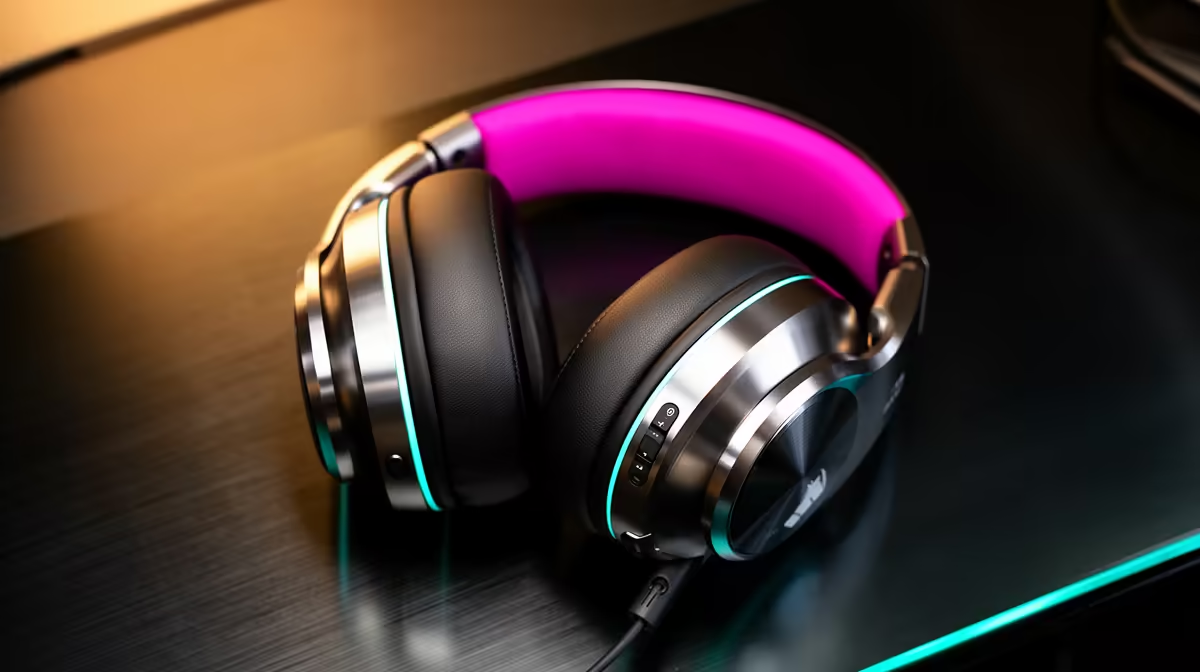
🎧 Closed-Back Headset: Isolation First, Then Everything Else
The headset spec that matters most for competitive e-sports is isolation, and closed-back construction delivers that in a way open-back headsets fundamentally cannot.
An open-back headset lets air flow freely through the ear cup, which creates a wider, more natural soundstage that audiophiles favour for music listening. In a competition setting, that same air flow lets external sound in. You hear your keyboard, your fan, the person next to you. In a critical round, the detail you miss because ambient noise masked a footstep or a reload sound is the margin between winning and losing.
A closed-back ear cup seals around the ear with a cushion, blocking a meaningful amount of external sound passively, typically 15 to 25 dB of attenuation depending on cushion material and headband seal quality. Memory foam cushions seal better than flat foam, and an over-ear design that fully surrounds the ear attenuates more than an on-ear design that presses against it.
Driver quality matters after isolation. A flat frequency response is more useful for competitive play than boosted bass. Bass-heavy tuning masks the mid-frequency range where footsteps and weapon sounds sit. Flat mids and clear treble give a positional advantage that consumer bass boost actively removes.
🔧 Assembling the R5,000 Chain
At a R5,000 total budget, the allocation across the chain looks like this.
A dynamic cardioid USB mic at around R2,000 to R2,500 covers the core microphone requirement. This tier gets you a tight cardioid pattern, hardware gain control, and zero-latency USB output without needing an audio interface. A USB dynamic at this price point handles gaming callouts, streaming commentary, and post-match analysis recordings without compromise.
A closed-back over-ear gaming headset in the R1,500 to R2,000 range delivers the isolation and driver quality the competitive use case requires. This tier typically includes a detachable or retractable boom mic for team comms, a flat cable or braided detachable cable, and a USB or combined 3.5mm jack that works on both PC and console.
A metal boom arm for the microphone rounds out the chain at R700 to R900. This is not an optional extra. A mic on a desk stand picks up every keystroke as a thud, and a dynamic cardioid already needs to be positioned precisely at mouth height to perform at its best. A metal arm holds that position through a four-hour session without drift.
The remainder of the R5,000 budget covers a basic shock mount if the arm does not include one, and a pop filter if the mic does not have an integrated screen. These two items together sit under R400 and are worth including upfront rather than discovering their absence in your first recording session.
Pro Tip ⚡
your mic gain to around 50 to 60 percent and run a Discord or team voice channel test with a teammate. Ask them to report the level on their end while you perform normal in-game actions: keyboard use, mouse clicks, chair movement. Adjust gain until your voice is consistently louder than any of those incidental sounds on their end. This calibration, done once, removes the most common callout clarity complaint in competitive teams.
Frequently Asked Questions
What microphone type suits competitive e-sports?
A dynamic cardioid. Its lower sensitivity captures your voice at close range while rejecting fan noise, team ambient sound, and venue noise from further away. The cardioid pattern adds side and rear rejection on top of that. The combination is why dynamic cardioid mics appear on professional tournament setups where noise rejection is non-negotiable.
How much should the full audio chain cost?
Around R5,000 covers the competitive chain: a dynamic cardioid USB mic at R2,000 to R2,500, a closed-back over-ear headset at R1,500 to R2,000, and a metal boom arm at R700 to R900. The remainder handles a shock mount and pop filter, keeping the full setup within budget for both LAN and stream use.
Does a headset mic suffice for e-sports?
For team voice comms at a LAN where intelligibility is the bar, a headset boom mic is adequate. For a stream where mic audio is part of the viewer experience, a standalone dynamic mic on a boom arm sounds noticeably cleaner and rejects more room noise. Serious competitors typically use a closed-back headset for monitoring and a standalone dynamic for the broadcast feed.
Why prioritise isolation in a team house?
Multiple players in the same space create bleed between microphones. Tight cardioid patterns cut cross-bleed by roughly 15 to 20 dB, keeping each player's callouts on their own channel. A poorly isolated mic that broadcasts a teammate's loud reactions makes the stream harder to follow and degrades the overall production quality.
Can I skip an audio interface to save Rands?
Yes. A USB dynamic mic converts internally and connects directly to the PC, skipping the R1,000 to R1,500 an entry-level interface costs. That saving is better applied to a quality headset at this tier. An interface adds value when you move to XLR or need hardware processing, both of which can come later.
Ready to build a competition-ready audio chain? Browse the gaming microphone and headset range at Evetech and put together the e-sports setup that keeps your callouts clear whether you are streaming from home or competing at a local LAN.










