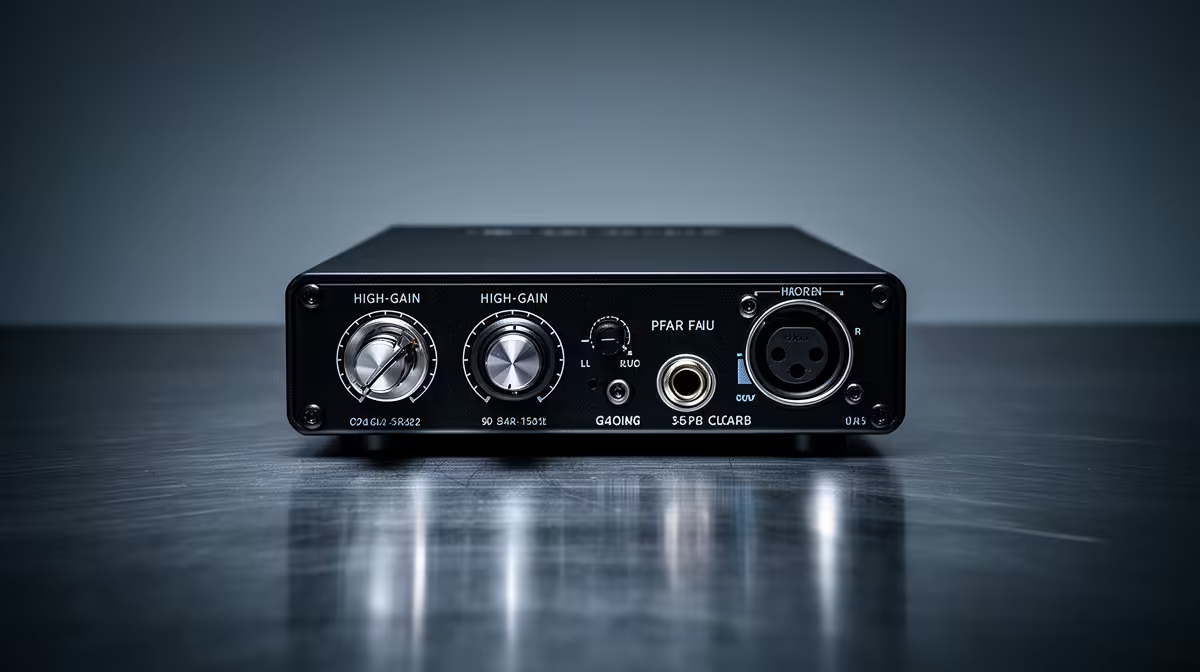
Broadcast-quality podcast audio is not a spending problem for most South African creators; it is a priorities problem. The same R6,000 budget can produce a hissy, echoey result or a clean, full-sounding studio depending almost entirely on which component you spend the most on. The answer is almost always the same: the high-gain preamp stage inside your mixer is where the money makes the most audible difference, and two good dynamic microphones fill out the rest without drama.
Quick Answer
A dual-XLR USB mixer with clean high-gain preamps costs around R2,500 to R4,000. Two solid dynamic mics add roughly R1,500 to R2,000 combined. Stands, cables, and basic acoustic treatment round out a full studio under R7,000 that records at broadcast standard.
💰 The Budget Breakdown That Actually Works
Spend the largest single portion of your budget on the mixer. A unit offering -128dBu equivalent input noise and 60 to 65dB of clean gain is the signal chain foundation; everything else connects to it. At around R2,500 to R4,000 you can find dual-XLR USB mixers with independent phantom power per channel, onboard headphone monitoring, and USB class-compliant operation requiring no driver installation.
Dynamic microphones are the correct pick for untreated South African home recording rooms. They capture tightly in front and push ambient room reflections off the recording. Two reliable broadcast dynamics cost roughly R700 to R1,200 each, depending on the model. A pair in the R1,500 to R2,000 range combined leaves meaningful budget for the physical setup.
Adjustable desk stands or short-throw boom arms cost R200 to R400 each. Two XLR cables at R100 to R200 each complete the connections. That leaves R500 to R1,000 for the single highest-return acoustic upgrade available: foam panels on the wall directly behind each presenter.
🔧 Why the Preamp Decision Drives Everything Else
A dynamic microphone outputs a weak signal. Getting that signal to a proper recording level requires 55 to 65dB of analogue gain from the preamp. A gain stage with high self-noise adds its own hiss to the signal during that amplification process; the louder the gain, the louder the hiss underneath your voice.
Invest in a mixer with a low-noise preamp and a dynamic mic that costs R800 records cleanly. Put that same R800 mic through a noisy R1,200 interface and the result sounds thin and noisy. This is why spending R1,500 more on a quality mixer outperforms spending that same amount upgrading the microphone. The preamp is the multiplier; a clean gain stage makes every mic on the desk sound better.
Onboard USB audio on the mixer also eliminates the need for a separate audio interface, which typically costs R2,500 to R3,500 as a standalone unit. An all-in-one mixer with its own USB output handles preamps, phantom power, routing, and digital conversion in a single box, saving both money and desk space.
✨ Acoustic Treatment: The Upgrade Nobody Prices Correctly
The second biggest audio improvement after a clean preamp comes from the room, not the equipment. A South African home office in a flat with bare painted walls and tiled floors produces audible room echo that no equaliser removes cleanly in post.
About R300 to R500 worth of acoustic foam panels stuck to the wall behind each presenter dramatically reduces early reflections. The foam does not need to cover every surface; treating the area directly behind the speaker and the ceiling panel directly above the recording position is enough to remove the room-in-a-room quality that marks amateur podcast audio.
A duvet hung on the wall behind the presenter, or recording inside a wardrobe surrounded by clothing, achieves a similar result for free. Both approaches work because soft, irregular surfaces absorb and scatter sound rather than reflecting it back to the microphone.
🎙️ What the Complete Studio Looks Like
For two hosts recording simultaneously: a dual-XLR USB mixer positioned centrally, two broadcast dynamic microphones on short boom arms angled 10 to 15 degrees off-axis, foam treatment behind each presenter's head, and two pairs of headphones plugged into the mixer's output jacks for monitoring.
Recording software opens on a laptop or PC connected to the mixer via USB. Both channels appear as separate inputs in the DAW, allowing independent editing of each presenter's audio. The full hardware cost at this specification sits between R5,500 and R7,500 depending on mixer model and mic choice, well within the R6,000 to R8,000 range that represents genuine value without compromise.
Frequently Asked Questions
How much does a complete starter podcast studio cost in South Africa?
Budgeting around R6,000 to R7,500 covers a dual-XLR USB mixer, two dynamic microphones, two desk stands, XLR cables, and basic acoustic foam. The mixer should take the largest share of that budget at around R2,500 to R4,000, because the preamp quality determines how good the mics sound.
Why does spending more on a mixer beat spending more on a microphone?
A high-quality preamp amplifies a quiet dynamic mic cleanly at 60dB of gain. A budget preamp adds audible hiss at that same gain level, which follows the vocal into every take. Once the preamp stage is clean, the microphone is the next constraint; the reverse spending order wastes money on a mic that the preamp cannot do justice.
Can one mixer handle two presenters simultaneously?
Yes, provided it has two XLR combo input jacks with independent gain controls and independent 48V phantom power per channel. Both presenters connect directly to the mixer, each with a dedicated level control. The USB output sends both to the recording PC, ideally as separate tracks for independent editing.
Should I buy condenser or dynamic mics for a budget SA podcast studio?
Dynamic mics are the better choice for untreated rooms. They capture sound in a tight forward pattern, so reflections from walls behind and beside the presenter contribute far less to the recording. Condensers are more sensitive and require a quieter, treated environment to sound better than a dynamic, which most budget studios cannot provide.
What is the single most cost-effective upgrade to a budget studio?
Acoustic foam panels behind the presenters. Around R400 of treatment cuts early reflections more audibly than upgrading from a R1,200 mic to a R2,000 mic on the same preamp. Treat the room first, then invest in better microphones once the gain stage and acoustic environment are clean.
Ready to build a podcast studio that records professionally from day one? Browse the audio mixer and microphone range at Evetech for dual-XLR USB mixers and dynamic mics suited to South African home studios at every budget level.