


Best AMD Monitor Under R2000 in SA 2026
Top AMD Monitor Under R2000 picks evaluated on performance, value & SA availability with current Rand pricing from Evetech.
Read moreProtect gaming PC case from dust in Cape Town, Durban and other humid areas with proven filters, positive pressure, anti-corrosion steps, and simple cleaning routines. Learn quick DIY fixes, gear picks, and schedules. 🛡️🧼
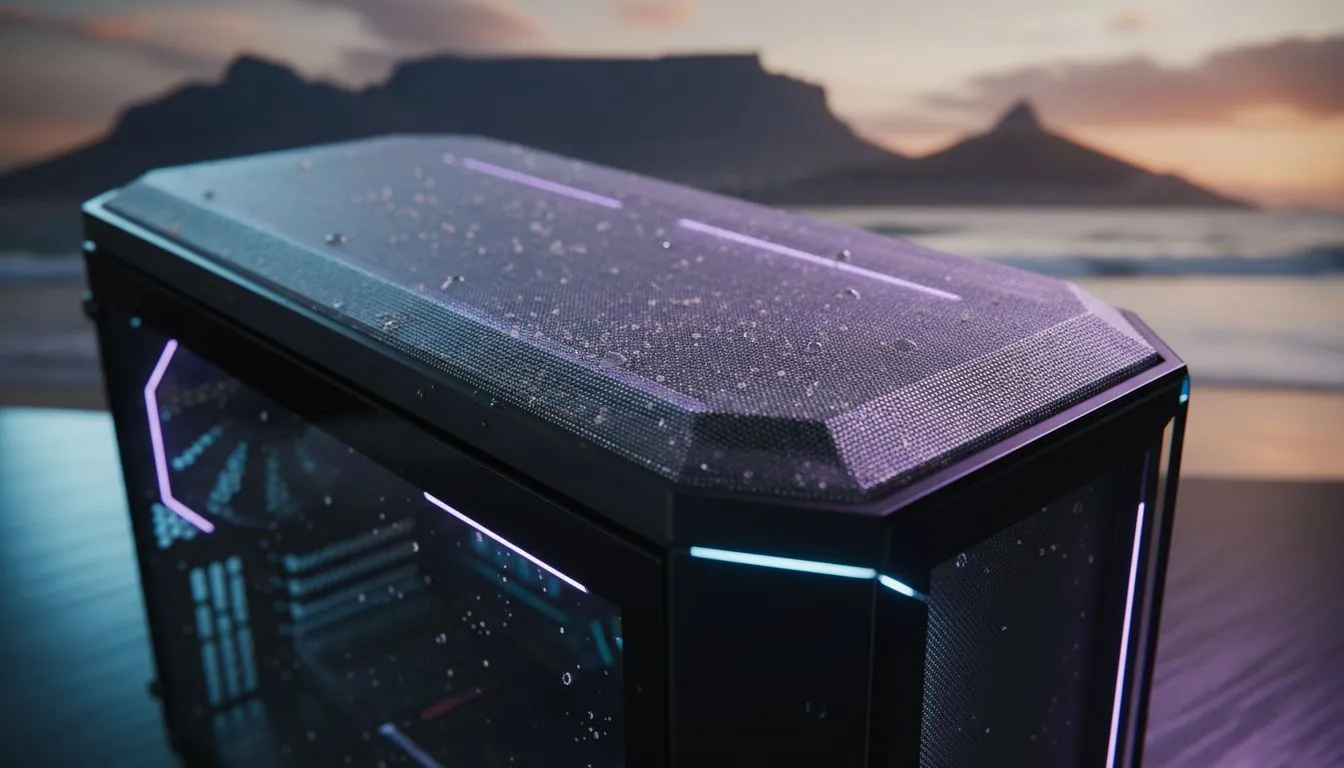
Living in a beautiful coastal town like Ballito or Muizenberg is a dream for most South Africans. However, for your hardware, the salt air and high humidity are a constant threat. When moisture meets dust, it creates a sticky, conductive residue that clings to your components. Learning how to protect gaming PC case from dust in coastal & humid areas is essential for anyone living near the ocean.
🔧
Your first line of defence is the chassis itself. Not all enclosures are built to handle the unique challenges of the South African coast. You need a case that features fine mesh filters on every intake point. If you want a premium solution with exceptional build quality, Fractal Design PC cases are legendary for their high-density filtration and smart airflow layouts.
Selecting the right foundation from a wide range of computer cases allows you to prioritise sealed panels and filtered intakes. This prevents the "salt-mist" from settling directly on your GPU or motherboard.
Airflow logic is simple... you either keep dust out or you invite it in. Positive air pressure occurs when you have more intake fans than exhaust fans. This creates a slight internal pressure that forces air out of every unsealed crack and port. It ensures that air only enters through your filtered fans.
For those looking for high-performance airflow on a budget, Gamdias gaming cases under R1500 offer excellent value. These models often include multiple pre-installed fans to help you achieve that perfect pressure balance right out of the box. Even the standard range of Gamdias gaming cases features magnetic dust filters that make weekly maintenance a breeze. ⚡
If you live within 5km of the shoreline, avoid placing your PC directly on the floor. Dust and salt particles settle most heavily at ground level. Keeping your PC on a desk can reduce dust intake by up to 30% and keeps it away from potential dampness on floor tiles.
No filter is 100% effective. In humid areas, you should aim to clean your dust filters every two weeks. If the dust becomes damp, it hardens... making it much harder to remove later. Use a can of compressed air to blow out the internal heat sinks, but always hold your fans steady to prevent bearing damage.
By taking these steps to protect gaming PC case from dust in coastal & humid areas, you extend the lifespan of your expensive hardware. Keep your setup cool, dry, and clean to ensure your frame rates stay high and your temperatures stay low. 🚀
Ready to Upgrade Your Thermal Defence? Don't let the coastal air ruin your rig. From high-end mesh masterpieces to budget-friendly airflow kings, we have the hardware to keep you running cool. Explore our massive range of computer cases and find the perfect shield for your components.
Install fine magnetic filters, set up positive-pressure airflow, seal gaps, and follow a monthly cleaning routine to limit sand and coastal air intake.
Washable fine-mesh or electrostatic foam filters trap sand and salt. Look for filters with fine micron ratings for PC case filters for coastal areas.
Clean external filters weekly and perform internal dusting every 1–3 months; increase frequency during windy or sandy seasons.
Yes. Positive pressure pushes air out through gaps and stops unfiltered inflow, reducing sand and salty coastal air entering components.
Yes. Salt accelerates corrosion on contacts and fans; use anti-corrosion sprays, control humidity, and clean contacts periodically.
Not always. Rugged cases with sealed gaskets, removable washable filters, and good airflow usually suffice for Cape Town or Durban setups.
Add magnetic dust filters, switch to positive-pressure fan layout, use rubber grommets on cables, and place silica packs in storage or spare bays.
Top AMD Monitor Under R2000 picks evaluated on performance, value & SA availability with current Rand pricing from Evetech.
Read more
UJ Eng: Monitor Setup Under R15000. Clear setup instructions with SA-specific considerations, troubleshooting tips & recommended components.
Read more
Top NZXT Monitor Under R15000 picks evaluated on performance, value & SA availability with current Rand pricing from Evetech.
Read more
Top 240Hz Monitor Under R20000 picks evaluated on performance, value & SA availability with current Rand pricing from Evetech.
Read more
Top Budget 4K monitor Under R5000 Gamers picks evaluated on performance, value & SA availability with current Rand pricing from Evetech.
Read more
Stellenbosch Arch: Monitor Setup Under R15000. Clear setup instructions with SA-specific considerations, troubleshooting tips & recommended components.
Read more
When Will the RTX 6090 Launch in South Africa Detailed answer with SA data, expert analysis & practical recommendations for local buyers.
Top Valorant Settings for RTX 5070: FPS Optimisation picks evaluated on performance, value & SA availability with current Rand pricing from Evetech.
RDNA 3.5 Graphics in Ryzen AI 400? Can You Game. Plain-English explanation of what it means, why it matters & how it affects your buying decisions in SA.

GPU Price Index : December Report. Current stock data & price tracking for SA buyers. See what is available and where prices are heading.

Core i5-14600K + B760 + RTX 5060 Build Under. Full parts list, Rand pricing & expected performance. Build confidently with SA-available components.
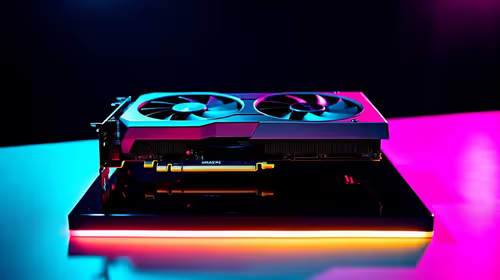
RX 7600 Apex Legends at 4K: FPS Benchmark. Real-world benchmark data, FPS numbers & performance analysis. What SA gamers can actually expect.
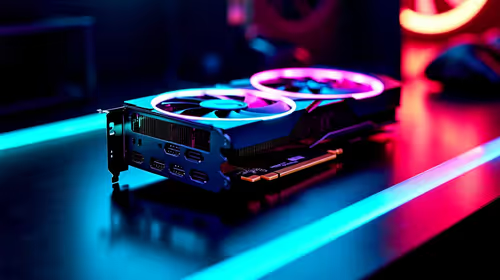
RX 7900 XTX GTA 6 at 4K: FPS Benchmark & Optimal. Real-world benchmark data, FPS numbers & performance analysis. What SA gamers can actually expect.
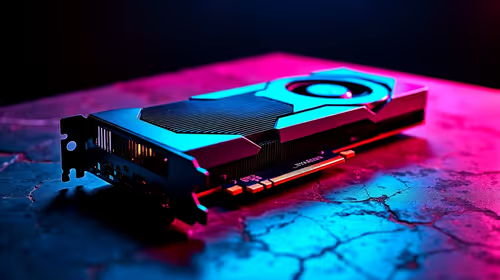
Head-to-head comparison of RTX 5070 vs RX 9070 XT: Gaming Performance for SA gamers. Performance benchmarks, Rand pricing & which delivers better value.
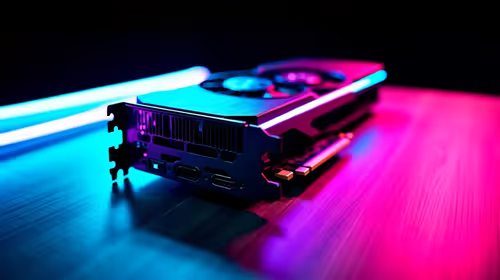
Starfield Max Settings on RTX 5070. Tested & verified settings for best FPS and visual quality on SA hardware budgets.
Top RX 7800 XT Model Under R8,000 picks evaluated on performance, value & SA availability with current Rand pricing from Evetech.
RTX 5070 Valorant Optimised Settings: Graphics. Real-world benchmark data, FPS numbers & performance analysis. What SA gamers can actually expect.

Top Laptop with Core i7 + RX 7700S: Picks picks evaluated on performance, value & SA availability with current Rand pricing from Evetech.