


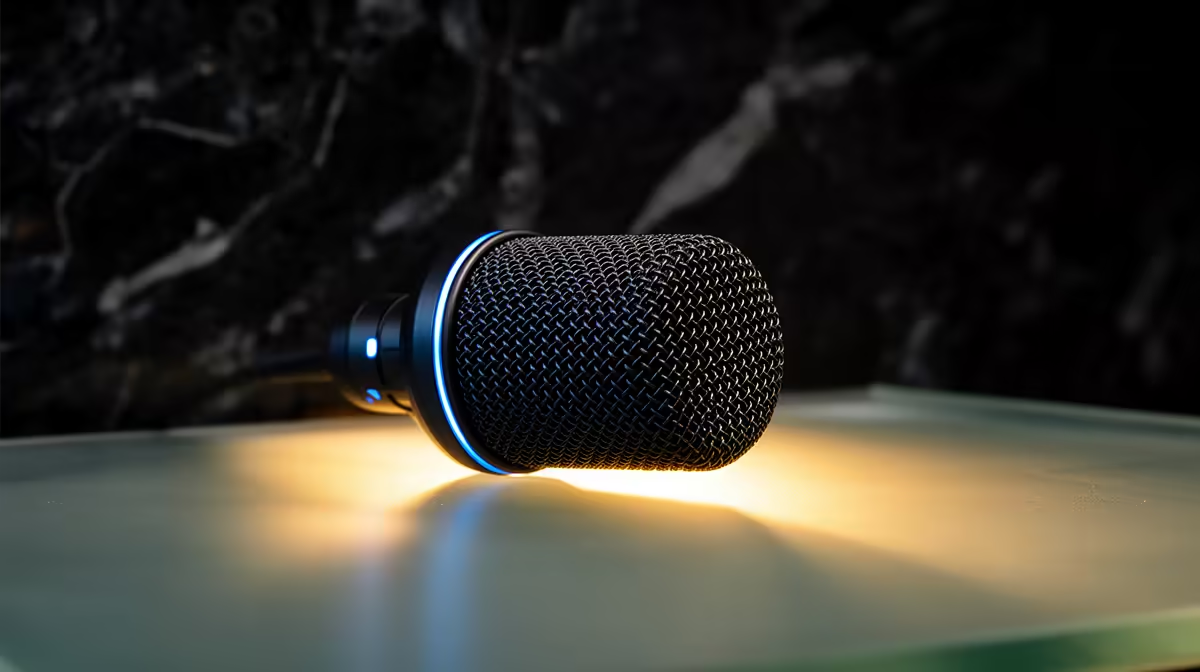
Most South African home studios are untreated rooms with bare walls, hard floors and no acoustic panels anywhere. Echo is not a taste preference in these spaces, it is a physics problem. A supercardioid pickup pattern does not solve that problem completely on its own, but it addresses the largest share of it at the source, before any software processing is involved.
Quick Answer
A supercardioid pickup pattern reduces echo by focusing tightly on the front and rejecting side reflections by 10 to 15dB. Pair it with close mic placement within 10cm and a single foam panel on the wall behind you, and slap echo in untreated rooms drops to a level that does not affect the recording.
🔆 Why Supercardioid Beats Cardioid for Noisy Rooms
All directional microphone patterns reject some sound from outside their primary capture zone. The difference between cardioid and supercardioid is how aggressively they do it and from which angles.
A standard cardioid pattern accepts sound in a roughly 130-degree front arc and attenuates sound from the sides and rear at moderate levels, typically around 15 to 20dB of rear rejection. For a controlled recording environment, this is fine. For a room with reflections bouncing off multiple walls simultaneously, the cardioid's wider acceptance zone picks up those reflections from angles it is not fully rejecting.
A supercardioid tightens the front acceptance to roughly 115 degrees and increases side rejection substantially. The areas directly to the left and right of the capsule are in a high-attenuation zone. This is precisely where most room reflections arrive during a typical desk recording, because the nearest hard surfaces are usually the side walls and the monitor in front of you reflecting sound back.
For a home studio in Cape Town or Joburg where the walls are plaster, the floors are tile or wood, and the room has minimal soft furnishings, the tighter supercardioid pattern is doing meaningful acoustic work every session without any treatment being required.
🔧 The Role of Close Placement in Echo Control
Pattern rejection handles the geometry of where sound comes from. Mic placement handles the ratio of direct voice to reflected sound, and this ratio is often more powerful than the pattern choice.
Sound follows the inverse square law. Double the distance and the intensity drops by roughly 6dB. This applies equally to your voice reaching the capsule and to room reflections reaching the capsule. When you move from 40cm away from the mic to 10cm, your direct voice signal rises by approximately 12dB relative to where it was. The room reflections, arriving from the walls at consistent distances, do not change.
The result is a sharp improvement in the ratio of direct voice to ambient echo, purely from moving closer. At 10cm, your voice is so dominant in the signal that even fairly lively room echo sits well underneath it in the mix. Combine that with the supercardioid's rejection of the side angles the reflections most commonly arrive from, and the effective echo in the recording drops substantially.
🎯 The Foam Panel: Handling What Pattern and Placement Cannot
A supercardioid pattern and close placement address reflections arriving from the sides and reduce the room-to-voice ratio. They do not address the reflection that comes back straight from the front.
When you speak, sound travels forward and hits the wall in front of you or the monitor screen. That reflection travels back toward the capsule from the same axis as your direct voice. The supercardioid pattern cannot reject it because it is arriving from the front, the acceptance zone. This is the slap echo that remains even after you have closed up your placement and used a tight pattern.
A single acoustic foam panel on the wall your sound is bouncing off absorbs that primary reflection. At approximately R300 per panel, this is the cheapest meaningful acoustic treatment available. The panel does not need to cover the entire wall. It needs to cover the reflection point, which is usually a 60 by 60cm area roughly at head height.
For a desk recording setup, the most effective single panel placement is on the wall directly behind your monitor or slightly behind the microphone itself, facing back toward you. This intercepts the forward reflection before it returns to the capsule. The difference on playback is immediately audible and usually larger than the improvement from any microphone upgrade at a similar price point.
Frequently Asked Questions
What makes a supercardioid pattern effective against echo?
A supercardioid pattern captures from a roughly 115-degree front zone and strongly attenuates sound from the sides. Room reflections most commonly arrive from side walls and furniture surfaces beside and behind you. The tight pattern pulls these down by 10 to 15dB compared to a wider cardioid, reducing the level of reflected sound reaching the capsule during recording.
Does close mic placement help with echo too?
Yes, significantly. Moving from 40cm to 10cm from the capsule raises your direct voice signal by roughly 12dB relative to the room's fixed reflection level. Room echoes arrive from the same distances regardless of where you sit, so the ratio of direct voice to ambient echo improves sharply with closer placement. This is one of the most effective echo-reduction changes you can make without spending anything.
Do you still need acoustic treatment with a supercardioid mic?
One foam panel adds meaningful improvement beyond what the pattern and placement alone can achieve. Specifically, it handles the front reflection that the tight supercardioid pattern cannot reject because it arrives from the acceptance zone. A single R300 panel placed at the primary reflection point removes the remaining slap echo that pattern geometry cannot address.
Why does an untreated room echo so much?
Hard reflective surfaces, plaster walls, tile floors, glass windows and bare wood bounce sound back rather than absorbing it. Every surface adds a slightly delayed copy of your voice back into the capsule. In a furnished room with carpet, curtains and books, those surfaces absorb much of the energy. In a bare room, the reflections build up until the recording sounds like it was made in a bathroom.
Can a supercardioid mic fix a large bare room?
Partly. It handles side reflections well and close placement improves the voice-to-room ratio. But a large bare room with significant reverberation has a longer echo tail than the pattern or placement can overcome. In that case, a panel or two plus soft furnishings like a rug and curtains make the remaining difference. The supercardioid mic and close placement remain the starting point.
Ready to clean up your room recording without rebuilding your studio? Browse the supercardioid microphone range at Evetech and pair it with a boom arm for the placement that makes the pattern work properly.










