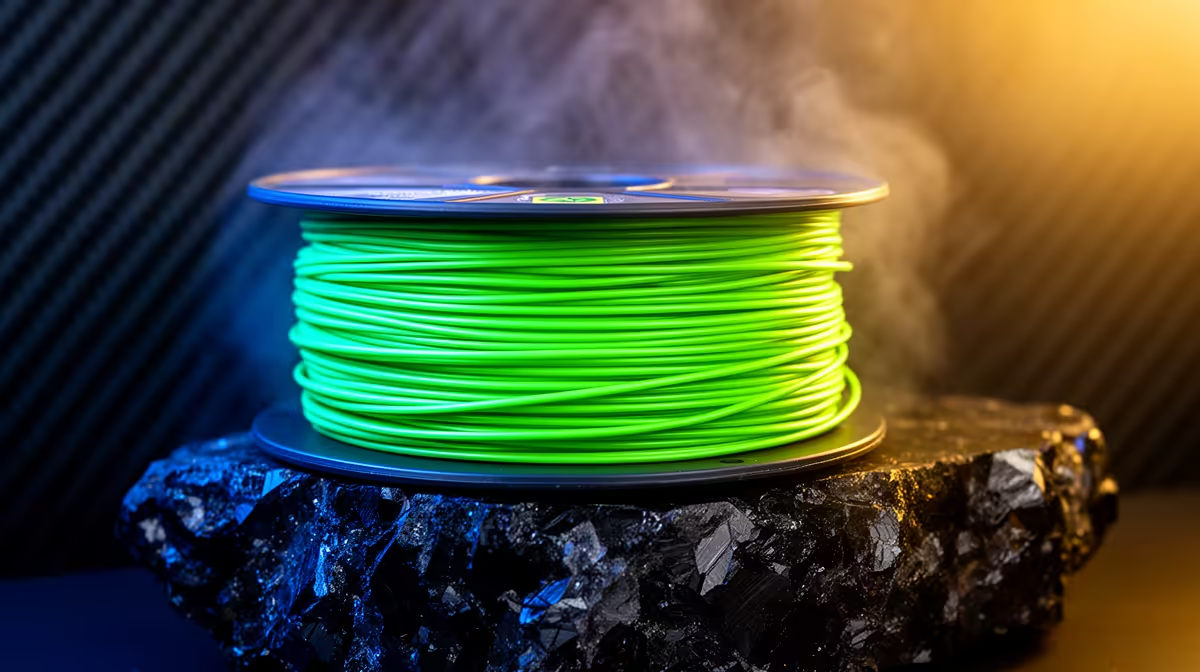
If a child is going to be anywhere near a 3D printer, PLA filament is the material you want loaded and resin is the one you want nowhere in the house. PLA is made from plant starch, prints at a low temperature, and gives off very little odour, while photopolymer resin is a liquid skin sensitiser that requires gloves, ventilation and careful disposal. For a family setup the safe choice is genuinely clear-cut.
Quick Answer
PLA is the safest 3D printing material for children: plant-derived, low-temperature and low-fume. Resin printing is unsuitable for kids because uncured resin is a skin and respiratory sensitiser. Always print in a ventilated room and keep little hands away from the hot end, which still reaches around 200C.
Why PLA is the right call for kids
PLA, short for polylactic acid, is derived from renewable plant sources like maize starch. That origin is part of why it behaves so well around children.
It prints at roughly 190C to 210C, which is cool by 3D printing standards, and it does not need a heated enclosure or high bed temperatures to produce clean parts. Lower temperatures mean fewer fumes and a smaller burn risk from the surrounding machine. PLA also produces only a faint, slightly sweet smell while printing rather than the sharper odours you get from materials like ABS. For a child supervised at a sensible distance, a PLA print on a desktop FDM printer is about as low-risk as 3D printing gets. If you are choosing a first machine for the family, browse the 3D printers at Evetech to find an FDM printer you can pair with PLA spools rather than a resin kit.
Why resin is a no for children
Resin (SLA and MSLA) printing produces stunningly detailed models, which is exactly why parents are tempted by it for miniatures and figures. The catch is the chemistry.
Liquid photopolymer resin is a known skin sensitiser. Repeated or careless contact can trigger allergic dermatitis, and the uncured liquid should never touch bare skin. The process also involves isopropyl alcohol for washing parts and a UV curing step, plus careful disposal of contaminated liquid and paper towels. None of that is appropriate to hand to a child. Even with an adult doing all the handling, a resin printer in a shared family space is a hazard a household with young kids simply does not need.
Setting up a safe space to print
Choosing PLA is step one. How you set the printer up matters just as much.
- Put the printer in a ventilated room. A window that opens or a room with decent airflow is enough for PLA. You do not need industrial extraction, but you do not want it running in a sealed bedroom either.
- Position the machine out of easy reach. The nozzle and hot end sit around 200C and stay hot for a while after a print finishes. Place the printer where a curious child cannot grab the moving parts or touch the heater block.
- Supervise the start and finish. The riskiest moments are loading filament and removing a finished part from the build plate, which often involves a scraper. An adult should handle both.
- Let kids watch, then design. The genuinely educational part for children is the design and slicing on the computer, not poking at the hardware. Keep them on the creative side of the process.
- Store filament sensibly. Keep spools and any tools in a drawer or box, away from younger siblings, between sessions.
What about other filaments?
PETG is a reasonable step up once a child is older and well supervised, since it is food-safe-friendly and tougher than PLA, though it prints hotter. ABS is best avoided around kids because it needs higher temperatures and an enclosure and gives off a stronger smell. For a starter family printer, sticking to PLA keeps things simple and safe. When you need extra spools, nozzles or a scraper, the accessories best-sellers at Evetech stock everything a home setup regularly runs through.
Frequently Asked Questions
Is PLA filament toxic when printed?
PLA is one of the lowest-emission common filaments because it is plant-derived and prints at low temperatures. It is not considered toxic for normal home use, though as with any printing you should still keep the room ventilated and avoid breathing in concentrated fumes.
At what age can a child use a 3D printer?
There is no fixed age, but children can safely take part in designing and slicing models from primary-school age with adult supervision. Hands-on hardware tasks like clearing the nozzle or removing parts should stay with an adult until a child is clearly old enough to respect the heat and moving parts.
Why is resin worse than filament for kids?
Uncured resin is a skin sensitiser that can cause allergic reactions on contact, and the process involves alcohol washing and UV curing with messy disposal. FDM filament printing has none of those liquid-chemical hazards, which is why PLA is the family-friendly choice.
Do I need a special printer for PLA?
No. Almost every standard desktop FDM printer prints PLA out of the box, and many ship with a sample spool. You only need a more capable, enclosed machine if you later move to higher-temperature materials.
How do I reduce fumes when printing PLA?
Run the printer in a room with an open window or natural airflow, and avoid sealed spaces. PLA produces minimal fumes, so basic ventilation is enough for occasional home printing.
Building a safe first 3D printer setup for the kids? Start with an FDM machine and PLA spools from https://www.evetech.co.za/components/3d-printers-130 and keep resin off the shopping list.