Strapped in, knuckles white, eyes locked on the apex... but does your sim rig feel right? The difference between wrestling a rally car down a dirt track and slotting an F1 car through a chicane isn't just the car; it's your posture. Getting your sim racing seat setup dialled in for a rally vs F1 configuration is crucial for immersion and shaving seconds off your lap times. Let's break down how to perfect your driving position.
The Core Difference: Posture and Control
Before you start loosening bolts, understand the philosophy behind each driving style. The ideal sim racing seat setup isn't about comfort for a long road trip; it's about maximising control and feeling what the car is doing underneath you.
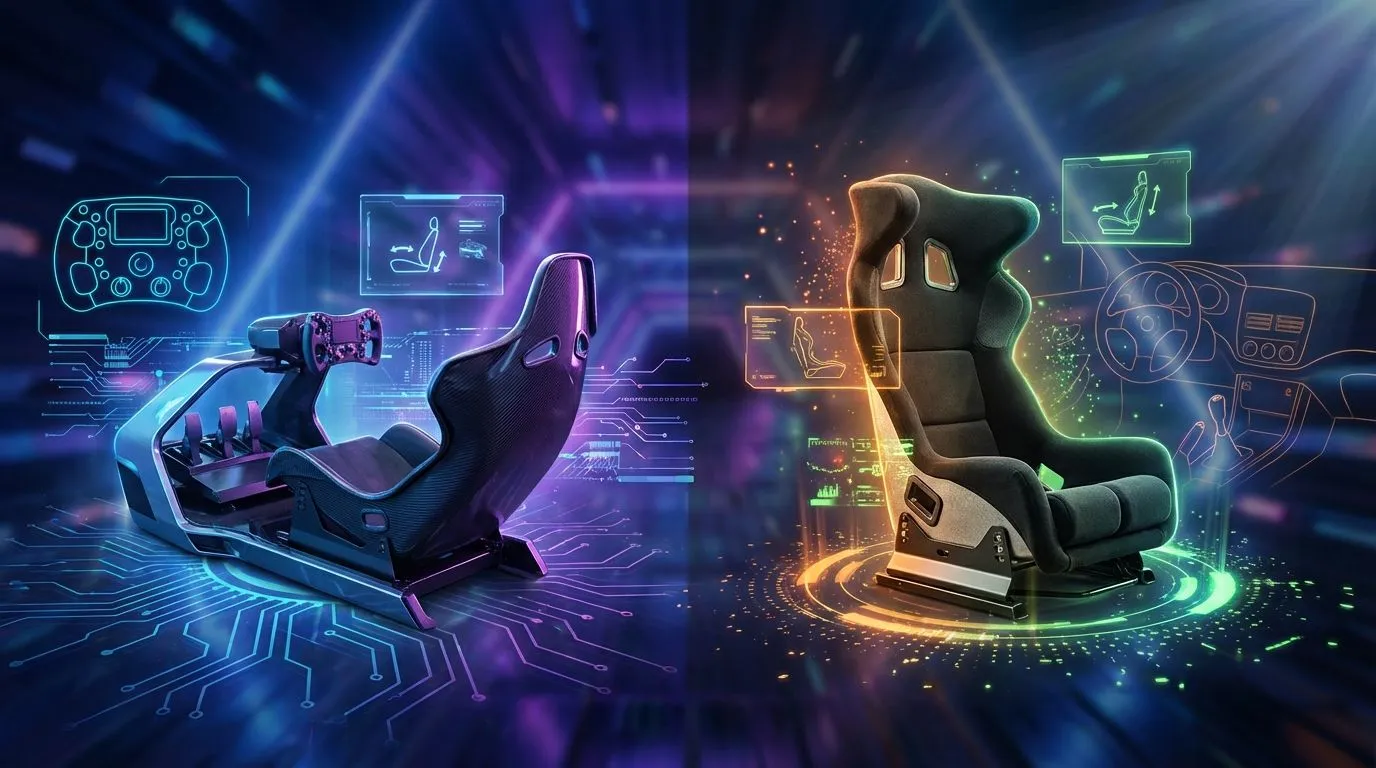
- F1 Configuration: This is the "bathtub" position. You sit low, heavily reclined, with your pedals raised high. The goal is to lower your centre of gravity and feel every vibration through the chassis. It's a static, precise position for reacting to subtle feedback at extreme speeds.
- Rally Configuration: Think of a more aggressive, upright road car position. You need excellent visibility and the leverage to make large, rapid steering and pedal inputs. Your body is braced for aggressive weight transfer, not just feeling fine-tuned downforce.
Nailing the F1 Configuration 🏎️
Achieving the perfect F1-style sim racing seat setup is about becoming one with the machine. It’s a low-slung, compact position designed for lightning-fast reactions.
Seating Angle & Height
Your primary goal is to get low. The seat should be angled back significantly, anywhere from 30 to 40 degrees, so your back and shoulders are fully supported. Your hips should be lower than your knees, creating that signature lay-down posture. This position connects your body directly to the rig, allowing you to feel the smallest details of traction loss or kerb strikes.
Pedal & Wheel Placement
The pedals need to be high and relatively close to you, forcing your knees into a distinct bend. Your wheel should be positioned close to your chest, allowing you to make small, precise inputs with your arms bent at roughly 90 degrees. This minimises physical effort and maximises control. Getting this right is the first step to building the perfect sim racing setup.
Don't Forget Your Field of View (FOV)! ⚡
Your seating position directly impacts your ideal FOV. Once your F1 or Rally setup is locked in, use an online FOV calculator. Input your monitor size and distance from your eyes to the screen. A correct FOV makes judging braking points and apexes far more intuitive and is a massive, free upgrade to your immersion.
Mastering the Rally Configuration 🌲
A rally setup prioritises leverage and quick, large movements over the reclined posture of formula racing. You're constantly fighting the car, and your seating position needs to support that.
Seating Angle & Height
Sit upright. Your back should be straight, with the seat at an angle of around 90 degrees. Your seat height should be higher, giving you a clear view over the dashboard, which is essential for spotting obstacles on a treacherous stage. This upright posture allows for a full range of motion in your arms and shoulders for those massive Scandinavian flicks.
Pedal & Wheel Placement
Your pedals will be much lower and further forward than in an F1 setup, similar to a standard road car. Your legs should have a comfortable bend, allowing for powerful and fast footwork between the accelerator and brake. The wheel should be further away, promoting larger steering inputs from the shoulders, not just the wrists. Combining this setup with quality Thrustmaster peripherals gives you the tactile feedback needed to feel the gravel.
Can One Rig Do It All?
So, do you need two separate rigs? Not necessarily. The key is adjustability. Many modern cockpits are designed as a versatile foundation for any sim racing seat setup. Look for rigs that offer significant adjustment in the seat angle, pedal plate height and angle, and steering wheel mount. A chassis with pre-drilled holes for multiple configurations is a huge plus. Investing in one of the highly adjustable Playseat rigs can provide a solid, flex-free base that can transform from a rally monster to an F1 rocket in minutes. It’s the smarter choice for the versatile South African sim racer.
Ready to Build Your Ultimate Cockpit? The perfect F1 or Rally sim racing seat setup starts with the right foundation. Explore our huge range of sim racing gear and find the perfect rig to dominate the track.