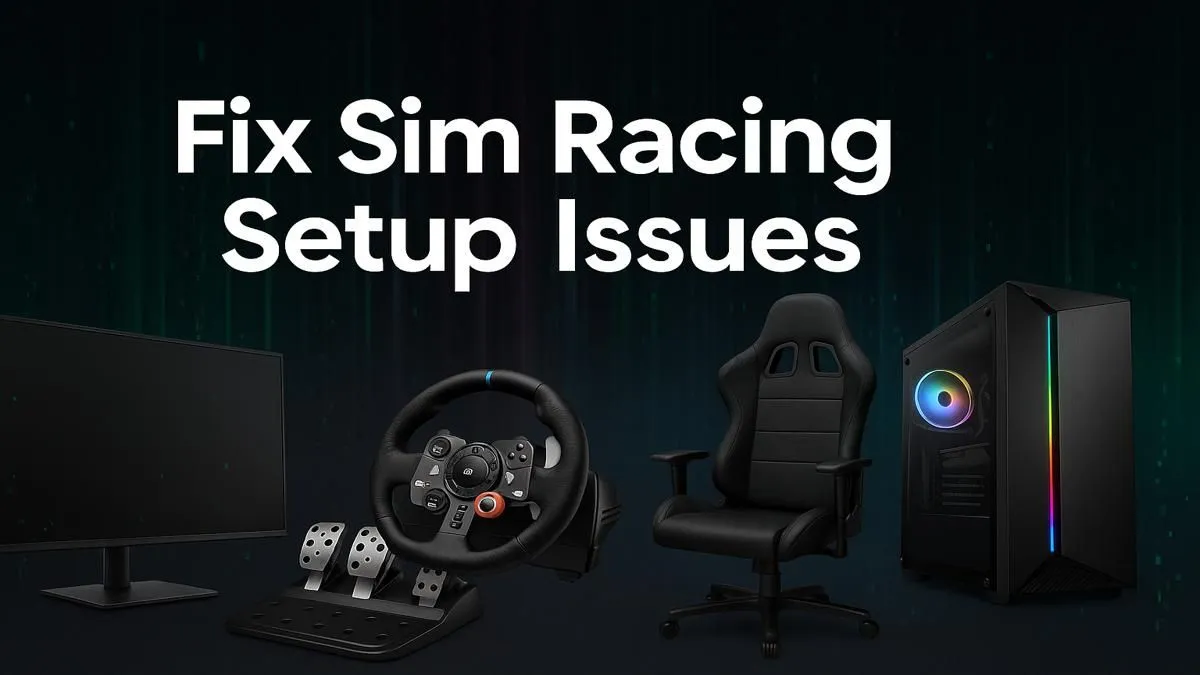
You’ve just unboxed your new sim racing rig. The smell of fresh hardware fills the air. You’re dreaming of hitting the apex at Kyalami, but when you plug everything in… nothing. Or worse, the force feedback feels weak, the pedals are unresponsive, and your virtual race car handles like a bakkie on ice. Don’t panic! This guide to sim racing troubleshooting is your express pit stop to fixing those frustrating first-time setup gremlins.
Diagnosing Your Sim Rig: Where to Start?
Before diving into complex software settings, let's cover the basics. The most common sim racing setup issues often stem from simple physical connection problems. It sounds obvious, but you’d be surprised how often a loose cable is the culprit.
Start by checking every connection:
- Power: Is the wheelbase power brick plugged in securely at both ends and switched on at the wall? Many force feedback issues come from a lack of dedicated power.
- USB: Is the wheel connected directly to a USB port on your PC's motherboard, not a hub? USB hubs can sometimes cause power or data issues. Try a different port to be sure.
- Cables: Are the pedals connected firmly to the wheelbase?
A methodical approach to troubleshooting your sim rig saves a ton of time. Once you’ve confirmed the physical setup is solid, you can move on to the software. Building a reliable setup starts with quality sim racing gear that provides a solid foundation.
Common Sim Racing Hardware Headaches 🔧
Hardware hiccups can kill your immersion. From a wobbly wheel to unresponsive pedals, let's tackle the most frequent offenders and get you back on the virtual track.
Wheel and Force Feedback (FFB) Issues
Your wheel is your primary connection to the road. When it feels wrong, the whole experience suffers. If you’re not feeling the bumps or the wheel feels disconnected, start by installing the latest drivers and firmware from the manufacturer's website. For example, a wheel from the Thrustmaster ecosystem requires its specific control panel software to function correctly. Inside this software, you can test forces, update firmware, and ensure the PC is seeing the hardware properly before you even launch a game.
Pedal Problems
Are your throttle inputs jerky or your brakes locking up with the slightest touch? Pedal calibration is one of the most critical steps. Most sim racing troubleshooting for pedals involves re-calibrating them within the manufacturer's software or the game itself. This process tells the software the full range of motion for each pedal, ensuring smooth and accurate inputs.
Quick Pedal Fix ⚡
If you have older pedals with potentiometers, erratic inputs can be caused by dust inside the mechanism. A quick spray with contact cleaner can often solve the problem. For load cell brakes, ensure they are mounted securely, as any flex in the pedal plate will lead to inconsistent braking pressure.
Cockpit and Rig Instability
You can have the best wheel and pedals in the world, but if they are mounted to a wobbly desk or a flexible rig, you're losing a huge amount of detail. Force feedback is wasted if your wheel mount is flexing under load. The same goes for braking force if your pedal plate is bending. Ensure every bolt on your rig is tight. If you find you’re still fighting against flex, it might be time to consider a more rigid foundation, like one of the sturdy Playseat chairs and cockpits, which are designed to handle the intense forces of modern direct drive wheels.
Tackling Software and Driver Glitches
If your hardware checks out, the problem likely lies in the software. This is a common area for sim racing issues, especially when juggling multiple peripherals. Always ensure you only have one control software running at a time to avoid conflicts.
Finally, dive into your game's specific control settings. Each simulator (like Assetto Corsa Competizione or iRacing) handles force feedback and device mapping differently. Make sure you've selected the correct device and run the in-game calibration wizard. A setting that feels perfect in one game might feel completely wrong in another, so be prepared to tweak and save profiles for each of your favourite titles. 🚀
Ready to Upgrade Your Drive? Sometimes, the best fix is a fresh start. If troubleshooting reveals your old gear is the bottleneck, it might be time for an upgrade. Explore our complete range of sim racing gear and find the perfect wheel, pedals, or cockpit to dominate the track.