



Fix Monitor stuck at 60Hz checks on DDR5 build
Monitor stuck at 60Hz on DDR5 build needs careful display-chain checks, not a single-part blame. Test the screen, cable, port, scaling, drivers, and setup context before replacing hardware.
Read moreUniversity of Cape Town residence: compact should be shortlisted around the job it must do. South African buyers should compare wattage, efficiency, protection, and connector support, warranty path, and upgrade room before treating any pick as best.
For University of Cape Town residence use, the practical setup in the R10,000-R18,000 planning range is a 14- or 15-inch student laptop, laptop stand, compact keyboard, mouse, and a 24-inch 75Hz/100Hz monitor if desk space allows. It must fit a small desk, stay easy to move during holidays, and handle 1080p study work plus light esports around 45-90 fps on low settings when the GPU allows it. Use R10,000-R18,000 as a planning range and confirm current Evetech stock before buying.
UCT residences around Rondebosch and Upper Campus, with compact desks and shared rooms make size and cable control more important than a showroom-style build. Measure the desk, check whether an external monitor is allowed, and keep the keyboard, mouse, headset, and charger footprint small. A 24-inch screen is usually the upper comfort point for a narrow residence desk; 27-inch can work, but it often leaves too little room for books and food.
Build the basket around named, replaceable parts: ASUS Vivobook, Lenovo IdeaPad, MSI Modern, Logitech MK270, and ASUS VA24EHF-style 24-inch monitors. Keep 16GB RAM as the practical floor, choose a 512GB SSD only when budget is tight, and move to 1TB if games, design apps, or recorded lectures will live on the same machine. In Cape Town, a single courier delivery is simpler than trying to fix missing cables after move-in week.
For shared rooms, the best setup is the one that stays tidy and quiet after midnight. Use a headset instead of speakers, choose a keyboard that will not annoy a roommate, and label chargers or adapters before the semester starts. If the residence network has Ethernet, use it for gaming and streaming; if it is Wi-Fi only, keep the PC close to the strongest access point and test latency before blaming the hardware.
Buy the core computer first, then add monitor, keyboard, mouse, and headset only if the budget still fits. A reliable laptop or compact PC with 16GB RAM is more important than decorative accessories.
Yes, but keep it compact and quiet. A 24-inch monitor, headset, and small keyboard are easier to live with than a large tower, speakers, and oversized desk gear.
For esports, 60 fps is the minimum comfort target and 120 fps is better on a 100Hz or 144Hz monitor. The GPU matters most, so do not expect a study-only laptop to perform like an RTX gaming machine.
Measure the desk before checkout Check the residence desk width, plug position, and network option, then buy the R10,000-R18,000 setup that keeps study gear and gaming gear usable together.
Monitor stuck at 60Hz on DDR5 build needs careful display-chain checks, not a single-part blame. Test the screen, cable, port, scaling, drivers, and setup context before replacing hardware.
Read more
Recommended build for Genshin Impact at R60 000 should justify the spend with high-end parts that help beyond one title. SA buyers should prioritise GPU headroom, large SSD space, reliable power and quiet cooling for long-term use.
Read more
Atomic Heart stuttering on RX 9070 XT points to frame pacing, driver, or settings issues first. Check display mode, shader cache, overlays, background load, and thermals before replacing parts.
Read more
Cell C Fibre Polokwane packet loss can come from Wi-Fi, drivers, router settings, Ethernet, line faults, or game-server routing. Start with local checks before replacing parts or escalating support.
Read more
Setting up a running local LLMs rig in Hermanus should be shortlisted around the job it must do. South African buyers should compare fit, performance, compatibility, and upgrade room, warranty path, and upgrade room before treating any pick as best.
Read more
UCT Actuarial Science student in Wynberg? Best needs a balanced parts plan, not a random basket. Map the CPU, GPU, RAM, SSD, cooling, and monitor target to the budget so SA builders know where to spend first.
Read more
Windows 11 spatial sound greyed out needs an output-device check before a headset purchase. Select the intended playback device and look for Windows Sonic for Headphones. Speaker, HDMI and headphone routes can expose different spatial sound options.
DisplayPort 2.1 vs DisplayPort 1.4 for aAA single-player gaming Difference explained is mostly about compatibility, budget, upgrade path, and setup fit. SA buyers should check device support and real needs before expecting a clear win from either.
RTX 4080 too expensive? Cheaper SA alternatives should solve the exact workload without overbuying. Compare nearby options by GPU tier, VRAM, cooling, and PSU headroom, local warranty path, and total build balance before moving to a product page.
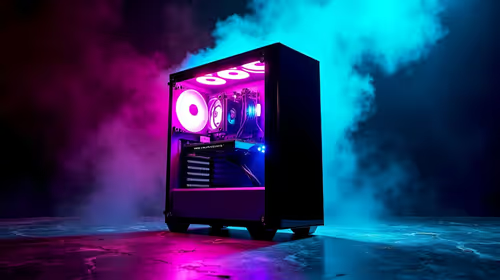
Recommended build for Hollow Knight Silksong at R100 000 SA buyer's guide frames a dream-class PC around more than one game. Balance flagship graphics, premium CPU, 32GB or more RAM, fast SSDs, quiet cooling and power quality.

Windows 11 Ethernet unidentified network needs a cable, router and PC comparison before a reset. Test a second device and run the network troubleshooter. Save adapter drivers and custom settings before using network reset as the final step.
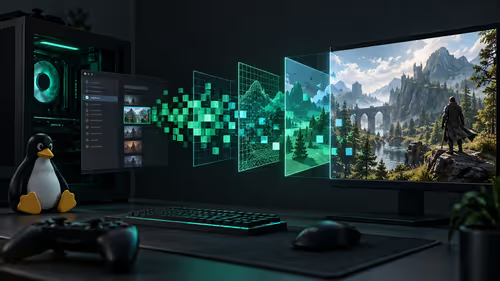
Steam processing Vulkan shaders is graphics preparation rather than a normal game download. On Linux, compare progress and repeat launches before deleting caches. A driver or game change can alter the work, so gather evidence before paying for a new GPU.

Steam discounts and events are moving towards personalised recommendations in early 2027. A firm start date is still pending. The change concerns promotional visibility, so compare the actual rand price and game requirements before making a purchase.
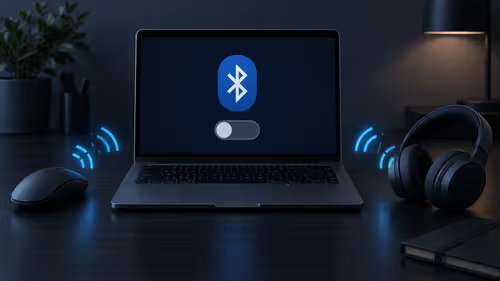
Windows 11 Bluetooth toggle missing can mean the radio is not being detected or enabled. Start with a complete power-off, then check the adapter and drivers. Pairing a new mouse cannot repair an absent Bluetooth control, so isolate the PC first.
Windows 11 spatial sound greyed out needs an output-device check before a headset purchase. Select the intended playback device and look for Windows Sonic for Headphones. Speaker, HDMI and headphone routes can expose different spatial sound options.

NACON Revolution 5 Unlimited adds a control screen, TMR sticks and charging dock. The controller targets PS5 and PC use, with a dedicated PC mode. Match your games and connection route before treating its premium features as a reason to replace a working pad.

GeForce NOW October 2026 games include 25 planned additions, with six in the first week. Store release dates do not guarantee instant cloud access. Check the exact game, store version, regional service and connection before changing your PC budget.

DGX Spark 64GB is a new local-AI configuration scheduled for 23 October. Its smaller unified memory pool changes workload planning. Compare model size, context and concurrency with the existing 128GB system before requesting a South African quote.