Quick Answer
Lag and hitching on a DDR5 build is frame-pacing, a dropped memory profile, or a background process, not a slow stick. Confirm EXPO or XMP is on at the rated speed, close overlays, and check Task Manager for a process pinning a core. A 6000MT/s kit running at 4800 because the profile dropped is a common hidden cause. Most lag on a DDR5 rig is the EXPO profile silently dropping to 4800MT/s after an update, so confirm the rated speed first.
Read the logs before you swap anything
Open Event Viewer (Windows Logs then System) and look for Kernel-Power 41 (the dirty restart), WHEA-Logger 18 (a memory or bus error), and any 0x1A or 0x124 BugCheck on a blue screen. Sort by the timestamp of the last fault so you compare like with like. In HWiNFO64, log a five-minute gaming run and check whether the input lag and hitching you see coincide with a temperature spike, a clock drop, or a voltage dip. A reboot or freeze wipes the screen evidence, so the log is the only honest record of what actually happened.
The fix sequence that actually works
Clear CMOS, then re-enable EXPO or XMP, set VDD and VDDQ to 1.35V, keep SoC voltage at or below 1.25V on AM5, and leave tRFC on Auto. Run MemTest86 for at least four passes with the profile applied; a single error means the profile is too aggressive, so drop the speed one step (6000 to 5600MT/s) and re-test. Update the latest chipset driver (AMD chipset 7.x or Intel INF), and confirm a quality 750W supply (Corsair RM750e or Cooler Master MWE 750). A stable kit passes MemTest cleanly and holds its rated speed without a single error.
How to tell real lag from a dropped memory profile
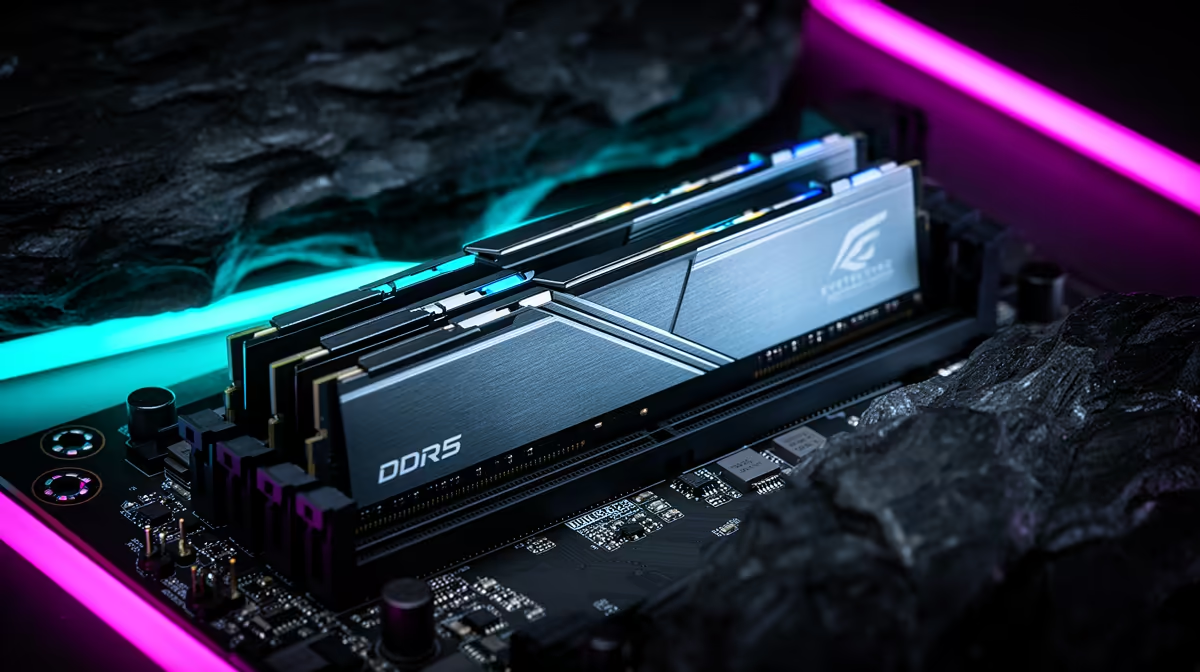
Open HWiNFO64 and check the Memory Clock line during a game. A 6000MT/s kit should report 3000MHz (DDR is double data rate); if it reads 2400MHz it has fallen back to 4800MT/s and you have lost real performance. Re-enable EXPO in the BIOS, run a four-pass MemTest86, and re-check. On a Ryzen 7 9800X3D pairing, restoring a dropped 6000 profile is often worth 10-15% in the 1% lows you feel as smoothness. Also clear the shader cache and cap FPS a few below your refresh; combined, these fix the bulk of lag that is not a memory problem at all. A 2x16GB DDR5-6000 kit currently sits from around R1,800 at Evetech, but you rarely need new RAM here, just the profile applied correctly.
FAQ
Why does my build feel laggy even at high FPS?
Lag and hitching live in your 1% lows and frame pacing, not the average FPS. Background processes, an overlay, thermal throttling, or VRR sitting out of range all cause it. Close overlays and cap FPS first.
Does a faster SSD or more RAM fix lag?
Sometimes. If a slow or full drive is the cause, a Gen 5 NVMe SSD or a 32GB DDR5 kit helps; but if the lag is frame-pacing or driver-related, storage and RAM will not change it. Diagnose first.
How do I find what is stealing performance?
Open Task Manager during a session and sort by CPU and GPU. A background app pinning a core, or a driver overlay, is a common hidden cause that costs you smoothness without dropping the average frame rate.
Fix the cause, not the symptom. Before you buy new RAM, clear CMOS, re-enable EXPO or XMP, set VDD and VDDQ to 1.35V, keep SoC voltage at or below 1.25V on AM5, and leave tRFC on Auto, and run a four-pass MemTest86. A failing profile, not a failing kit, is behind most of these, and any genuinely faulty stick is covered locally through Evetech.