Quick Answer
Low microphone volume is almost always a settings or gain issue, not a dead mic, so diagnose before you upgrade. Check the Windows input level and mic gain, disable any -20dB attenuation, and move the mic within 10-15cm of your mouth; only if a known-good cardioid mic like the HyperX SoloCast (R1,200-R1,600) still sounds faint should you replace it.
Diagnose the volume problem first
Start in Windows Sound settings: set the input device correctly, raise the input volume to 100%, and look for a mic-boost or gain slider that is sitting too low. In your chat or recording app, confirm it is using the right device and not a laptop array. A common culprit is an app applying attenuation or noise suppression that crushes your level, so toggle those off and retest. Distance matters too, since a cardioid mic 30cm away sounds far quieter than one at 12cm.
When new hardware is the real fix
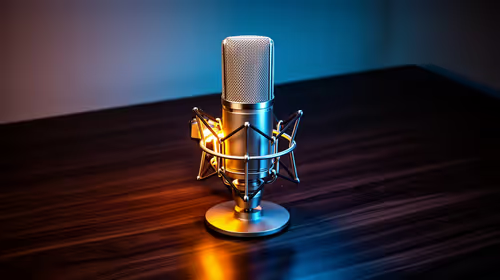
If gain is maxed and the mic still sounds thin, the cause may be a low-output capsule on a no-name mic or a dying connector. At that point a known-good cardioid USB mic like the HyperX SoloCast (R1,200-R1,600) or Fifine K669 (R600-R900) gives a healthy output with headroom to spare. A boom arm to bring the capsule close and a pop filter then let you run a lower, cleaner gain rather than boosting noise. Replacing before checking settings often wastes money on a mic that has the same problem.
Buying it in South Africa
Evetech ships mics nationwide, and if a settings fix is not enough, a dependable replacement sits at R600-R1,600. Choose a cardioid USB condenser with a solid USB-C connector and aim it at your mouth from 12-15cm for the strongest clean signal. Add a boom arm so you can position the mic close without it eating desk space, which raises your effective volume more than cranking gain does.
FAQ
Why is my mic so quiet?
Usually a settings issue: input volume too low, mic boost disabled, or app-side attenuation. Distance also matters, since a mic 30cm away sounds far quieter than one at 12cm. Check those before assuming the mic is faulty.
Will a new mic fix low volume?
Only if the cause is hardware. If gain is maxed and a known-good mic still sounds faint, the capsule or connector may be the problem. Otherwise a new mic inherits the same settings issue.
How close should a USB mic be to my mouth?
About 12-15cm for a cardioid condenser. That distance gives a strong, clean signal at a moderate gain, so you avoid boosting the noise floor to compensate for a mic placed too far away.
and position before you spend. Raise input to 100%, disable attenuation, and bring the mic to 12-15cm. Most low-volume problems vanish for free.