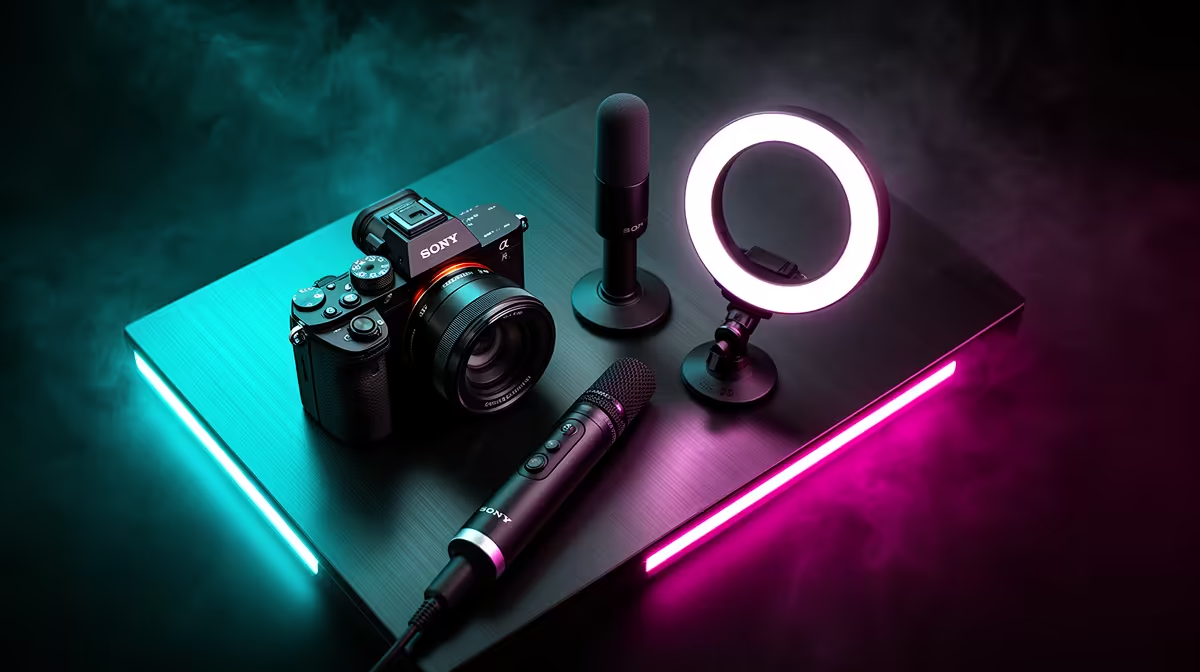
Shooting on the move means every cable is a hazard, and every tether to a wall socket is a shoot cut short. A fully wireless portable vlogging setup changes that equation entirely: you stop hunting for power outlets at a Cape Town coffee shop or a Joburg street corner and start focusing on what is actually in the frame.
Quick Answer
A wireless vlogging setup needs five components: a stabilised camera or phone, a clip-on wireless lavalier microphone, a portable LED panel with its own battery, a compact tripod, and a 20,000mAh power bank to recharge everything between shots.
🎙️ Camera and Stabilisation
Your camera choice anchors the whole rig. A dedicated vlogging body with a flip-out touchscreen lets you frame yourself accurately while moving, something a rear-only display cannot do. Optical zoom matters on the street where you cannot always close the distance to your subject.
If budget is the constraint, a modern flagship phone is a workable starting point. The sensor size is smaller than a dedicated camera and optical zoom is limited to a couple of focal lengths, but the convenience is genuine and the results are respectable in decent light. Whichever you choose, a three-axis electronic gimbal or in-body stabilisation keeps footage watchable when you walk and talk simultaneously.
Storage runs out faster than most people expect. 4K footage consumes roughly 6GB per ten minutes of recording, so a 128GB card fills in around three hours of actual shooting. Carry a spare or offload clips to your phone's internal storage mid-day.
🔌 Wireless Audio
A lavalier transmitter clipped to your collar and a receiver slotted into the camera's cold shoe decouples your audio from your body movements entirely. Good wireless lavalier systems maintain clean audio at 50 metres or more, which is ample for a single creator moving around an outdoor market or venue. The transmitter runs on a built-in rechargeable battery that typically lasts four to six hours per charge, roughly matching a full day's shooting in bursts.
Wind is the main enemy of outdoor lav audio. A small foam windshield over the capsule drops wind rumble by a useful margin, and most kits include one. Tuck the transmitter in a breast pocket rather than clipping it to a lapel if wind is strong.
💡 Portable Lighting
Natural light is free, but it is not reliable. An overcast Durban afternoon and direct midday sun in summer produce very different results on a facecam or interview shot. A pocket LED panel with a built-in lithium cell and a CRI rating around 95 fills in the shadows under a subject's eyes and lifts skin tones without a colour cast. Panels under 15cm wide fit in a jacket pocket and draw no external power.
Bi-colour panels that shift between roughly 3,200K and 5,600K let you match whatever ambient light surrounds you. Warm tungsten interior, cool outdoor shade, or anything between: one dial adjusts to suit instead of making the subject look green or orange.
Pro Tip ⚡
Bounce the LED off a nearby white wall or light-coloured ceiling rather than pointing it directly at the subject. The result is softer, more flattering light that reads as natural on camera, even in a small urban SA flat.
🔋 Power Management
A 20,000mAh power bank is the invisible backbone of a wireless rig. At that capacity it will fully recharge a compact camera two to three times and top up the LED panel twice over before needing a socket itself. Charge the bank overnight and you walk out with a full day's power budget.
Carry the right cables. A USB-C to USB-C lead for the camera, a second USB-C or micro-USB for the lav receiver, and a third for the LED. Many power banks supply two or three ports simultaneously, so you can top up the whole rig during a lunch break rather than waiting for each device in turn.
A compact tripod with legs that fold down to roughly 20cm serves double duty: standing on a table for a static talking-head shot, or held in one hand as a grip for handheld walking footage. Look for a ball head that locks firmly at any angle, because a slow-tilting head is useless mid-shot.
Frequently Asked Questions
What wireless microphone range is adequate for solo vlogging?
A 50-metre range gives generous room for movement in most outdoor shooting situations. You are unlikely to stray further than 20 metres from your camera in practice, so a mid-range wireless lav system covers that comfortably. What matters more than raw range is the stability of the connection: a system that holds clean at 30 metres beats one that advertises 100 metres but drops out whenever a phone is nearby.
How long does a 20,000mAh power bank last in the field?
It depends on what you are charging and how often, but for a standard wireless vlogging rig it sustains a full eight-hour shooting day without trouble. A compact camera body draws roughly 7 to 9 watts under continuous recording. At that rate, even accounting for charging inefficiency, 20,000mAh comfortably refills the camera battery twice and keeps the LED and lav receiver running all day.
Can a phone substitute for a dedicated vlogging camera?
A recent flagship phone produces excellent video, especially in good light. Where it falls short is a fixed-lens sensor that cannot zoom optically beyond two or three times, and the lack of a side-mounted flip screen means you are guessing at your own framing unless you use a monitor app on a second device. For a beginner or anyone shooting casually, a phone is a perfectly valid starting point.
Why does the LED panel need its own battery?
Drawing power from the camera's battery via USB shortens your recording time significantly, since video recording and powering an external light together drain the battery in roughly half the normal time. A panel with its own cell keeps the power loads independent: the camera focuses entirely on capturing footage while the light handles its own runtime.
How compact should the tripod be for travel vlogging?
A folded length under 25cm fits in a laptop sleeve pocket or a small daypack side pocket without bulk. Look for legs that splay wide enough to stand on uneven surfaces like cobblestones or grass, and a centre column that extends to at least 150cm so the camera reaches eye level when you want a static shot rather than a low-angle clip.
Ready to shoot an entire day's content without a single wall socket?
Browse the wireless microphones, portable LED panels, and compact tripods in the Evezone gear range, and put together a rig that keeps up wherever you go.