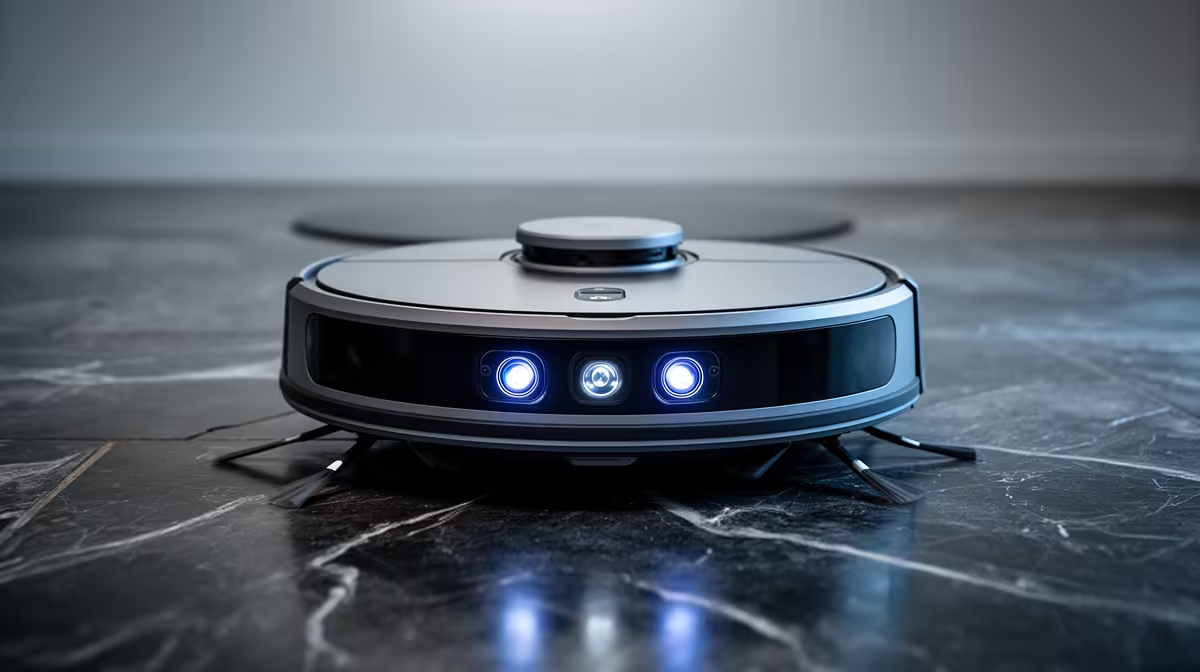
The two complaints that defined early robot vacuums, getting stuck on a stray cable and leaving a fuzzy line of dust in every corner, are exactly what the 2026 models set out to fix. AI obstacle avoidance now lets a robot spot a sock or a charging cable as small as 1cm and steer around it, while extending side-brush arms reach into corners that fixed brushes always missed.
Quick Answer
AI obstacle avoidance uses onboard cameras and sensors to identify objects as small as 1cm and reroute around them in real time, so the robot stops eating cables and bumping furniture. Extending side-brush arms physically push out from the body to sweep debris from corners and along skirting that older fixed brushes could not reach. Together they close the two biggest coverage gaps of earlier robot vacuums.
What The Cameras And Sensors Actually Do
Older robots navigated mostly by bumping into things and turning. The 2026 generation looks before it touches. A forward camera, paired with depth and structured-light sensors, builds a live picture of what is in front of the robot and classifies it. A cable, a shoe, a pet bowl, a cluster of toys, the system recognises the shape and plans a path around it rather than driving straight in.
The practical payoff is fewer rescues. You stop finding the robot tangled in a phone charger or beached on a rug tassel. It also means you can leave the floor as it is, lived-in rather than show-home tidy, and still trust the clean to finish. Detecting objects down to roughly 1cm is the threshold that separates a robot that dodges a power bank from one that swallows it.
Why The Arms Matter More Than They Sound
A round robot cleaning a square room has an obvious problem: the corners. Fixed side brushes flick at the edges but never quite reach into the 90-degree corner or tight along the skirting. The result is the faint dust triangle you used to finish by hand.
Extending arms solve that mechanically. When the robot detects it is near a wall or corner, a side brush swings or slides outward to push debris from that dead zone into the suction path. It is a small movement with a real result: edge and corner cleaning that genuinely covers the floor instead of stopping a few centimetres short. Combined with smarter mapping, the robot now treats the whole room rather than just the open middle.
What This Means For A Home Here
For a typical SA home with rugs, pets, kids, and the odd cable strung across a room, these two features change how hands-off the robot really is. Obstacle avoidance means you are not pre-tidying the floor before every run, and the extending arms mean fewer touch-ups in corners. It is the difference between a gadget you babysit and an appliance that just gets on with it.
These robots also sit inside a wider smart-home setup, so it is worth seeing what pairs well with them in the smart home appliances range at Evetech. And if you are kitting out the rest of the home with the cables, mounts, and extras that tie it together, the best-selling accessories are a sensible place to browse.
The Short Version
AI obstacle avoidance keeps the robot out of trouble, and extending arms make sure it actually reaches the edges. The 2026 models are the first that genuinely earn the "set it and forget it" promise the category always made.
Frequently Asked Questions
How small an object can a 2026 robot vacuum detect?
The better models detect objects down to roughly 1cm using cameras and depth sensors, which is enough to dodge cables, socks, and pet bowls rather than getting stuck on them.
Do extending arms really clean corners better?
Yes. The arm pushes out toward walls and corners to sweep debris that a fixed brush leaves behind, so the robot covers the edges of a room instead of stopping a few centimetres short.
Will AI obstacle avoidance stop my robot getting stuck on cables?
It greatly reduces it. The camera recognises cables and similar small objects and routes around them, so you no longer need to tidy every wire off the floor before a run.
Do I still need to tidy the floor before running one?
Far less than before. Obstacle avoidance handles most stray items, though very small or low-contrast objects can still trip up any robot, so a quick clear of the worst clutter never hurts.
Want a vacuum that dodges the clutter and actually reaches the corners? Explore the latest models in the smart home appliances range at Evetech and hand the floors over to the robot.