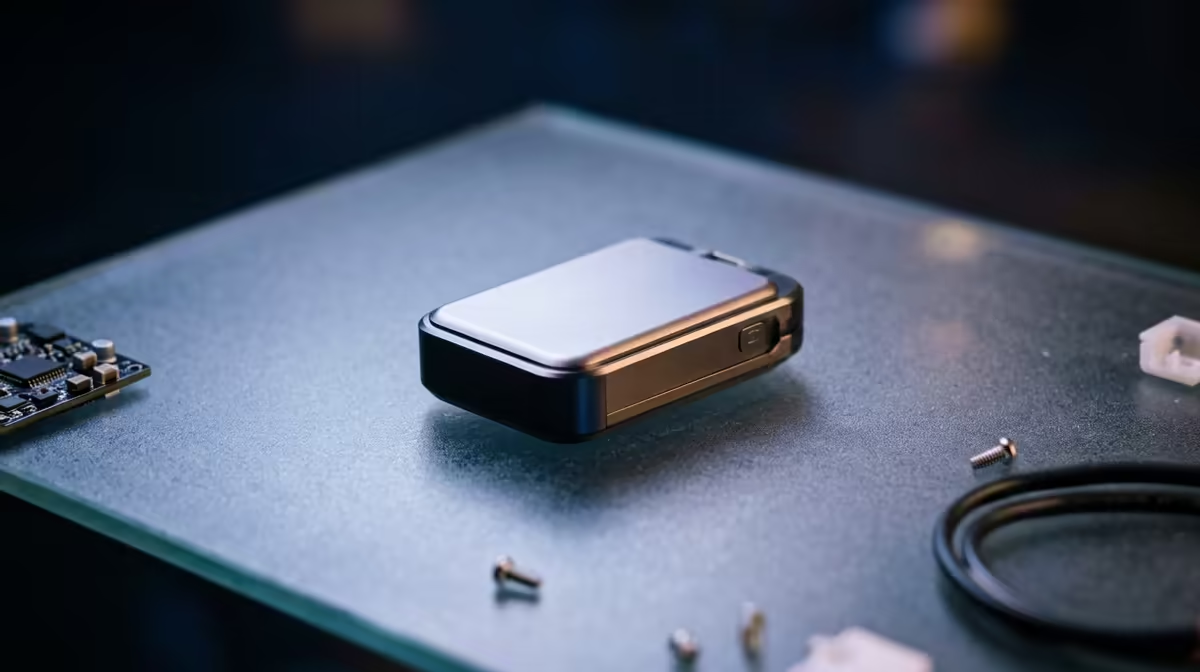
A single camera module that snaps onto a LEGO SPIKE hub one afternoon and an Arduino board the next, recognising objects and colours without ever touching the internet, is the kind of quietly practical upgrade that changes how a classroom teaches robotics. AI vision sensors built for STEM kits in 2026 have collapsed what used to be a tangle of platform-specific cameras into one cross-compatible module that speaks to LEGO SPIKE, EV3, Arduino, ESP32, and micro:bit alike.
Quick Answer
These new AI vision sensors run object and colour recognition directly on the module, so no cloud connection is needed for real-time results. One camera now works across LEGO SPIKE, EV3, Arduino, ESP32, and micro:bit, which means a single purchase serves multiple platforms a learner is likely to grow through. On-device inference also keeps response times low and keeps learner data off the internet entirely.
What makes these sensors different
Earlier vision add-ons were locked to one ecosystem and often leaned on a phone or a cloud service to do the actual recognition. The 2026 generation flips both of those. The recognition happens on a chip inside the module itself, so the moment the camera sees a red block or a familiar shape, it reports it back to whatever board it is plugged into without a round trip to a server. That on-device approach removes the lag that made earlier cloud cameras frustrating for live robotics, and it works perfectly well in a classroom with patchy connectivity.
Cross-compatibility is the second shift. Because the module exposes standard connections and common protocols, the same sensor that drives a LEGO SPIKE project can be moved onto an Arduino or micro:bit build. A school buys one device category rather than three.
Why on-device recognition matters for SA classrooms
For South African educators, the no-cloud design is more than a technical footnote. Connectivity in many schools is shared, capped, or simply unreliable, and a sensor that depends on the internet becomes dead weight on the days the link drops. A module that recognises objects and colours locally keeps a robotics lesson running regardless of the network, which makes it genuinely usable rather than a demo that only works under ideal conditions.
There is a privacy benefit too. When recognition runs on the device, the camera feed never leaves the room, so learner images are not being shipped to a remote service. For a teacher responsible for a class of young students, that is one less thing to manage.
How learners actually use them
In practice, a learner trains the sensor on a handful of examples, a few coloured blocks or a couple of simple shapes, then writes code that reacts to what the camera sees. A line-following robot can suddenly stop at a red marker. A sorting arm can separate parts by colour. A micro:bit project can count how many of an object pass in front of it. Because the same module carries across platforms, a student who starts on LEGO SPIKE in primary school can keep using the sensor when they graduate to Arduino projects later, which protects the investment a family or school makes.
These modules sit alongside the broader category of smart home and connected-device gear at Evetech, and pairing one with the right cables and mounts from the accessories and best-sellers range gets a build up and running without hunting for adapters.
Frequently Asked Questions
Do these sensors need an internet connection to work?
No. Recognition runs on a chip inside the module, so object and colour detection happens locally in real time. The sensor works fully offline, which suits classrooms with unreliable connectivity.
Will one module really work on both LEGO and Arduino?
Yes. The cross-compatible design exposes standard connections and protocols, so the same sensor moves between LEGO SPIKE, EV3, Arduino, ESP32, and micro:bit. You buy one module rather than a separate camera per platform.
What can a beginner build with one?
Plenty. A colour-sorting arm, a robot that stops at a marker, or a counter that tallies objects passing the lens are all achievable early on. The learner trains the sensor on a few examples, then codes reactions to what it detects.
Are they suitable for young students?
Yes. The training and coding workflow is designed to be approachable, and the offline, on-device operation keeps data private and lessons simple to run for a whole class.
Bring real machine vision into your robotics lessons without depending on the network. Explore the smart modules and connected-device range at Evetech and equip your learners with one camera that grows across every platform they will use.