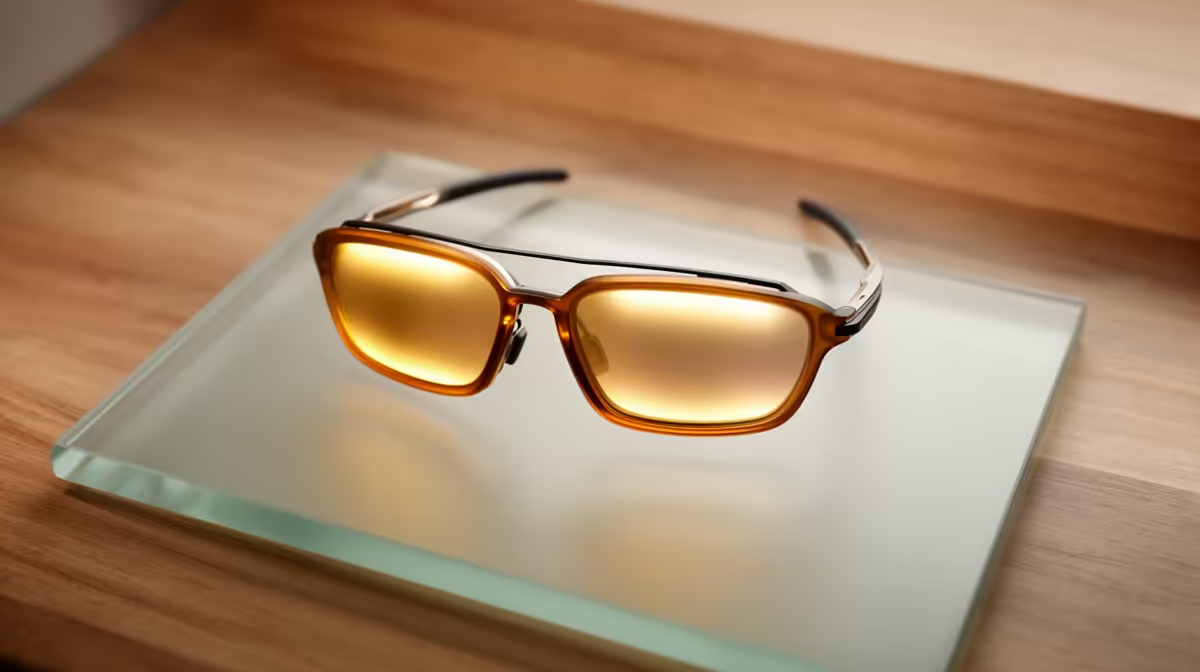
Three of the biggest names in tech are now building face-worn computers at the same time, and that simultaneous push is the clearest signal yet that smart glasses have moved from novelty to serious platform bet. Meta is shipping in volume, Google and Samsung have shown their Android XR eyewear, and Apple is working on its own answer. When rivals this large all commit at once, it usually means they see a real shift coming.
Quick Answer
Smart glasses are not replacing the smartphone yet, but 2026 is the year the category turned into a genuine platform race. AI glasses shipments are forecast to cross 10 million units in 2026 and reach about 35 million by 2030, with Meta holding roughly 69 percent market share early in the year while Google, Samsung, and Apple all move in.
What Changed In 2026
For years smart glasses were a curiosity. That changed when the Ray-Ban Meta line found real buyers. EssilorLuxottica, the eyewear group behind Ray-Ban, sold over 7 million AI glasses in 2025, more than triple the combined total of the two years before. Demand pushed Meta to discuss doubling production. Once one product proves people will actually wear cameras and an AI assistant on their face all day, the rest of the industry stops treating the idea as fringe.
The standout shift is who is now in the ring. Google and Samsung used Google I/O 2026 to give a first look at Android XR eyewear, built with eyewear houses Gentle Monster and Warby Parker, with a target of more than 2 million units in 2026. Apple is developing its own camera-and-audio glasses with Apple Intelligence, though reports suggest its launch has slipped toward late 2027. The point is the same: every major platform owner now has a horse in this race.
Why It Looks Like A Real Platform Race
Most of what sells today is audio-and-camera glasses rather than full display headsets. Roughly 91 percent of 2026 smart glasses shipments are expected to be these lighter, glasses-shaped designs that pair to your phone, take photos, play audio, and run an AI assistant by voice. They are an accessory to the phone, not a replacement, and that is exactly how the smartphone itself started life next to the PC.
The longer game is AI. A device you wear that can see what you see and answer instantly is a natural home for an assistant. That is why Meta leans on its AI, Google and Samsung built theirs around Gemini, and Apple is tying its pair to Apple Intelligence. The hardware is the doorway; the assistant is the product. Whether that adds up to a smartphone successor depends on displays, battery life, and price maturing over the next few years.
For South African readers who want to follow the category without paying flagship money, browsing the AR glasses at Evetech gives a grounded view of what is locally stocked and priced in Rand, while the accessories section shows which wearable and connected-device picks are actually moving here.
Frequently Asked Questions
Will smart glasses replace smartphones?
Not in the near term. Current glasses work as a phone accessory for audio, photos, and an AI assistant rather than a standalone device. A true replacement would need mature in-lens displays, longer battery life, and lower prices, which are still some years away.
Which company leads the smart glasses market in 2026?
Meta, through its Ray-Ban line, held roughly 69 percent of the market early in 2026. Google and Samsung entered with Android XR eyewear, and Apple is developing its own pair, so the lead is real but no longer unchallenged.
How big is the smart glasses market expected to get?
Analysts forecast AI glasses shipments to pass 10 million units in 2026 and reach around 35 million by 2030, with the broader market value projected to grow strongly through the early 2030s.
What can smart glasses actually do right now?
Most pairs handle audio playback, hands-free calls, photo and video capture, and voice access to an AI assistant. Full augmented-reality displays in the lens are still rare and mostly limited to premium or early models.
Curious whether wearable tech belongs in your kit? Browse the AR glasses range at Evetech to see what is available now and start small before the next platform wave arrives.