


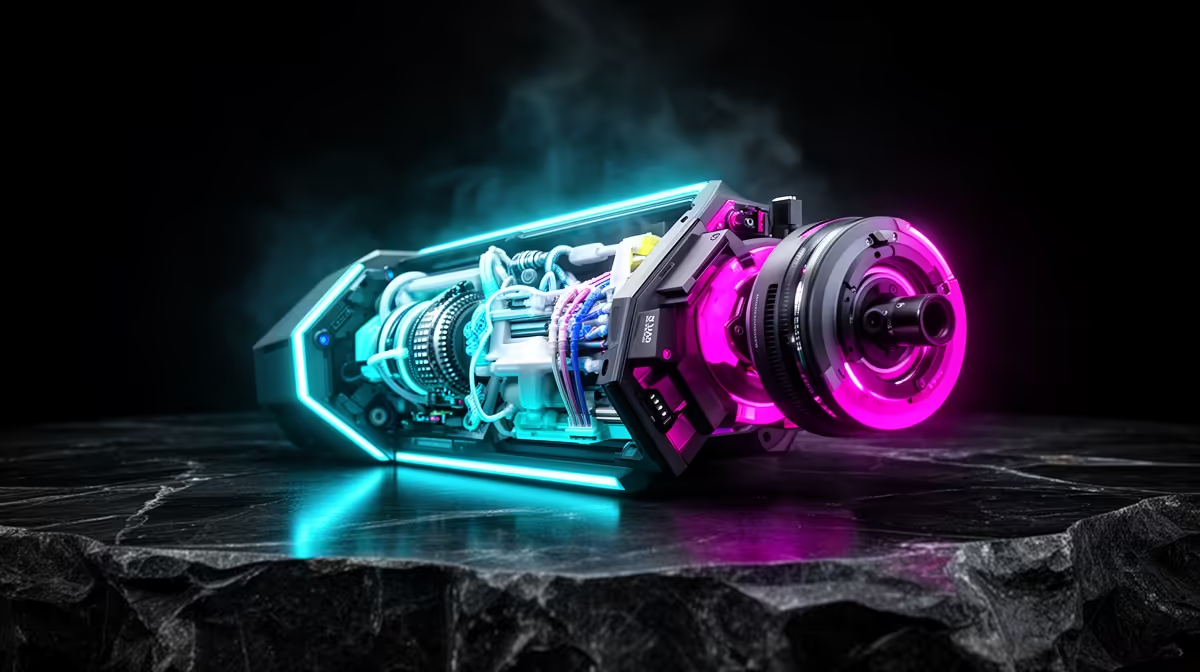
Multi-material printing has always carried a hidden tax: the purge tower, that wasteful tab of mixed filament a printer spits out every time it changes colour. The Bambu Lab H2C rethinks that entirely with a Vortek dock that swaps whole hotends instead of flushing one, so six or more materials can share a single print with almost no waste.
Quick Answer
The Bambu Lab H2C is a toolchanger that holds 0.2mm, 0.4mm and 0.6mm hotends in a Vortek dock and switches between them with near-zero purge. By changing the entire hotend rather than flushing filament through one nozzle, it can run six or more materials in a single job without the purge towers that AMS-style systems generate.
What the Vortek Dock Changes
On a conventional multi-material setup, one nozzle handles every filament. Each colour or material change means pushing the old plastic out and the new plastic in, and that flushed material goes straight to a purge tower or poop chute. Over a detailed multi-colour model, the wasted filament can rival the weight of the part itself.
The H2C parks separate hotends in its dock. When the print needs a different material, the toolhead drops one hotend and picks up another that is already loaded. There is almost nothing to purge because each material keeps its own dedicated path. That is the core mechanical difference from an AMS feeding a single shared nozzle.
Why Three Nozzle Sizes Matter
The 0.2mm, 0.4mm and 0.6mm hotends are not just spares, they let one machine trade speed against detail mid-project. A 0.2mm tip lays down fine surface detail, the 0.6mm tip fills large volumes fast, and the 0.4mm sits in the middle as the everyday workhorse. Picking the right size per object means you stop choosing between a slow detailed print and a fast rough one.
Where It Fits a South African Workshop
For a maker running prototypes, signage or functional assemblies in mixed materials, the saved filament adds up quickly in Rand terms over a busy month. Less purge waste also means fewer interruptions to clear the chute. If you are building out a print station, the 3D printing tools and spares range covers the nozzles, plates and cleaning gear that keep a toolchanger like this productive.
Frequently Asked Questions
How is the H2C different from an AMS system?
An AMS feeds many filaments into one nozzle, so every switch needs a purge. The H2C swaps complete hotends, so each material has its own path and there is almost no flushing. That is why it can claim near-zero purge across six-plus materials.
Does swapping hotends slow the print down?
There is a brief mechanical change as the toolhead docks one hotend and collects another, but it removes the lengthy purge and prime cycle that a single-nozzle system needs at every change. On material-heavy prints the toolchanger approach is usually the more efficient one.
Can it really run more than six materials?
Yes, the design is built around six or more materials in a single job thanks to the dock holding multiple hotends and dedicated paths. The exact ceiling depends on the configuration you set up.
Is it worth it if I mostly print one colour?
If your work is single-material, the toolchanger advantage barely applies and a simpler printer makes more sense. The H2C earns its keep specifically on multi-material and multi-colour jobs where purge waste is otherwise high.
Want a closer look at multi-material printing? See the current Bambu Lab and 3D printer lineup at Evetech for local pricing and availability.










