



WhatsApp Business Replies Cost 12c From October
From 1 October 2026, WhatsApp Business Platform service replies in South Africa are expected to cost about $0.0076, or 12 cents, per delivered message.
Read more2026 machines including the Bambu H2D, Anycubic Kobra S1 Max and Elegoo Centauri Carbon 2 ship 350C-rated hotends that handle PC, PA and carbon-fibre at high flow rates. A 350C hotend unlocks filament categories that 260C all-PTFE systems cannot extrude reliably.
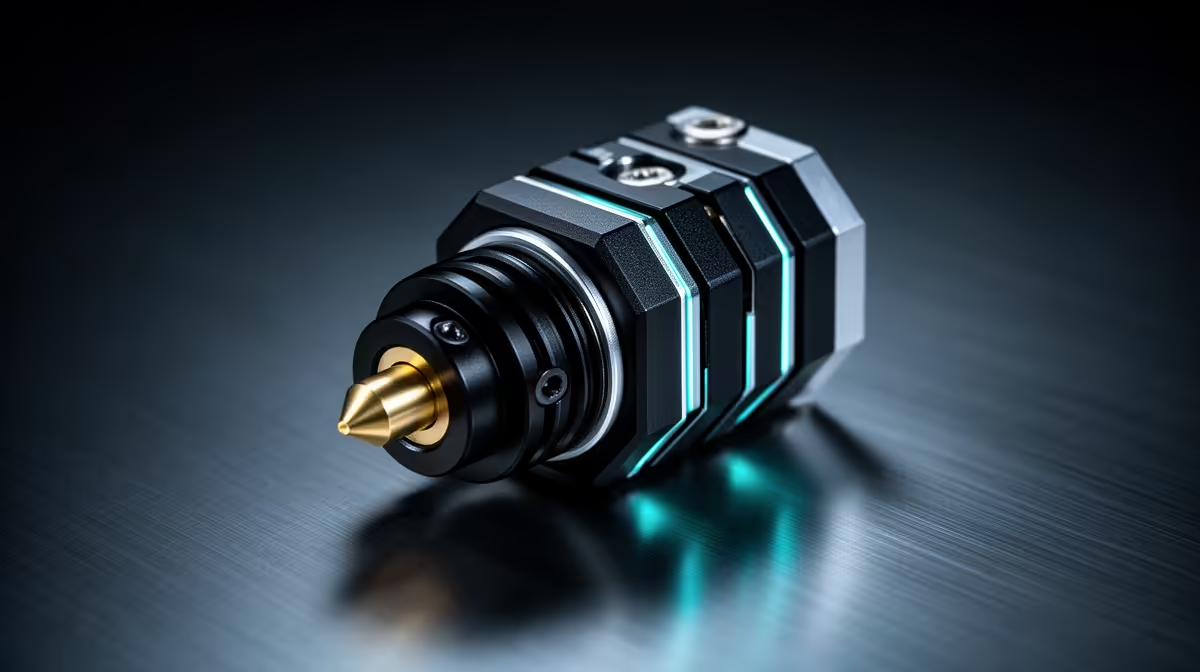
A hotend rated to 350C is the dividing line between a printer that prints toys and one that prints functional engineering parts. The 2026 wave of machines, including the Bambu H2D, Anycubic Kobra S1 Max and Elegoo Centauri Carbon 2, ships this capability as standard, and it quietly unlocks a whole class of filaments that older 260C all PTFE systems simply cannot push out reliably.
A 350C hotend lets you reliably extrude polycarbonate, nylon (PA) and carbon fibre composites at high flow rates. Older 260C all PTFE hotends top out below the temperature these materials need, so they either clog or print weak, under fused parts. The 2026 engineering printers solve this with all metal heat paths.
The headline is material range. PC needs around 270 to 310C at the nozzle, and nylon and PA carbon fibre blends sit in a similar band. A 260C ceiling leaves no usable margin, so those filaments never melt evenly. Pushing the rated temperature to 350C gives the melt zone the headroom to flow these tougher polymers at speed rather than dribbling them out.
Just as important is the all metal construction. PTFE lined throats start degrading above roughly 250C, releasing fumes and softening, which is why the high temperature machines drop the liner entirely and run a titanium or steel heat break straight into the nozzle. That is what makes sustained 350C printing safe rather than a quick burst before failure. The full lineup of current machines sits on the 3D printers page if you want to compare hotend specs side by side.
Temperature alone is not enough. These hotends pair the higher ceiling with high flow nozzles and longer melt zones, so the filament has more dwell time to reach full temperature before it exits. That is how the H2D and Centauri Carbon 2 hit fast print speeds on stiff engineering materials instead of slowing to a crawl to avoid under extrusion.
Carbon fibre filled filaments are abrasive, so these machines also use hardened steel or coated nozzles that resist wear. A standard brass nozzle would erode within a few hundred grams of PA CF. If you print composites regularly, keep spare hardened nozzles from the accessories best sellers range on hand, since they are wear items.
If you only print PLA models and props, a 350C hotend is overkill and you will never touch the upper range. The capability matters for makers printing jigs, fixtures, drone frames, automotive brackets and any part that needs heat resistance or mechanical strength. For that audience, the 2026 machines remove a real ceiling rather than adding a marketing number.
PC needs nozzle temperatures around 270 to 310C to flow and fuse properly, which sits above a 260C ceiling. Without that margin the layers do not bond, producing brittle, delaminated parts.
Yes. PTFE liners degrade above roughly 250C, so sustained high temperature printing requires an all metal heat break running straight to the nozzle. The 2026 engineering printers are built this way.
No, PLA prints fine on far cheaper machines. The 350C capability earns its place only if you genuinely need PC, nylon or carbon fibre composites for functional parts.
A hardened steel or coated nozzle, never plain brass. Carbon fibre is abrasive and will wear a brass nozzle out quickly, changing your flow and print quality.
If functional engineering prints are your goal, explore the 350C capable machines on the Evetech 3D printers page and match the hotend to the materials you actually need.
PC needs nozzle temperatures around 270 to 310C to flow and fuse properly, which sits above a 260C ceiling. Without that margin the layers do not bond, producing brittle, delaminated parts.
Yes. PTFE liners degrade above roughly 250C, so sustained high temperature printing requires an all metal heat break running straight to the nozzle. The 2026 engineering printers are built this way.
No, PLA prints fine on far cheaper machines. The 350C capability earns its place only if you genuinely need PC, nylon or carbon fibre composites for functional parts.
A hardened steel or coated nozzle, never plain brass. Carbon fibre is abrasive and will wear a brass nozzle out quickly, changing your flow and print quality.
From 1 October 2026, WhatsApp Business Platform service replies in South Africa are expected to cost about $0.0076, or 12 cents, per delivered message.
Read more
A Windows 11 Experimental Insider build adds per-app camera, microphone and location controls for Win32 programs, plus permission prompts.
Read more
Black Friday Gaming PC Timing is worth waiting for only if your current setup still works. SA gamers should balance timing, budget, warranty, and uncertainty before delaying a purchase on a R20,000 plan.
Read more
Black Friday Gaming PC Wait can help if your PC need is flexible. On a R12,000 SA budget, compare deal risk, component balance, warranty, and timing before waiting.
Read more
Pre-Black Friday 1440p monitor buying advice should be shortlisted around the job it must do. South African buyers should compare panel type, resolution, refresh rate, and ports, warranty path, and upgrade room before treating any pick as best.
Read more
Black Friday 2026 DDR4 RAM kit strategy in SA - what to buy, what to skip gets a cautious, practical look for South African readers. Compare fit, setup needs, compatibility, and upgrade timing before you shortlist options or plan your next move.
Read more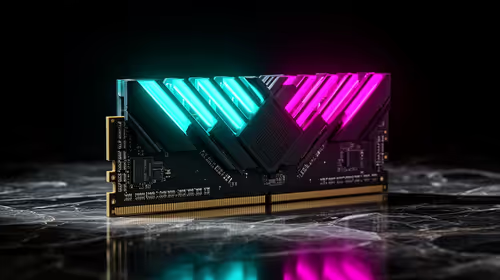
DDR5 build FPS drops needs a methodical troubleshooting pass. Review drivers, thermals, power settings, background apps, cables and game settings before replacing parts in an SA gaming setup.
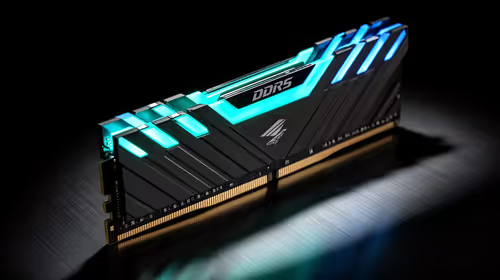
Fps drops on ddr5 build in south africa usually needs a settings, driver, thermal, or power check first. Work through safe SA troubleshooting steps before replacing parts or assuming a full upgrade.

Wi-Fi 6E vs Wi-Fi 6 depends on AAA single-player gaming needs, platform limits, and budget fit. Compare compatibility, latency, upgrade path, and real setup constraints before choosing for an SA build.
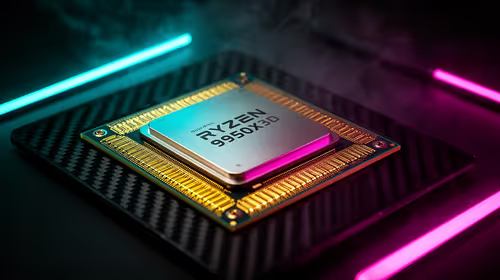
Ryzen 9 9950X3D dead pixel checks should isolate the panel first. Run colour fills, inspect the monitor menu, test another cable or input, and capture proof before linking it to the SA CPU upgrade.

YouTube will count public views from the first frame across video formats from 24 August, while earnings and eligibility remain tied to engaged viewing.

Canonical expects Ubuntu on WSL users to outnumber native Ubuntu desktop users before the end of 2026. The software is open source and runs inside supported Windows PCs.

Telkom's daily bundles pair WhatsApp access with 10 all-network voice minutes. The R15 option includes 300MB, while the R17 option uses a fair-use threshold.

A 10,000-hour test found similar image retention across older and newer OLED TVs, while newer panels were brighter and more efficient. Local OLED monitors started at R9,999.
From 1 October 2026, WhatsApp Business Platform service replies in South Africa are expected to cost about $0.0076, or 12 cents, per delivered message.
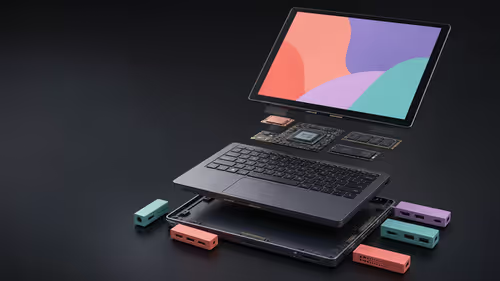
Framework has refreshed Laptop 12 with Intel Core Series 3 processors, Thunderbolt 4, a backlit keyboard and a claimed battery-life increase.
A Windows 11 Experimental Insider build adds per-app camera, microphone and location controls for Win32 programs, plus permission prompts.
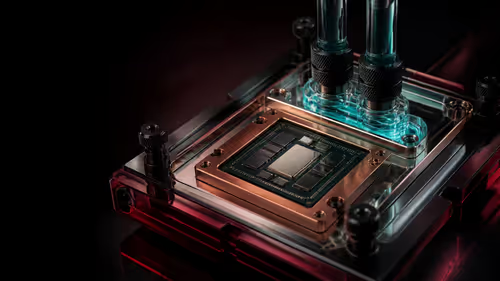
Thermal Grizzly is selling a tested, delidded Ryzen 9 9950X3D2 with its own 24-month warranty for experienced direct-die cooling builds.