

Corsair Mouse Prices Across SA: Q3 2026
Corsair Mouse Prices Across : Q3. Current stock data & price tracking for SA buyers. See what is available and where prices are heading.
Read moreIs gaming PC Overkill for 1080p Gaming Detailed answer with SA data, expert analysis & practical recommendations for local buyers.
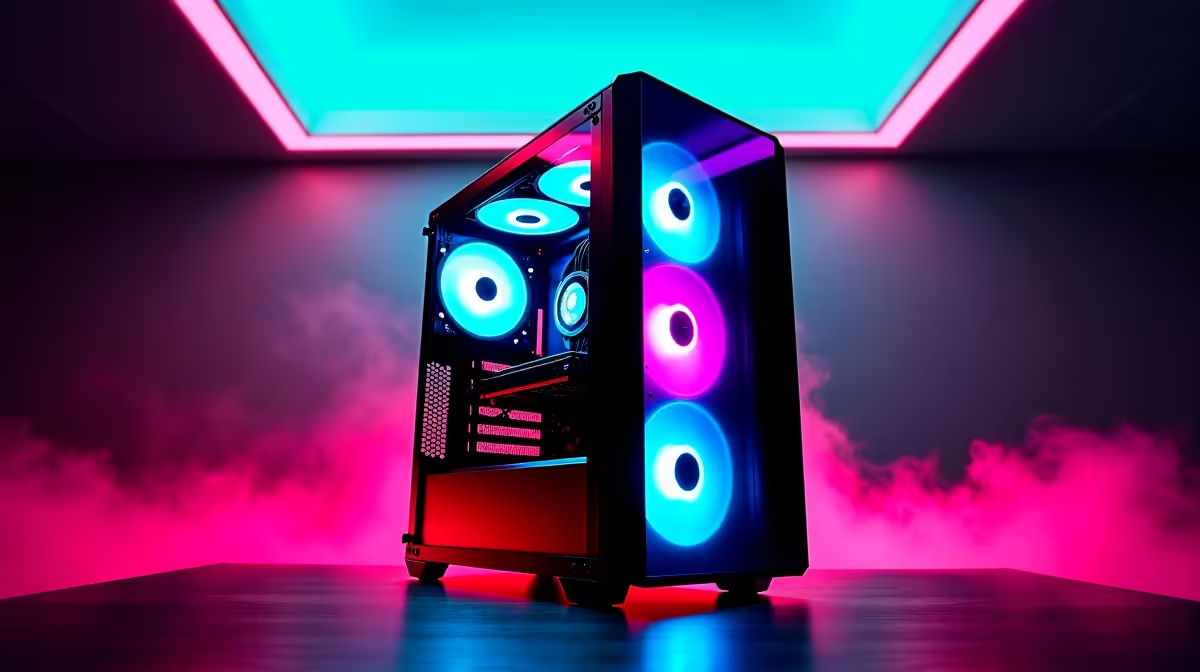
A high-end gaming PC is not necessarily overkill for 1080p gaming, but the value proposition depends heavily on which GPU you choose. An extremely powerful GPU running at 1080p will often be CPU or refresh-rate limited before it reaches its full potential, though for competitive gaming the extra headroom is genuinely useful.
The phrase "overkill for 1080p" usually refers to pairing a flagship GPU with a 1080p monitor. At 1080p resolution, the GPU has fewer pixels to push compared to 1440p or 4K, meaning it reaches very high framerates quickly - sometimes faster than your monitor can display them.
This is actually a good thing if you play competitive games. Titles like Valorant, CS2, Apex Legends, and Fortnite benefit massively from 144fps, 240fps, or even 360fps framerates. A powerful gaming PC at 1080p can deliver framerates that a more modest build cannot. For competitive gaming, strong GPU performance at 1080p translates directly into smoother, more responsive gameplay.
Where the overkill argument holds up is for single-player, graphically demanding games. Running The Witcher 3, Cyberpunk 2077, or Red Dead Redemption 2 at 1080p high settings does not require a flagship GPU. A mid-range card handles these titles comfortably, and the extra spend on a top-tier GPU produces diminishing visual returns at this resolution.
At 1080p with a powerful GPU, CPU performance becomes the limiting factor more quickly than at higher resolutions. At 300-plus fps in esports titles, a weaker CPU will bottleneck your GPU before it reaches its potential.
Building a balanced system matters more than chasing the highest GPU spec. A well-matched CPU and GPU for 1080p gaming at 144fps delivers a better overall experience than a mismatched pair where one component holds the other back.
For South African buyers, the value argument against overkill is stronger due to ZAR pricing. A flagship GPU can cost R15,000 to R25,000 locally. At 1080p, a mid-range GPU at R5,000 to R9,000 delivers very similar results in most games. That R10,000 to R15,000 difference can fund a quality monitor, peripherals, a UPS for load shedding protection, or extra RAM.
Spending R8,000 to R12,000 total on a 1080p gaming PC in SA in 2026 is a genuinely smart choice for casual and mid-core gamers. You get excellent performance at 1080p without the premium that a 4K-capable machine commands.
If you are using a 60Hz monitor, upgrading to a 144Hz 1080p panel will improve your gaming experience more noticeably than a GPU upgrade in most cases. The GPU upgrade makes more sense once your monitor is 144Hz or higher.
Yes. A well-built PC in the R8,000 to R12,000 range handles 1080p gaming competently for most popular titles. Setting expectations appropriately for the most demanding new releases is sensible, but the majority of popular games run well at this budget.
Loadshedding affects all desktop PCs equally regardless of resolution. A UPS is recommended for any desktop gaming setup - it protects your components and lets you save your game cleanly when the power goes out.
Ready to Find Your Perfect Match? Find a gaming PC that matches your budget and resolution needs. Shop Gaming PCs at Evetech
Is gaming PC Overkill for 1080p Gaming available at Evetech.co.za with local warranty and fast delivery.
Is gaming PC Overkill for 1080p Gaming - check Evetech for latest stock and SA pricing.
Depends on your use case. Is gaming PC Overkill for 1080 offers good value at current Rand pricing.
Corsair Mouse Prices Across : Q3. Current stock data & price tracking for SA buyers. See what is available and where prices are heading.
Read more
AMD Keyboard Prices Across : Q1. Current stock data & price tracking for SA buyers. See what is available and where prices are heading.
Read more
GPU Availability Watch: September. Current stock data & price tracking for SA buyers. See what is available and where prices are heading.
Read more
ultrawide monitor Performance Drops After Update:. Real-world benchmark data, FPS numbers & performance analysis. What SA gamers can actually expect.
Read more
Headset Stock Levels in Port Elizabeth: October. Current stock data & price tracking for SA buyers. See what is available and where prices are heading.
Read more
Winter Load Shedding Ready: Storages. SA-focused analysis with local pricing data, real-world insights & actionable buying advice.
Read more
MacBook Pro for Machine Learning in 2026: Can Apple Silicon Compete Detailed answer with SA data, expert analysis & practical recommendations for local buyers.

Choose the Right SATA SSD for machine learning. Step-by-step instructions with SA-specific tips, common pitfalls to avoid & expert recommendations.
Overwatch 2 Competitive Settings Servers. Tested & verified settings for best FPS and visual quality on SA hardware budgets.
League of Legends Settings for 144Hz Gaming. Tested & verified settings for best FPS and visual quality on SA hardware budgets.
Every AMD CPU Ranked for Gaming: Tier List. SA-focused analysis with local pricing data, real-world insights & actionable buying advice.
Easter Family Bundles: Monitors. Hand-picked gift ideas at every budget tier. SA pricing & Evetech availability included.
Ryzen 7 9800X3D Running 100 Degrees: Cooler. Diagnosis steps, proven fixes & when to seek professional help. SA-specific support info included.
Most Affordable Laptops : Starting from R8,000. Full parts list, Rand pricing & expected performance. Build confidently with SA-available components.

HBADA Chairs : Range and Pricing. Complete product range with SA pricing, key specs & recommendations for different budgets.
Ryzen 7 9800X3D for Music Production: Performance. Real-world benchmark data, FPS numbers & performance analysis. What SA gamers can actually expect.

Winter Cooling Management: Headsets. SA-focused analysis with local pricing data, real-world insights & actionable buying advice.
AKRacing Gaming Chair Range: Which Model Is Right. Complete product range with SA pricing, key specs & recommendations for different budgets.