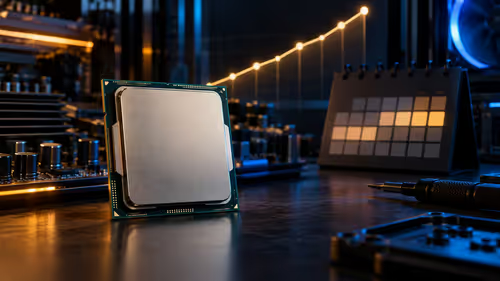
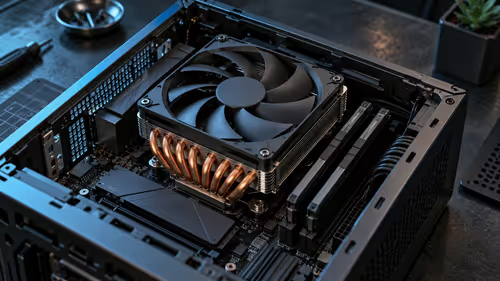
The AMD Ryzen 7 9700X is a high-performance CPU built on the Zen 5 architecture, and while it runs warm by design, hitting 100 degrees Celsius under load is a serious warning sign that should not be ignored. South African builders investing in this processor need to know whether that temperature spike points to a cooler problem - or something else entirely.
Quick Answer
A Ryzen 7 9700X hitting 100°C under load almost always indicates an inadequate cooler, poor thermal paste application, or a mounting pressure problem. AMD's Precision Boost Overdrive (PBO) aggressively pushes the chip to its thermal limit, but sustained 100°C operation will throttle performance and risk long-term damage.
Why the 9700X Runs Hot 🔧
AMD's Zen 5 architecture uses a small chiplet design with a high power density. The Ryzen 7 9700X has a rated TDP of 65W but can boost well beyond that with PBO enabled, spiking into 80–120W territory for short periods. At stock settings, AMD allows the CPU to boost to its thermal limit (Tjmax of 95°C) before pulling back clocks. Hitting exactly 100°C means the CPU is boosting hard but throttling - you are leaving performance on the table.
The AM5 socket also demands a cooler with solid mounting pressure. Stock AMD coolers are rated for 65W processors, but even high-end aftermarket coolers can underperform if the mounting screws are not tightened evenly or if the thermal paste coverage is insufficient.
Diagnosing the Problem 💡
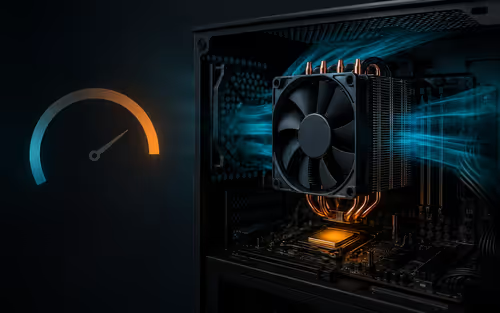
First, check your cooler's rated TDP - it should be at least 150W for the 9700X if you plan to use PBO. Reapply thermal paste using a pea-sized dot of quality compound in the centre of the IHS. After reseating, monitor temperatures with HWiNFO64. If temperatures drop to 70–85°C under full load, the original installation was the issue.
Also verify your case airflow. A hot case with poor front-to-back or bottom-to-top airflow will starve even a good cooler of cool air to work with. South Africa's warmer ambient temperatures in summer can add 5–10°C to baseline temps compared to cooler European climates.
If temperatures remain at 100°C after reseating, the cooler itself may be undersized or faulty. Browse CPU coolers at Evetech for options rated to handle the 9700X comfortably - look for models with at least a 240mm AIO or a dual-tower air cooler.
Fixing It Permanently ⚡
For a long-term fix: upgrade to a quality aftermarket cooler, use high-grade thermal paste, and ensure even mounting pressure on the AM5 socket. If you want to reduce temperatures further without sacrificing too much performance, set a manual power limit of 65–75W in AMD's Ryzen Master software - this keeps the chip cool and still delivers excellent gaming performance.
Check your CPU options at Evetech if you are considering a full platform upgrade alongside your cooler investment.
Frequently Asked Questions ❓
Q: Is 100°C safe for the Ryzen 7 9700X?
A: It is within AMD's defined Tjmax, but sustained 100°C operation causes clock throttling and reduces long-term chip reliability. Aim for 85°C or below under sustained full load.
Q: Does PBO cause the temperature spikes?
A: Yes. PBO allows the CPU to draw more power and push frequencies higher, which directly increases heat output. Disabling PBO or setting a power limit in Ryzen Master will reduce temperatures significantly.
Q: What cooler is recommended for the Ryzen 7 9700X in SA?
A: A 240mm or 360mm AIO liquid cooler, or a high-performance dual-tower air cooler with a TDP rating above 200W. Ensure the cooler is AM5 socket compatible before buying.
Evetech carries AMD Ryzen 7 Processors and Graphics Card Deals — check live stock and pricing before you buy.
Ready to Find Your Perfect Match?
Explore relevant Evetech options, compare current South African pricing, and choose hardware that fits your setup. Shop now