Shopping for a new monitor in South Africa can feel like decoding a secret language. You’ve settled on a size and refresh rate, but then you see it: pixel density. Is a 27-inch 1440p monitor at 109 PPI the sweet spot? Or should you push your budget for a 32-inch 4K screen with a whopping 140 PPI? Let's cut through the jargon and figure out which pixel density is genuinely best for your rig.
What Exactly is PPI (Pixels Per Inch)?
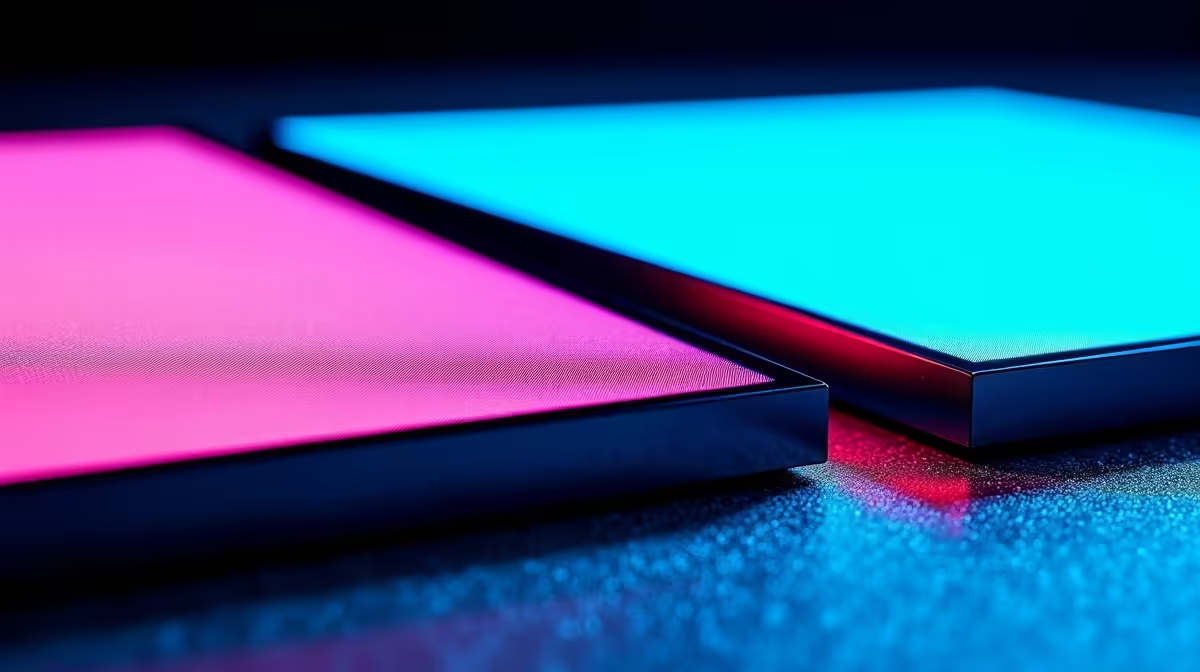
Think of PPI as the thread count for your screen. The higher the number, the more pixels are packed into every square inch of the display. More pixels in the same space mean a sharper, crisper, and more detailed image with no visible pixel grid. It’s the magic behind those stunningly clear displays.
A 27-inch monitor with a 1440p (QHD) resolution, a popular choice for gamers, has a pixel density of about 109 PPI. Step up to a 32-inch monitor with a 4K (UHD) resolution, and you’re looking at a much denser 140 PPI. This difference is the core of the 109 PPI vs 140 PPI debate. You can see how resolution and screen size interact across all the latest PC monitors available today.
The Real-World Showdown: 109 PPI vs 140 PPI
So, how does this difference feel in practice? Does a higher number automatically mean a better experience? Not always… it depends entirely on you.
The Case for 109 PPI: The Performance Sweet Spot 🚀
For a massive number of PC gamers, 109 PPI is the undisputed champion. It hits a fantastic balance between visual clarity and performance.
- Visual Quality: At a typical desk viewing distance, 109 PPI is sharp enough that you won't be distracted by individual pixels. Games look crisp, text is clear, and it’s a huge upgrade from 1080p.
- Performance: This is the big one. A 1440p resolution is significantly less demanding on your graphics card than 4K. This means you can achieve higher, more stable frame rates in demanding titles like Apex Legends or Warzone without needing a top-of-the-line R40,000 GPU.
- Value: 1440p monitors often offer the best bang for your buck, making them a popular choice in our wide selection of gaming monitors.
If you prioritise high refresh rates and buttery-smooth gameplay, 109 PPI is your ally.
The Case for 140 PPI: The Ultra-Sharp Contender ✨
When visual fidelity is your absolute priority, the jump to 140 PPI is undeniable. The clarity is simply on another level.
- Visual Quality: The difference is immediately noticeable. Text looks like it's printed on a page, photos have incredible depth, and in-game details pop like never before. For cinematic single-player games like Cyberpunk 2077 or Alan Wake 2, it’s a truly immersive experience.
- Productivity: For creative professionals editing high-resolution photos or video, the extra sharpness of these stunning 4K monitors is a massive benefit.
- The Trade-off: Power. Driving games at a native 4K resolution to take advantage of that 140 PPI requires a seriously powerful GPU. You'll need to be prepared for lower frame rates or invest heavily in your hardware.
If you have a beast of a PC and crave the most detailed image possible, 140 PPI will not disappoint.
Don't Fear the Pixels! 🔧
Worried that text on a high-PPI 4K monitor will be too tiny to read? Don't be. Windows Display Scaling is your best friend. Setting it to 125% or 150% makes text and icons perfectly readable while keeping your games and photos razor-sharp at their native resolution. It’s the best of both worlds!
So, Which Pixel Density is Right for Your Setup?
Let’s break it down by use case to solve the 109 PPI vs 140 PPI question for you.
- For the Competitive FPS Gamer: Go for 109 PPI. The higher frame rates you'll get at 1440p will give you a bigger competitive advantage than the extra sharpness of 4K. Your priority is performance and responsiveness. Why not check out our best monitor deals to find a high-refresh-rate beast?
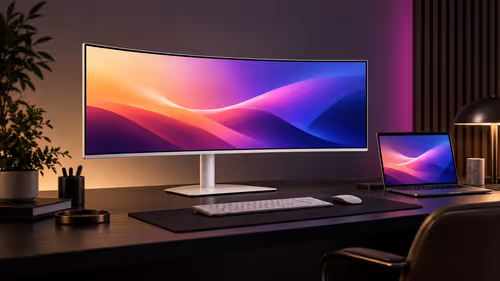
- For the Cinematic Story Gamer: If you love getting lost in beautiful game worlds and have a powerful GPU (like an RTX 4070 Ti or higher), 140 PPI delivers an unmatched visual feast. Consider one of our immersive curved monitors in 4K for the ultimate experience.
- For the Hybrid User (Work & Play): This is tougher. If your work involves a lot of text or creative detail, 140 PPI is a dream. If your gaming is more casual, you can always run games at a lower resolution.
- For the Traveller: Pixel density is just as important on the go. For a sharp image on a smaller screen, our compact portable monitors pack a visual punch without weighing you down.
Don't Forget the Supporting Cast
While pixel density is a huge factor, it’s not the only thing that matters. A high-PPI screen with a slow response time or a low refresh rate won't feel great. Always consider the full package:
- Refresh Rate (Hz): 144Hz is the standard for smooth gaming.
- Response Time: 1ms is ideal for eliminating motion blur.
- Panel Type: IPS for great colour, VA for deep blacks.
- Ergonomics: A good stand with height and tilt adjustment is crucial.
Make sure you grab all the essential monitor accessories to perfect your setup.
Ready to Find Your Perfect Pixel Density?
The 109 PPI vs 140 PPI debate comes down to your personal needs and your PC's power. Whether you're after silky-smooth frame rates or breathtaking clarity, the perfect screen is waiting. Explore our massive range of gaming monitors and find the perfect display to conquer your world.