Ever been in the final circle in Warzone Mobile, lined up the perfect shot, and then... a stutter? That split-second judder on your screen is often the difference between a triumphant "Winner!" and a frustrating second place. It’s not always your connection; your screen's refresh rate might be the culprit. For South African gamers looking for a competitive edge, understanding the massive benefits of a 120Hz refresh rate is the first step to victory. 🚀
What is a 120Hz Refresh Rate, Really?
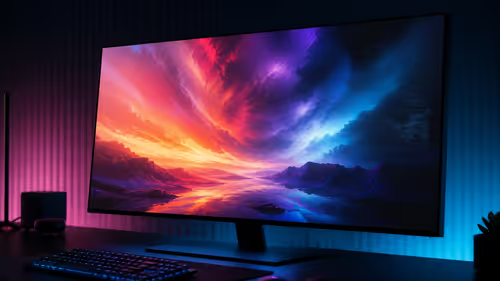
Think of your screen like a digital flipbook. A standard 60Hz screen shows you 60 "pages" or frames every second. It's smooth, but it's the old standard. A 120Hz refresh rate screen doubles that, displaying a whopping 120 frames every single second.
This isn't just a numbers game. The result is a visibly smoother, more fluid experience. Everything from scrolling through your social feeds to navigating menus feels snappier and more responsive. But where this technology truly shines is in the heat of battle.
The Core Gaming Benefits of a 120Hz Screen
When the action gets intense, a high refresh rate screen provides tangible advantages that can genuinely improve your performance. It’s about more than just looking good; it's about playing better.
Unmatched Smoothness and Clarity
With twice the frames, motion on screen is incredibly fluid. In fast-paced shooters or racing games, this means tracking opponents or navigating tight corners becomes easier. The distracting motion blur you see on 60Hz screens is significantly reduced, keeping the image crisp and clear, even when you’re spinning around to catch an enemy flanking you. This level of clarity is a standard feature on many modern handheld gaming consoles, designed for peak performance. ✨
Faster Reaction Times
This is the big one. A 120Hz screen draws a new frame every 8.3 milliseconds, compared to 16.6ms on a 60Hz screen. This means you physically see what's happening in the game sooner. It might sound like a tiny difference, but in competitive gaming, milliseconds matter. Seeing an opponent pop out from behind a corner a fraction of a second earlier gives your brain more time to react, aim, and fire. This is the competitive edge that a 120Hz refresh rate delivers.
Pro Gamer Tip ⚡
Many games default to 60Hz to save battery. Dive into your game's graphics settings and manually select the 120fps or 'Ultra' frame rate option to unlock the full potential of your 120Hz refresh rate screen. Don't leave performance on the table!
Is a High Refresh Rate Worth The Trade-Offs?
So, what's the catch? The main consideration is battery life. Pushing out twice as many frames requires more processing power, which can drain your battery faster.
Thankfully, modern devices are smart. Many feature "adaptive refresh rates," which automatically adjust the screen's speed based on what you're doing. It might ramp up to 120Hz for an intense gaming session, then drop down to a lower rate when you're just reading text to conserve power. Top-tier devices from Lenovo and other leading brands often include advanced power management to balance performance and endurance. You can see this technology implemented brilliantly in powerhouses from ASUS as well.
Ultimately, for any serious gamer, the answer is a resounding yes. The competitive advantage and sheer visual pleasure of smooth mobile gaming make it an essential feature. As the technology becomes more widespread, even MSI's latest handhelds are embracing high refresh rates to give gamers the best possible experience.
The bottom line? Once you experience 120Hz, going back to 60Hz feels like playing in slow motion. It’s an upgrade that fundamentally changes how you see and interact with your games.
Ready to Experience Buttery-Smooth Gaming?
A 120Hz refresh rate isn't just a number... it's a competitive edge. From faster reactions to a more immersive experience, it elevates your play. Explore our range of powerful handheld gaming consoles and find a device that can keep up with your skills.