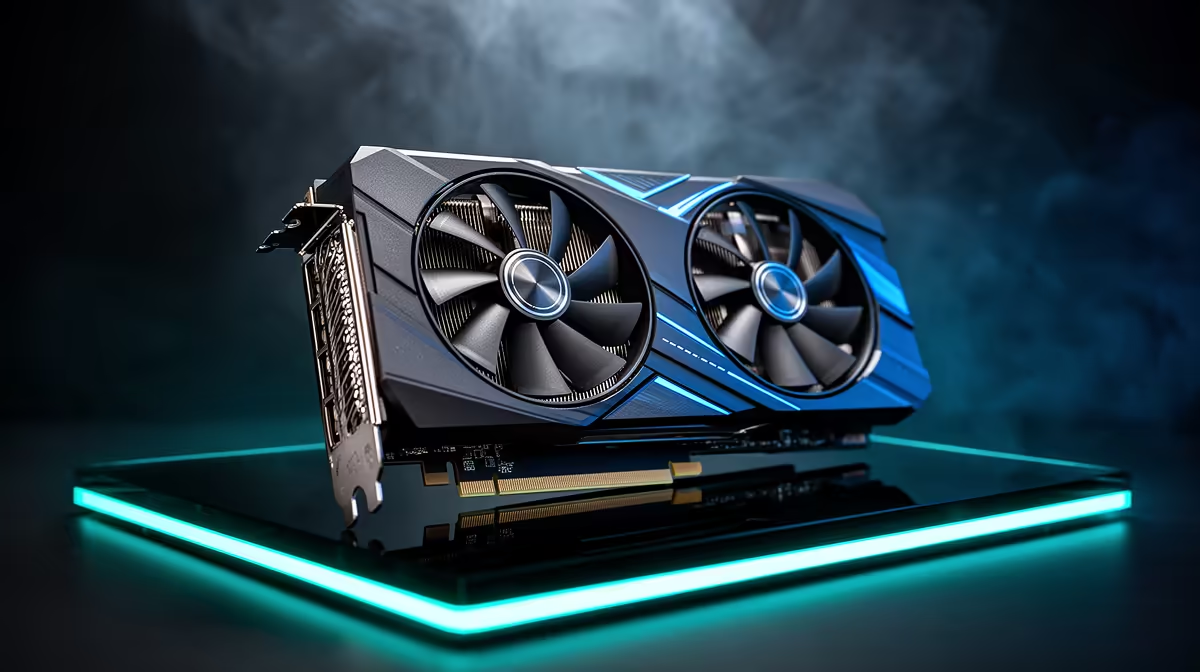
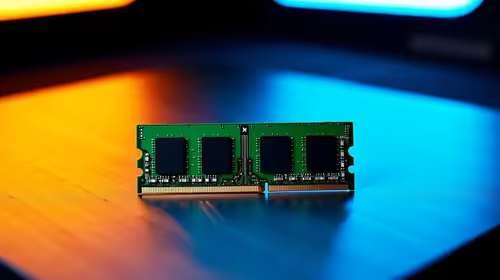
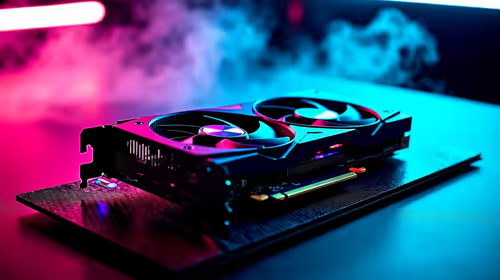
The rumour that has 1440p and 4K gamers sitting on their wallets is a high-VRAM RTX 50 Super refresh, promising up to 18GB on the mid card and 24GB at the top. The catch buried in those whispers is timing: gated by GDDR7 memory costs, that refresh now looks like a 2027 event, not a 2026 one. For 1440p and 4K gamers weighing whether to buy a current GPU or wait, that one date changes the entire calculation.
Quick Answer
Buy a current GPU now if you want to game at 1440p or 4K this year. The extra-VRAM Super refresh is gated by GDDR7 supply and pricing and is realistically a 2027 arrival, and in South Africa it will land at a steep Rand premium when it does. Waiting eighteen months for memory you may not fully use, while playing on aging hardware in the meantime, is the worse deal for most people.
What the Super refresh actually promises
The rumoured refresh centres on one thing: more video memory. Current high-end cards already handle 1440p comfortably and 4K capably, but VRAM is the spec that ages worst as games grow heavier on textures and ray tracing. A refresh that lifts the mid-tier card toward 18GB and the flagship toward 24GB would extend how long those cards stay comfortable at high resolutions.
The problem is that the memory itself is the bottleneck. GDDR7 is the component driving both the delay and the expected price, and until its cost settles, the cards built around larger amounts of it stay expensive and scarce. That is why the timeline keeps slipping toward 2027 rather than landing this year.
Why VRAM became the headline spec
At 1440p and especially 4K, a card runs out of memory before it runs out of raw speed in a growing number of titles. When VRAM fills, the game stutters or drops textures regardless of how fast the core is. That is what makes the rumoured capacity jump tempting: it targets the exact limit that current cards bump against in the most demanding scenes. But it is worth being precise about how often you actually hit that ceiling today, because for many games at these resolutions, current VRAM is already enough.
The cost of waiting
Waiting is never free. While you hold out for a 2027 card, you are gaming on whatever you have now, which for many people means an older GPU struggling at the very resolutions they want to enjoy. Eighteen months of compromised performance is a real cost paid in stutter and lowered settings, and it rarely shows up in the spreadsheet when people talk themselves into waiting.
There is also no guarantee the refresh lands on schedule or at a price that makes sense locally. Component-driven delays have a habit of stretching, and a card gated by memory cost is exactly the kind of product that arrives later and dearer than the early rumours suggest.
The South African price reality
In South Africa, 4K-capable cards already carry a meaningful Rand premium over their international sticker prices, the result of import costs, currency, and distribution. A refresh built around expensive GDDR7 will not buck that trend. If anything, a memory-driven price increase compounds the existing premium, which means the high-VRAM Super cards may remain firmly in flagship-price territory here long after they launch elsewhere. Waiting for them is, in part, waiting for a card that may stay out of reach for the average local buyer.
You can see how current 1440p and 4K options are priced today by browsing the graphics card range at Evetech, which gives a realistic read on what your money buys right now versus a speculative 2027 figure.
How to decide for your resolution
If you game mainly at 1440p
A strong current-generation card handles 1440p with room to spare, and VRAM pressure at this resolution is far lower than at 4K. There is little reason to wait. Buy a well-matched current card, enjoy high frame rates now, and let the 2027 refresh be a problem for whoever is still chasing maximum 4K longevity.
If you game at 4K
This is where the temptation to wait is strongest, because 4K is where VRAM limits bite first. Even so, current flagship and upper-mid cards play 4K well today, especially with modern upscaling doing much of the heavy lifting. Unless you are specifically running the handful of titles that already overflow current memory at maxed settings, a current card delivers a great 4K experience now rather than a hypothetical one later.
If your current card is genuinely struggling
The decision is easiest here. If your existing GPU is forcing low settings or stutter at the resolution you want, waiting eighteen months means eighteen months of that. Upgrading now restores the experience immediately, and the card you buy will still be capable when the refresh finally lands.
Matching the card to the rest of your build
A new GPU only pays off if the rest of the system can feed it. At 4K the graphics card does most of the work, so even a moderate CPU keeps up, but a fast card paired with too little system RAM or a weak power supply leaves performance on the table. Before committing, sanity-check that your supply has the headroom and that your platform is not the real bottleneck. Comparing complete builds against standalone cards through the best-selling GPU listings at Evetech helps you spot whether an upgrade or a fuller rebuild makes more sense.
Frequently Asked Questions
Is the RTX 50 Super refresh coming in 2026?
Current indications point to 2027 rather than 2026. The refresh is gated by GDDR7 memory cost and supply, which keeps pushing the realistic timeline back. Treat a 2026 launch as unlikely when planning a purchase.
Do I really need 24GB of VRAM for 4K gaming?
For most current 4K titles, no. Today's high-end cards have enough memory for the large majority of games at 4K, especially with upscaling. The extra VRAM mainly future-proofs against the heaviest upcoming titles rather than fixing a present-day problem.
Will the new cards be cheaper than current ones?
Unlikely. Because the refresh is driven by more expensive memory, the new cards are expected to carry a premium, and in South Africa that sits on top of the existing import-driven price gap.
Should a 1440p gamer wait at all?
No. At 1440p, current cards have ample VRAM and performance. There is no meaningful benefit to waiting for a memory-focused refresh aimed mostly at 4K longevity.
What happens to my current card if I wait?
You keep using it, which for many people means tolerating reduced settings or stutter at their target resolution for over a year. That ongoing compromise is the hidden cost of waiting.
Do not trade a year of smooth gaming for a 2027 maybe. Compare what current cards deliver at 1440p and 4K on the Evetech graphics card range and put the performance you want in your machine today.