

Complete Guide: Setting Up AIO Liquid 420mm
Setting Up AIO Liquid 420mm. Tested & verified settings for best FPS and visual quality on SA hardware budgets.
Read moreBoost your daily workflow with the right refresh rate. Discover how a 144Hz laptop display enhances responsiveness and reduces eye strain 🚀💡
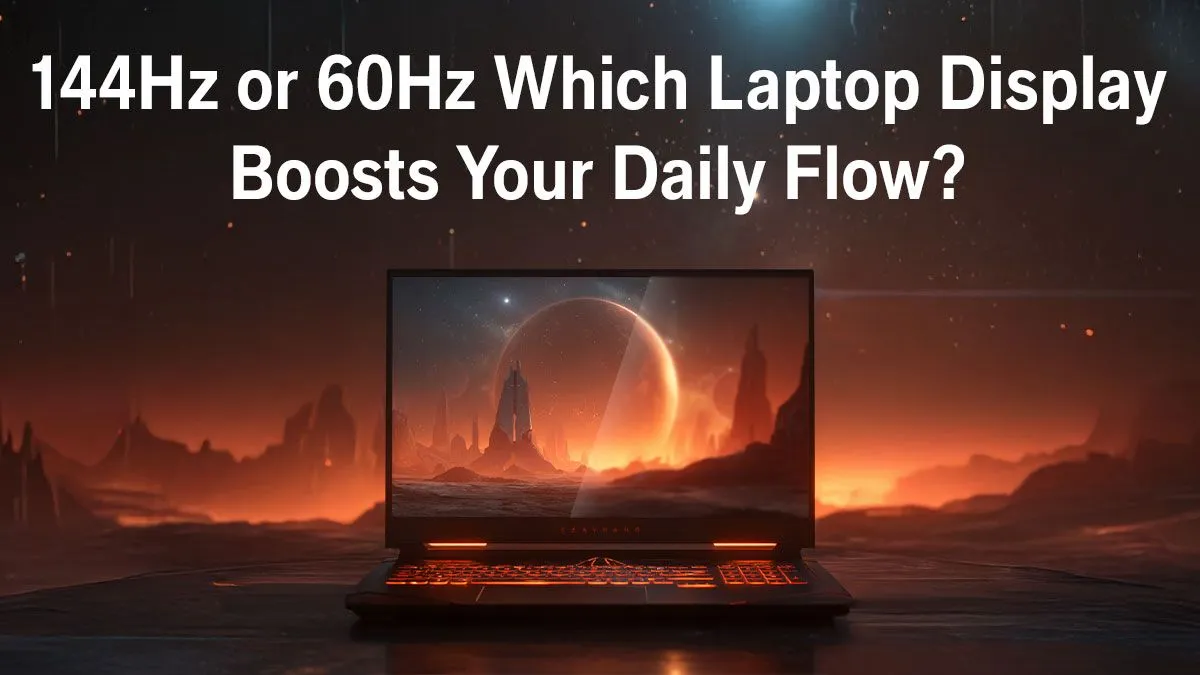
You've heard the hype: 144Hz is a must-have for serious gamers. But what if you spend more time in spreadsheets than in shootouts? Is a faster screen just an expensive luxury, or can faster laptop displays for productivity genuinely improve your workday? The answer might surprise you. That buttery-smooth scrolling you see on premium smartphones can be yours on a laptop, making every task feel more responsive and fluid. 🚀
Think of your screen's refresh rate, measured in Hertz (Hz), as the number of times it updates with a new image every second. A standard 60Hz display refreshes 60 times per second. A 144Hz display? A whopping 144 times.
This isn't just about seeing more frames in a game. It creates a smoother, more connected experience for everything you do. The mouse cursor glides instead of jumping, windows drag without ghosting, and scrolling through a long document feels incredibly fluid. While many of the best gaming laptop deals pioneered this tech, its benefits are now bleeding into the professional space.
So, how does this extra smoothness translate into getting more done? It's less about raw speed and more about reducing micro-frustrations and improving the overall user experience.
Ever scrolled quickly down a webpage or a code editor on a 60Hz screen and felt that slight, jittery blur? A 144Hz display dramatically reduces this motion blur, making text and images stay clearer as they move. This makes it easier to track information and can lead to less eye fatigue over a long 8-hour day. For professionals who live in browsers and documents, this is a massive quality-of-life upgrade. Many modern Intel laptops on special now offer these faster screens for this very reason.
If your work involves any kind of visual manipulation, the benefits are even more pronounced.
This enhanced responsiveness makes your digital workspace feel more tangible and direct. ✨
Curious what your current screen is running at? On Windows 11, right-click your desktop > Display settings > Advanced display. You'll see your current refresh rate listed and any other options your panel supports!
Let's be clear: if your daily tasks are just sending emails and light document editing, a 60Hz screen is perfectly capable. But if you're a power user, a developer, a creative, or anyone who values a supremely smooth and responsive interface, the leap to 120Hz or 144Hz is significant.
The primary trade-off used to be battery life, but modern laptops are much smarter. They can dynamically lower the refresh rate when you're on battery or viewing static content, giving you the best of both worlds. Whether you're looking at AMD laptops on special or their Intel counterparts, this feature pays dividends in daily comfort and perceived performance.
The verdict? Investing in faster laptop displays for productivity is no longer a gaming-only decision. It’s an investment in a better, more comfortable computing experience. It's becoming a standard feature across many of the best laptop specials for sale in South Africa, making premium performance more accessible than ever. 💻
Upgrade Your View, Upgrade Your Workflow Ready to experience the difference a faster display makes? Explore our huge range of laptop specials for sale in South Africa and find the perfect machine to boost your productivity.
Yes, 144Hz improves responsiveness and smoothness for multitasking and browsing.
Absolutely! It reduces eye strain and makes UI interactions feel faster.
Yes, but 144Hz offers a noticeably smoother experience for daily tasks.
144Hz may consume more power, but modern laptops balance performance efficiently.
Higher refresh rates enhance video smoothness during meetings and conferencing.
They cost more, but the productivity gains make them worthwhile investments.
No, productivity-focused laptops increasingly adopt 144Hz for better user experience.
Setting Up AIO Liquid 420mm. Tested & verified settings for best FPS and visual quality on SA hardware budgets.
Read more
Intel XTU Download & Setup Guide: Intel CPU. Clear setup instructions with SA-specific considerations, troubleshooting tips & recommended components.
Read more
Cyberpunk 2077 Max Settings on RTX 4090. Tested & verified settings for best FPS and visual quality on SA hardware budgets.
Read more
The Complete Guide to GPU. Everything you need to know with SA pricing, step-by-step instructions & expert recommendations.
Read more
NVCleanstall Download & Setup Guide: NVIDIA. Clear setup instructions with SA-specific considerations, troubleshooting tips & recommended components.
Read more
to Driver Installation for Beginners. Everything you need to know with SA pricing, step-by-step instructions & expert recommendations.
Read more
AMD RX 9050 XT: Rumoured Specs, Price & Release. SA-focused analysis with local pricing data, real-world insights & actionable buying advice.
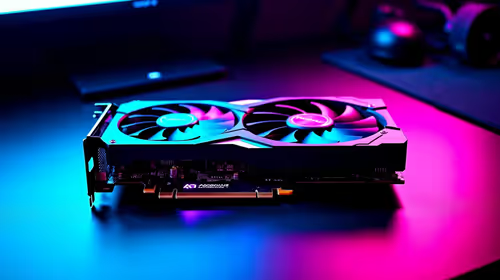
Can RTX 4080 Super Run AI Workloads for SA Developers Detailed answer with SA data, expert analysis & practical recommendations for local buyers.
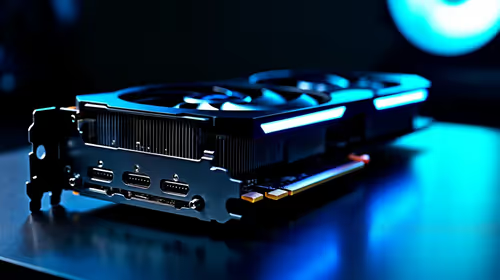
Can RTX 4090 Run AI Workloads for SA Developers Detailed answer with SA data, expert analysis & practical recommendations for local buyers.
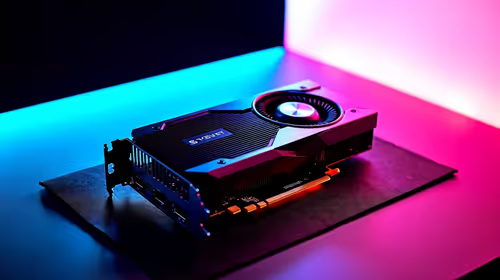
Top Settings for Intel Arc B580 at Ultrawide 1440p picks evaluated on performance, value & SA availability with current Rand pricing from Evetech.
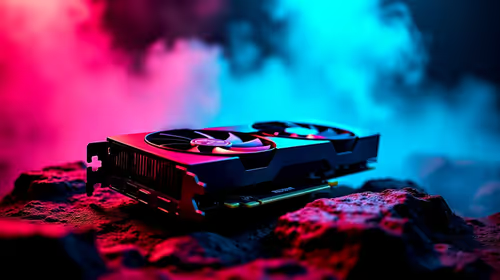
RTX 4060 CS2 Low Settings at 1080p: FPS Results. Real-world benchmark data, FPS numbers & performance analysis. What SA gamers can actually expect.
Visual Artifacts: Possible GPU Issue Issue #1. Diagnosis steps, proven fixes & when to seek professional help. SA-specific support info included.
Can the RTX 4090 Handle 1440p 144Hz Gaming. Performance testing verdict with real data & practical recommendations for SA buyers.
Top ASUS GPU Under R15000 picks evaluated on performance, value & SA availability with current Rand pricing from Evetech.
GTA 6 Max Settings on RTX 5070. Tested & verified settings for best FPS and visual quality on SA hardware budgets.
Cyberpunk 2077 Max Settings on RTX 5080. Tested & verified settings for best FPS and visual quality on SA hardware budgets.
Starfield Max Settings on RTX 5070 Ti. Tested & verified settings for best FPS and visual quality on SA hardware budgets.
Top RTX 5090 Under R5000 picks evaluated on performance, value & SA availability with current Rand pricing from Evetech.